

More news on this day
Delta’s first nonstop link between Salt Lake City and Seoul has quickly become a flagship transpacific option for Mountain West travelers, placing the carrier’s Delta One Suite on center stage for the 13-hour journey.
Get the latest news straight to your inbox!
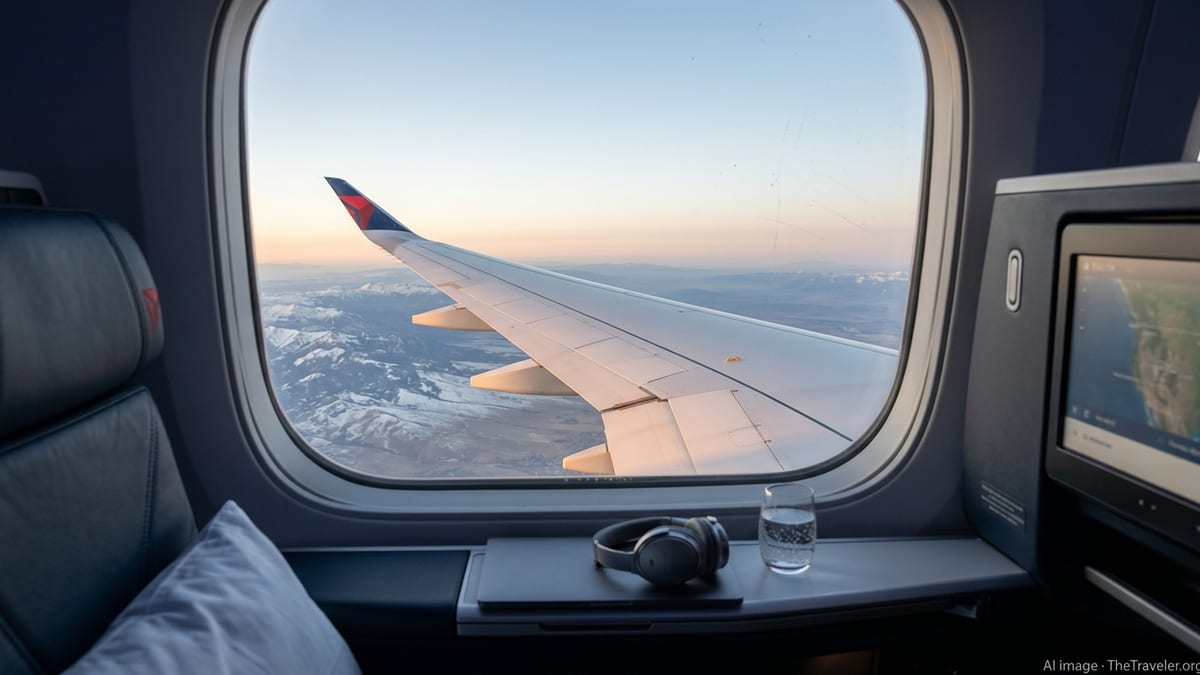
A New Long Haul From the Mountain West
Delta’s Salt Lake City to Seoul Incheon route, launched in June 2025, is the airport’s first nonstop connection to Asia and one of the longest flights in the carrier’s network from the western United States. Operated by the Airbus A350-900, the service is scheduled at just under 13 hours eastbound and slightly shorter westbound, giving business travelers and vacationers a one-stop link to more than 50 onward destinations across Asia through Delta’s SkyTeam partner hub at Incheon.
Publicly available schedule data indicates that the flight initially launched as a daily service for the summer season, before shifting to several flights per week in the winter timetable. This pattern aims to match leisure and business demand while maintaining a year-round presence on the route. Travelers in the Mountain West now have a direct premium cabin option to Seoul without routing through traditional coastal gateways such as Seattle, Los Angeles or Minneapolis.
Airport and airline communications emphasize the strategic nature of the route, with Salt Lake City positioned as a growing hub and Seoul emerging as both a tourism magnet and a key business destination. For premium travelers, the route also serves as one of the main showcases for Delta’s lie-flat Delta One Suite product on the A350-900, competing directly with other transpacific business cabins.
Cabin Layout and Delta One Suite Design
The Airbus A350-900 assigned to the Salt Lake City to Seoul route features Delta’s current long haul configuration with Delta One Suites in a 1-2-1 layout, Delta Premium Select, extra-legroom economy in Delta Comfort Plus and a standard Main Cabin section. Seat counts vary slightly by subfleet, but the consistently advertised highlight is the enclosed business-class suite with a sliding door at every seat.
In Delta One, each suite offers direct aisle access, a large work surface and a fully flat bed that extends to roughly two meters, depending on the specific seat position. Reports from frequent flyers describe the hard product as visually polished, with high sidewalls and doors that create a noticeable sense of privacy compared with older open-plan business cabins. The center pair of suites allows couples or colleagues to converse when the privacy divider is lowered, while window seats remain the best choice for solo travelers seeking seclusion.
Not all feedback is universally positive. Contributions in traveler forums suggest that some passengers find the footwell slightly narrow when in bed mode, particularly for taller individuals who prefer to sleep on their side. Others note that the suite can feel warm during overnight segments if cabin temperatures trend higher, and that overhead storage in the center section is limited compared with earlier widebody designs. Even so, most public commentary indicates that the A350-900 suite is perceived as a step up from Delta’s legacy angled or open business-class seats on older aircraft types.
Service, Dining and Amenities on the SLC–Seoul Sector
For the nearly half-day journey between Utah and South Korea, Delta positions the Delta One Suite as a fully premium experience built around sleep, dining and connectivity. Publicly available material from the airline notes that the A350-900 offers a seasonal multi-course meal service in Delta One, typically pairing a western-style menu with selected Korean-inspired options, followed by lighter snacks and a pre-arrival service. Passengers in premium cabins receive a wide beverage selection, including curated wines and spirits.
The soft product also includes premium bedding and a thin mattress pad for the lie-flat bed, along with a branded amenity kit featuring skincare items and basic travel essentials. Travelers posting on review sites and forums frequently highlight the quality of the bedding and the generally attentive service on longer A350 sectors, while occasionally pointing to variability in catering execution and portion sizes depending on the specific flight date and catering station.
Inflight entertainment is delivered through individual high-definition screens at every seat, offering hundreds of movies, television shows, music options and games. The A350-900 is part of Delta’s push toward fast, free Wi-Fi for loyalty program members, and reports indicate that the SLC to Seoul route has been included in the gradual rollout of streaming-capable internet on long haul international flights. For business travelers, the combination of AC power, USB charging and stable connectivity can make the Delta One Suite an effective in-flight office as the aircraft tracks across the Pacific.
Comparisons With Other Delta Transpacific Services
As the first and only direct link to Asia from Salt Lake City, the SLC to Seoul flight invites comparison with Delta’s longer-established Asian gateways in Seattle, Detroit, Atlanta and Minneapolis. On most of these routes, the carrier deploys similar A350-900 or A330-900neo aircraft featuring the same or closely related Delta One Suite design, which allows travelers to benchmark the new service against other major transpacific markets.
Frequent flyers sharing experiences online often rank the A350-900 suite as competitive but not always industry leading when set against top-tier Asian and Middle Eastern carriers. Feedback tends to praise the privacy, modern finishes and large inflight entertainment system while noting that the seat padding, storage options and footwell design can lag behind some rival business-class products. Nonetheless, for the Salt Lake City catchment area, the presence of a true suite-style business cabin on a nonstop flight to Asia represents a substantial upgrade over one-stop itineraries via older aircraft types.
Schedule filings and route analysis suggest that the A350-900’s range and fuel efficiency are key to making the long sector economically viable from a high-altitude inland hub. By standardizing on the A350-900 with suites, Delta can offer a consistent premium product across many of its longest international flights while giving Salt Lake City-based travelers similar comfort levels to those offered from larger coastal hubs.
What Travelers Can Expect Booking Delta One on SLC–ICN
For passengers considering a Delta One Suite on the Salt Lake City to Seoul route, recent experiences and available information point to a modern but occasionally mixed package. The hard product delivers excellent privacy, direct aisle access and a fully flat bed, along with large screens and contemporary finishes that compare favorably with many North American competitors. Travelers who prioritize quiet rest, workspace and personal space are likely to find the suite layout appealing, particularly on such a lengthy sector.
On the other hand, potential trade-offs include a relatively tight footwell for taller travelers, variable cabin temperatures and limited overhead storage in portions of the cabin. Soft product elements such as meal quality and service consistency can vary by flight, though many reports characterize the SLC to Seoul service as professional and generally well run. With free or low-cost high-speed Wi-Fi being rolled out across the fleet, the onboard experience is evolving, and travelers booking in the coming months can expect further refinements.
Overall, the introduction of the Delta One Suite on the A350-900 between Salt Lake City and Seoul has opened a new chapter in long haul travel for the Mountain West. While the product is not without its critics, the combination of nonstop convenience, suite-style privacy and a modern aircraft platform positions the route as a compelling choice for travelers seeking a direct, premium connection between Utah and South Korea.