

More news on this day
Travelers connecting through Saudi Arabia’s key hubs of Jeddah and Riyadh are facing fresh uncertainty as a cluster of flight suspensions and rolling delays by Saudia, Air India, Garuda Indonesia and Etihad Airways disrupts regional and long haul journeys across Asia and the Gulf.
Get the latest news straight to your inbox!
Cluster of Cancellations Hits Strategic Saudi Gateways
The latest disruption centers on six suspended flights involving major routes that funnel passengers through King Abdulaziz International Airport in Jeddah and King Khalid International Airport in Riyadh. Publicly available schedules and airline notices indicate that certain services operated by Saudia, Air India, Garuda Indonesia and Etihad Airways have been pulled from service or placed on extended delay, interrupting itineraries that depend on smooth connections through the two Saudi cities.
The timing comes as regional airspace remains under strain from ongoing tensions in parts of West Asia. Recent weeks have already seen airlines trim or reroute services around conflict zones, and the newest suspensions add fresh pressure on heavily used corridors between South and Southeast Asia, the Gulf and onward destinations in Europe and North America.
For Saudi Arabia, the impact is magnified by the dual role of Jeddah and Riyadh as both business and religious travel hubs. Jeddah in particular serves as a primary gateway for Umrah traffic to nearby Mecca, while Riyadh’s expanding network connects corporate and government travelers across the region.
Travel industry data and media coverage suggest that while many flights continue to operate, even a limited number of cancellations can create knock-on disruptions, with passengers facing missed connections, extended layovers and last minute changes to routing.
Saudia and Air India Adjust Saudi Operations Amid Regional Tensions
Saudi flag carrier Saudia has already been operating in a volatile environment, with previous suspensions affecting multiple destinations in response to heightened regional risk assessments. Reports indicate that some flights connecting Saudi hubs with neighboring countries remain on hold or subject to late operational changes, including services that feed traffic into Jeddah and Riyadh.
Air India and its low cost arm Air India Express have also been dynamically adjusting their schedules to and from Saudi Arabia. While much of the recent focus has been on maintaining connectivity to Jeddah, published updates show that other West Asia routes have seen temporary suspensions and reductions, forcing the group to consolidate capacity and operate ad hoc rescue or special services around peak disruption days.
The net effect for travelers transiting Saudi territory is a patchwork of options that can change within hours. Passengers booked on Air India itineraries that previously relied on stable Saudi connections are now more dependent on rebooking, rerouting through alternative Gulf hubs or accepting extended travel times while airlines balance safety, crew logistics and aircraft availability.
For both Saudia and Air India, Saudi Arabia’s position at the crossroads of South Asia, the Gulf and Africa means even targeted suspensions can ripple widely, affecting not only point to point city pairs but also multi leg trips involving Indian, European and North American destinations.
Garuda Indonesia and Etihad Airways Add to the Strain
The disruption has been compounded by schedule changes at Garuda Indonesia and Etihad Airways, two carriers that provide important links into Saudi Arabia from Southeast Asia and the wider global network. Garuda’s services into the Kingdom are particularly important for religious traffic originating in Indonesia, one of the world’s largest sources of pilgrims heading to Saudi Arabia for Umrah and, later in the year, Hajj.
When selected Garuda flights are suspended or delayed, passengers bound for Jeddah or Riyadh often face re-accommodation on alternative routings, including itineraries that require backtracking through third country hubs. This can significantly lengthen journeys and complicate visa and transit requirements for travelers who originally expected a more direct path into Saudi Arabia.
Etihad Airways, operating out of Abu Dhabi, has been rebuilding its schedule after earlier large scale interruptions triggered by regional security concerns. As Etihad restores a limited network to destinations including Riyadh and Jeddah, any fresh suspension of individual flights quickly reverberates through its long haul bank, affecting connections from Europe, North America and Asia that rely on precise timing to feed Saudi bound services.
For travelers, the result is a fluid situation in which flights may appear in reservation systems but remain labeled as subject to operational review, with departure times pushed back, aircraft swapped or sectors dropped entirely at relatively short notice.
Jeddah and Riyadh Under Pressure as Passengers Scramble
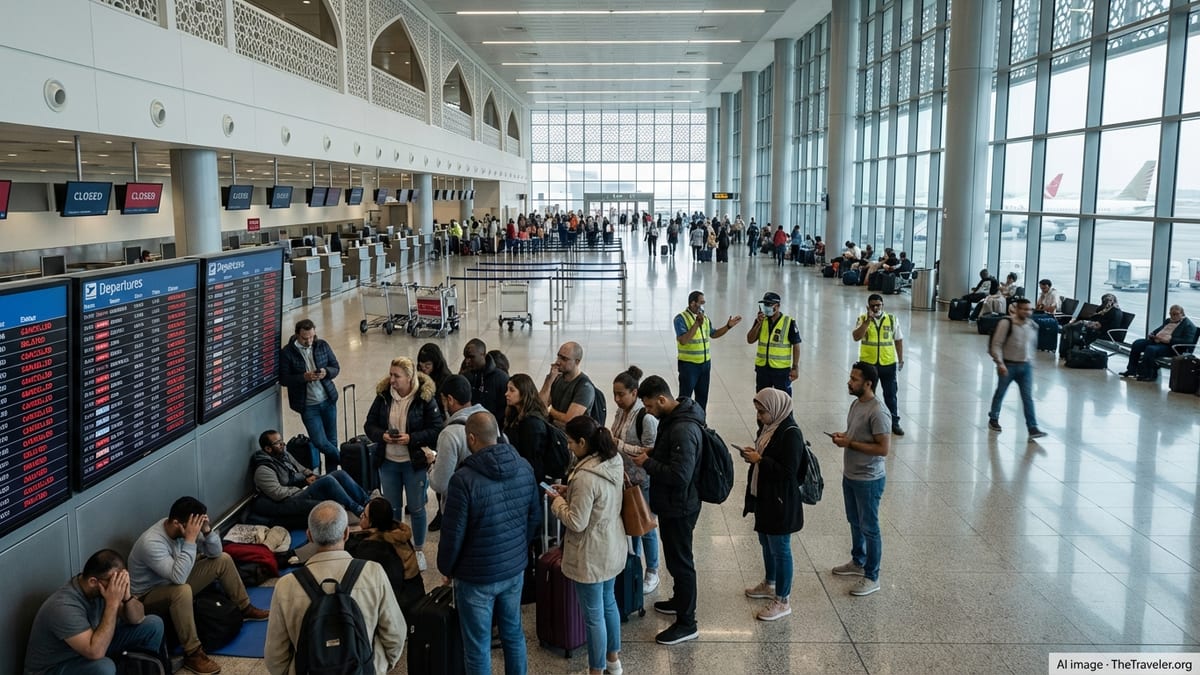
The immediate impact of these six suspended flights and associated delays is most visible at the terminal level in Jeddah and Riyadh, where passengers are experiencing crowded transfer areas, longer queues at transfer desks and a sharp rise in demand for same day rebooking. Travel forums and local media coverage highlight cases of overnight waits, last minute hotel searches and extended stays inside terminals as travelers attempt to secure new itineraries.
Because Jeddah and Riyadh function as critical nodes in complex multi stop journeys, even a small reduction in available seats can strand travelers mid route. Those arriving from South or Southeast Asia may find that the onward leg to Europe or North America is no longer operating as planned, while inbound passengers heading to domestic Saudi destinations encounter bottlenecks on connecting sectors.
Airlines are generally offering date or route changes without additional penalties during the current disruption window, according to publicly accessible policy updates. However, limited seat availability during peak travel days means that some passengers are being rebooked several days later than intended, particularly on popular weekend departures.
Travel agents report that flexible itineraries and multi carrier tickets are somewhat easier to reconfigure, while tightly priced, single airline bookings with restricted change rules can be harder to adapt quickly when specific flights drop out of the schedule.
What Travelers Through Saudi Hubs Should Expect Now
For the coming days, travelers with tickets involving Jeddah or Riyadh should be prepared for a higher than usual risk of last minute changes. Aviation tracking platforms and airline advisories show that schedules are still being updated close to departure, with some flights restored and others newly suspended as carriers reassess routes across West Asia and neighboring regions.
Industry guidance suggests that passengers build in additional buffer time for connections through Saudi hubs, avoid tight layovers where possible, and remain attentive to notifications from airlines and booking platforms. Reconfirming flight status repeatedly in the 24 hours before departure is emerging as a practical necessity rather than a simple precaution.
While the number of fully suspended flights at present is limited, the concentration among major carriers and key routes means that disruption can be disproportionate to the raw count of cancellations. This is particularly true for those traveling for time sensitive reasons, such as religious observance, medical appointments or business commitments in Saudi Arabia and beyond.
Travel observers expect that as regional conditions stabilize and airspace restrictions ease, airlines including Saudia, Air India, Garuda Indonesia and Etihad Airways will look to rebuild their Saudi schedules. Until then, passengers transiting Jeddah and Riyadh remain exposed to a shifting operational landscape in which contingency planning and flexibility are essential.