

More news on this day
Travelers at Toronto Pearson International Airport faced fresh disruption on March 19 as a cluster of cancellations and rolling delays involving Air Canada, regional affiliate Jazz and Icelandair disrupted at least five flights, straining major long-haul connections to Bahrain, Dubai, Bogotá, Cairo, Keflavík and other global hubs.
Get the latest news straight to your inbox!
Cluster of Cancellations Disrupts Global Connectivity
The latest operational turmoil at Toronto Pearson unfolded across a mix of transatlantic and long-haul routes, with publicly available flight-status boards showing at least five departures and arrivals linked to Air Canada, Jazz and Icelandair marked as cancelled or heavily delayed over the course of the day. Several of these flights formed crucial segments in multi-leg itineraries to or from Bahrain, Dubai, Bogotá, Cairo and Keflavík, amplifying the impact well beyond Canada.
Reports indicate that passengers booked on connections via Toronto to major Middle Eastern hubs, including Bahrain and Dubai, were left facing missed onward services or overnight rerouting. Similar issues were visible on South American and transatlantic corridors, where disruptions on Bogotá and Keflavík services complicated travel plans at the start of the busy spring break period.
Observers note that even a small number of cancellations at a tightly scheduled hub like Toronto Pearson can ripple quickly through the network, particularly when they affect aircraft assigned to long-haul rotations. With equipment and crews often scheduled across multiple continents in a 24-hour window, a cancelled sector into or out of Toronto can cascade into delays on routes as far afield as the Gulf, North Africa and northern Europe.
The latest issues follow a winter season in which Canadian airports, including Toronto Pearson, have already grappled with frequent weather-related disruptions and residual operational strain. While the conditions on March 19 were less extreme than the late January snowstorm that triggered hundreds of cancellations, the system remains sensitive to even modest schedule shocks.
Air Canada and Jazz Face Pressure on Hub Operations
Air Canada and its regional affiliate Jazz continue to face scrutiny over reliability at Toronto Pearson, the airline’s largest hub. Data and anecdotal reports over the winter have pointed to challenging on-time performance, with mechanical checks, aircraft swaps and air traffic flow restrictions compounding weather delays on some days.
At the same time, the carrier’s complex “hub-and-spoke” operation at Pearson means that a single cancelled domestic or transborder flight can jeopardize a chain of onward international connections. Travelers heading toward Bogotá, Cairo or Dubai on March 19 often depended on tight feeder flights into Toronto. When those shorter legs were delayed or cancelled, itineraries involving multiple continents quickly unraveled.
In recent seasons Air Canada has faced broader labor and operational headwinds, including a high-profile flight attendant dispute in 2025 and a winter of congested ground handling and de-icing operations across major Canadian airports. While those specific factors were not directly cited in the March 19 disruptions, they form part of a wider backdrop of strain on staffing and aircraft utilization.
Passenger advocacy groups in Canada have repeatedly highlighted the complexity of securing compensation or alternative travel when disruptions span multiple carriers and jurisdictions. When a journey combines an Air Canada or Jazz segment from a Canadian city into Toronto with a long-haul connection beyond, travelers can find themselves navigating several sets of passenger rights regimes and customer service channels.
Icelandair Disruptions Ripple Through Keflavík Hub
Icelandair’s presence at Toronto Pearson is relatively small compared with larger transatlantic carriers, but the airline plays an outsized role in connecting travelers from Canada to Europe via its Keflavík hub. The suspension of at least one Icelandair rotation on March 19 immediately reduced options for passengers aiming to reach northern Europe, the United Kingdom and parts of Scandinavia on same-day itineraries.
The airline’s model depends on tight waves of arrivals and departures through Keflavík, where passengers often have short transfer windows to connect onward to other European destinations. When a Toronto leg is cancelled or significantly delayed, these carefully timed connections can be lost wholesale, forcing rebookings up to a full day later or rerouting via continental hubs such as Amsterdam or Frankfurt.
Recent months have already tested Icelandair’s resilience, with reports of occasional overbooking and schedule adjustments on its North Atlantic network. The removal of even a single flight on a peak travel day can therefore reverberate across multiple markets. For Canadian travelers heading toward smaller European cities that rely on a Keflavík connection, alternatives out of Toronto may involve longer journeys with extra stops or overnight layovers.
Travel forums and social media posts from affected passengers on March 19 highlighted the frustration of learning about schedule changes close to departure time, particularly when connecting hotel bookings and tours in Europe were non-refundable. Such accounts underscore the vulnerability of intricate connection-based itineraries built around a relatively small number of key flights.
Middle East and Latin America Links Hit by Missed Connections
While not all cancelled or delayed flights on March 19 served Bahrain, Dubai, Bogotá or Cairo directly, disruptions on Toronto feeder segments and partner flights materially affected access to these destinations. Itineraries to the Gulf often rely on punctual departures out of Pearson to align with tightly scheduled waves at major Middle Eastern hubs.
According to publicly accessible routing data, travelers bound for Bahrain and Dubai from across Canada frequently route through Toronto to reach onward services. When Toronto arrivals are delayed or when departures leave late, missed minimum connection times can push passengers onto next-day flights, particularly on heavily booked services from Gulf hubs that have limited spare capacity.
A similar pattern emerged for Bogotá and Cairo traffic. These cities serve as important gateways to broader regions, including connections into the Andean countries and North Africa. A delayed Toronto departure can mean missed onward regional flights, leading to unexpected overnight stays and complex re-ticketing at downline airports.
Beyond the immediate inconvenience, disruptions to such long and multi-leg journeys can have outsized economic effects. Business travelers risk missing meetings, cargo in belly holds may arrive late to time-sensitive supply chains, and leisure visitors could lose valuable days from already short trips. Travel insurers and credit card protection programs are likely to see an uptick in claims related to missed connections and added accommodation costs.
What Travelers Are Experiencing at Toronto Pearson
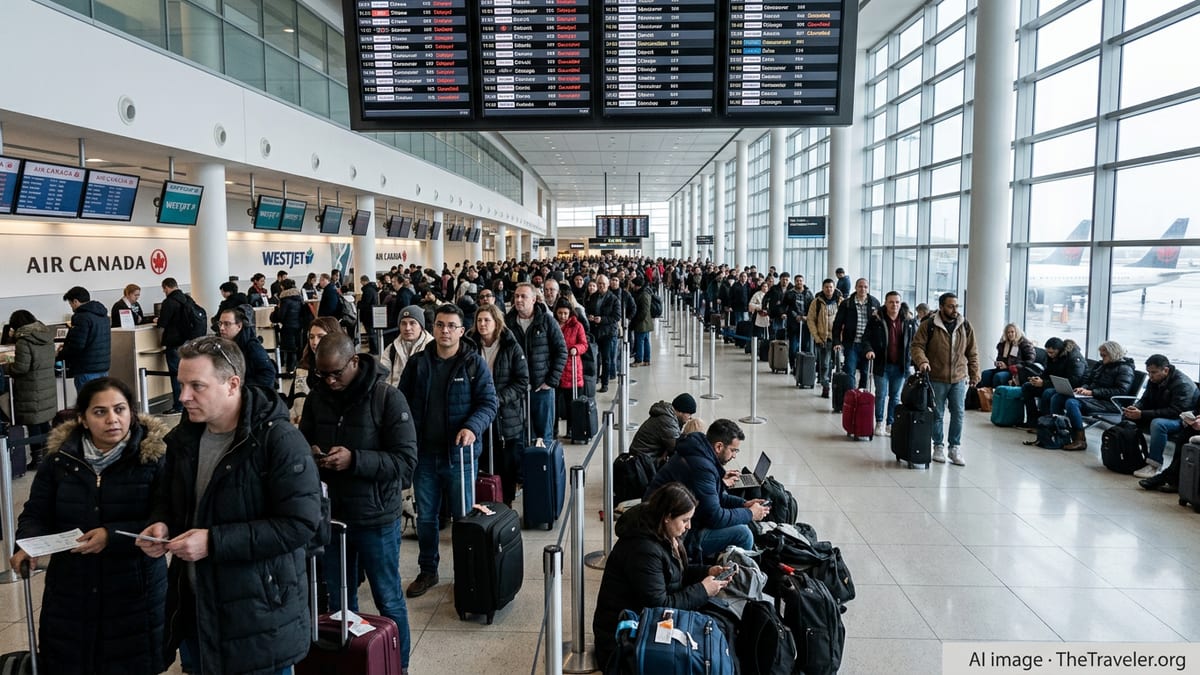
Passengers at Toronto Pearson on March 19 reported scenes familiar from earlier episodes of disruption, including long lines at airline service desks, crowded gate areas and rolling departure board updates. For some travelers, the most challenging aspect was the uncertainty around rebooking windows and the availability of seats on later flights.
Publicly available information shows that re-accommodation options were particularly constrained on routes with limited daily frequencies, such as certain South American and Middle Eastern city pairs. Travelers on those itineraries often had to accept rerouting through entirely different hubs or wait for the next available flight on the original routing, which in some cases was at least 24 hours later.
Information posted by passenger rights advocates and travel advisers emphasized the importance of checking flight status frequently, using airline apps where possible, and monitoring the status of inbound aircraft. For journeys involving several carriers, experts recommend confirming each individual segment, since a disruption on one partner can take time to be reflected in another carrier’s systems.
As the busy spring and summer travel seasons approach, analysts suggest that Toronto Pearson and its largest operators will remain under close watch from travelers and regulators. With winter weather, airspace restrictions in other parts of the world and persistent staffing challenges all still in play, the events of March 19 serve as a reminder of how quickly a handful of cancellations can escalate into a day of widespread travel turmoil across multiple continents.