

More news on this day
Travelers heading through Detroit and other major U.S. hubs are confronting a tense mix of operational disruption and security anxiety, as a diverted American Airlines flight to Detroit Metropolitan Wayne County Airport coincides with renewed federal attention on this month’s deadly attack at Temple Israel in suburban Detroit.
Get the latest news straight to your inbox!
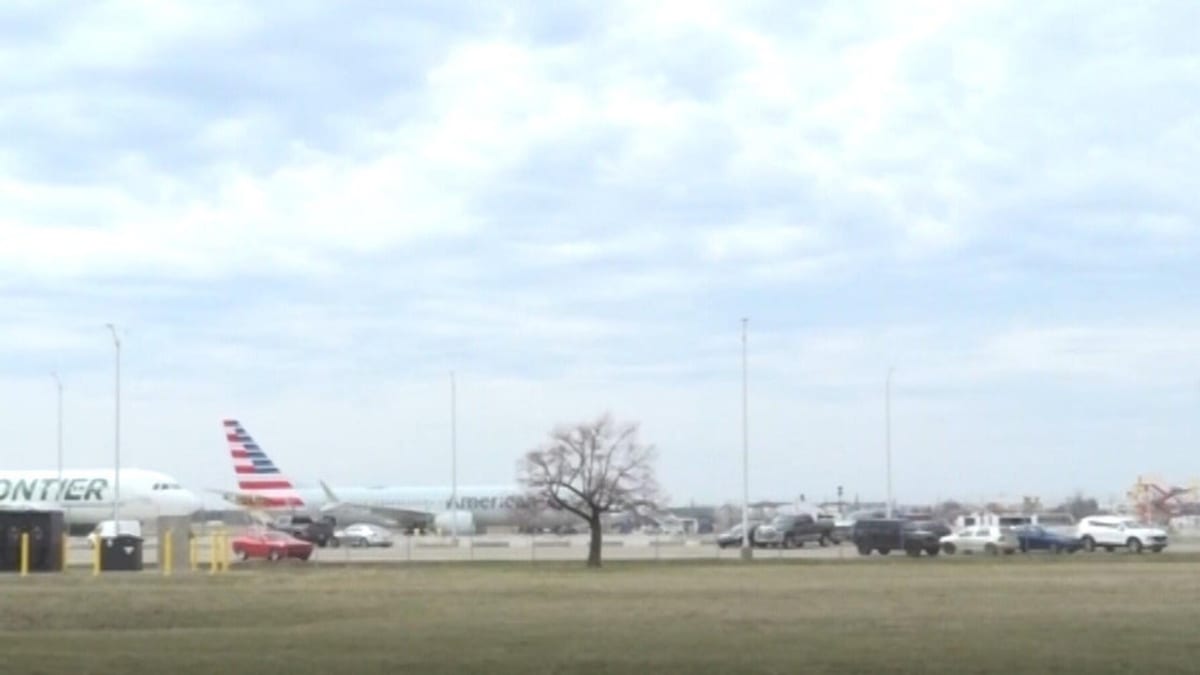
Image by cbsnews.com
Disruptive Passenger Forces Diversion to Detroit
Reports from broadcast outlets in Michigan and Washington indicate that an American Airlines service operating Sunday, March 29, was forced to divert to Detroit Metropolitan Wayne County Airport after a disruptive passenger incident on board. The flight, which had been en route between two East Coast destinations, landed safely at DTW, where law enforcement and federal agents met the aircraft at the gate.
According to published coverage, crew members reported a customer who became increasingly unruly in flight, prompting the decision to divert rather than continue to the scheduled destination. The airline has not publicly detailed the precise nature of the behavior, but video shared on social media shows passengers disembarking in Detroit while emergency vehicles are positioned nearby on the ramp.
Initial reports suggest that no injuries were recorded and that the aircraft was able to taxi under its own power after landing. Passengers were rebooked on later services, with downstream delays for connecting itineraries through Detroit and other hubs as the airline repositioned crews and equipment.
Publicly available information shows that the Federal Bureau of Investigation and airport police are reviewing witness accounts and onboard recordings as part of a routine post-incident assessment. As of Monday morning, there is no indication of a broader threat to aviation security, but the diversion adds to a pattern of midair disruptions that have challenged carriers in recent seasons.
FBI Expected to Update Temple Israel Investigation
The incident in the skies over the Midwest arrives as Detroit remains focused on events of March 12, when a driver rammed a pickup truck into Temple Israel in West Bloomfield Township and opened fire inside the sprawling synagogue complex. The attacker, identified in public records as Ayman Mohamad Ghazali, was fatally shot by security personnel on site after the vehicle caught fire within the building.
More than two weeks later, federal investigators are preparing to offer an updated public briefing on the case. Coverage from national and regional outlets indicates that the FBI’s Detroit field office has described the attack as a targeted act of violence against the Jewish community, while continuing to examine potential ideological influences and any overseas connections.
Recent reporting notes that the assailant was a naturalized U.S. citizen originally from Lebanon and that he recorded a video message prior to the attack. Separate articles published Monday state that investigators now believe he was inspired by Hezbollah, although court records and charging documents are still emerging as the case shifts from emergency response to formal review.
The anticipated FBI update is being closely watched by congregants and by Jewish organizations across the United States, which have cited the Temple Israel assault alongside other recent incidents as evidence of a heightened threat environment. Security professionals are using the case to refine protocols for access control, real-time communication with law enforcement, and the rapid evacuation of children from religious schools co-located with sanctuaries.
Heightened Security and Community Response Around Houses of Worship
The West Bloomfield attack unfolded with approximately 140 young children inside Temple Israel’s early childhood center, according to published accounts. Staff members and security officers moved quickly to evacuate classrooms while responding to smoke, gunfire reports, and the sound of the vehicle crashing through the building’s entrance corridor.
In the days that followed, Temple Israel leaders shared images of fire damage and structural repairs, while carefully managing how much visual detail to release to their community. Some congregants described early law enforcement photos as visually disturbing, prompting synagogue officials to instead circulate their own curated images that documented the recovery effort without graphically depicting the attack.
State officials and national Jewish organizations have used the Michigan case to highlight a series of recent threats and assaults on synagogues and Jewish community centers. Public statements from advocacy groups point to a rise in antisemitic rhetoric, both online and in physical spaces, and call for increased funding for security training, facility hardening, and mental health resources for congregants and staff.
For travelers, these developments may be most visible in what happens just beyond the terminal windows. Airport chapels, nearby churches, mosques, and synagogues in major hub cities have been reassessing visitor access policies, increasing coordination with local police, and reviewing emergency drills. The focus on houses of worship underscores how aviation, community life, and security preparedness now intersect in metropolitan regions such as Detroit.
Operational Strains Add to Detroit Travel Disruptions
The diverted American Airlines flight is only one element of a broader wave of disruption affecting Detroit Metropolitan Wayne County Airport in recent days. Industry-focused travel publications report that on March 28 DTW experienced more than one hundred flight delays and a handful of cancellations across multiple carriers, including ultra-low-cost and regional operators.
These disruptions formed part of a wider pattern across the national network, with data from aviation trackers showing significant delays at Chicago O’Hare, New York area airports, Atlanta, Denver, and Dallas on March 29. Weather in some regions, staffing shortfalls in others, and residual impacts from earlier ground stops all contributed to a patchwork of missed connections and rolling schedule changes.
Detroit’s role as both a major connecting hub and a gateway to the Upper Midwest has amplified the effects for travelers. Passengers on the diverted American Airlines service, already facing an unexpected arrival into DTW, encountered crowded gate areas, tight connection windows, and limited same-day rebooking options as airlines attempted to reset operations following consecutive days of irregular running.
Travel analysts note that this sort of compounded disruption can be particularly challenging at the end of a busy month, when aircraft utilization is high and spare capacity is limited. The combination of a security-related diversion, weather-driven delays in other regions, and longer-term scheduling pressures underscores how quickly strain can build in a complex hub-and-spoke system.
What Travelers Passing Through Detroit Should Expect Next
For passengers heading through Detroit in the coming days, the convergence of security concerns and operational volatility suggests a need for additional time and flexibility. While there is no indication that the diverted flight or the Temple Israel case pose an ongoing threat to aviation, carriers and airport managers are likely to remain especially cautious around disruptive behavior and suspicious activity reports.
Publicly available guidance from airlines and airport authorities continues to emphasize early arrival, frequent checks of mobile boarding passes, and close attention to gate-change announcements. Given recent patterns at DTW and other hubs, same-day itineraries involving tight connections may be at greater risk of misalignment, particularly on routes handled by regional affiliates.
Travelers planning visits to Detroit area religious sites, cultural attractions, or suburban communities may also notice heightened security measures, including visible patrols, controlled access points, and new signage about reporting suspicious activity. Community leaders around Temple Israel have stressed the importance of maintaining open doors for worship and education while adopting layered safeguards that can be scaled quickly during emergencies.
Together, the diverted flight, the forthcoming FBI briefing on the Temple Israel attack, and the rolling wave of delays at Detroit’s main airport provide a snapshot of travel in late March 2026. For visitors and residents alike, movement through this region now sits at the intersection of heightened vigilance, operational complexity, and a community’s ongoing effort to heal and adapt.