

More news on this day
Travelers heading to Philadelphia International Airport are confronting an unusual level of disruption this March, as waves of delays and cancellations combine with broader strain on the U.S. air network and raise urgent questions about how risky it is to route a trip through the City of Brotherly Love right now.
Get the latest news straight to your inbox!
Storms, Shutdown and Systemwide Strain Hit PHL Hard
Flight-tracking data and recent coverage show that U.S. air travel has been under intense pressure in mid-March, with powerful storm systems sweeping across large parts of the country and triggering hundreds of cancellations and thousands of delays. Philadelphia International Airport has been swept up in that turbulence, both as a destination and as a key East Coast connecting hub.
National reports in recent days describe storms dumping snow and ice across the Midwest and pushing eastward, prompting ground stops and cascading schedule disruptions at major airports. Those weather shocks are landing on top of an ongoing partial federal government shutdown that has strained security screening and air traffic staffing, slowing the flow of passengers and flights across the system.
For travelers headed to or through Philadelphia, this combination means that even flights not directly affected by severe weather can encounter knock-on disruptions. Delayed aircraft and crew timeouts in other cities are ricocheting into PHL’s departure boards, stretching what might once have been routine schedule hiccups into hours-long waits.
Travel industry trackers note that Philadelphia already ranks among the less favored U.S. hubs in passenger satisfaction, largely because of congestion and aging facilities. The current wave of disruption is landing at a delicate moment, as the city prepares for a high-profile tourism year in 2026 and attempts to convince travelers that PHL is a reliable gateway.
A Spike in Delays and Cancellations at Philadelphia
Recent travel news coverage focusing specifically on Philadelphia International Airport highlights sharp, localized turbulence. One industry outlet reported that on March 9, the airport recorded roughly 110 delayed flights and 18 cancellations in a single day, affecting a mix of domestic and international routes served by carriers including American, Delta, Frontier and regional partners.
While those numbers are far below the all-time peaks seen during historic winter storms earlier this year, they are notable for a normal March weekday and illustrate how quickly conditions at PHL can deteriorate when weather and staffing constraints converge. The problem for passengers is less any single day’s tally than the sense of lingering unpredictability from one travel day to the next.
Airlines are also still untangling residual disruptions from earlier winter weather episodes that heavily impacted the Northeast, including major snowfalls recorded at Philadelphia International Airport. Aircraft repositioning, maintenance backlogs and tight crew schedules can leave little room to absorb fresh shocks, meaning relatively modest operational issues can tip quickly into visible chaos at the terminal.
Travelers connecting through Philadelphia are reporting longer lines at check-in counters and security checkpoints, and reduced slack in tight connections. Even when flights ultimately depart close to on time, the perception of stress and vulnerability around any itinerary touching PHL has grown in recent weeks.
Construction, Capacity Management and Local Bottlenecks
Beyond weather and national staffing issues, infrastructure and capacity management are adding friction at Philadelphia International Airport. Federal aviation documents for the first quarter of 2026 outline ongoing construction work at the airport, part of a broader modernization effort that aims to upgrade facilities before major visitor events later in the decade.
Construction can mean temporary gate changes, narrowed corridors and occasional runway or taxiway restrictions, all of which can lengthen turnaround times and constrain how many flights the airport can handle during peak periods. When those capacity limits intersect with crowded spring-break demand, even small schedule slips can cause aircraft to stack up on the ground and in the arrival queues.
At the same time, national flight management policies tied to air traffic controller staffing have recently required carriers to trim schedules at dozens of major airports, including Philadelphia. Although those mandated cuts were eased from earlier, steeper levels, they have encouraged airlines to concentrate operations into fewer flights and tighter time windows, potentially magnifying the impact of any disruption.
Local travelers have also pointed to intermittent security checkpoint adjustments, such as temporary closures of specific screening lanes or terminals, as another source of bottlenecks. While these measures are often short-lived and precautionary, they can create snapshots of congestion that feed the broader narrative of a hub under strain.
How Worried Should Travelers Be About Upcoming Trips?
For travelers with tickets to Philadelphia in the coming days and weeks, the question is not only whether flights will operate, but how much risk there is of serious delay. Publicly available data and recent reporting suggest that, despite the heightened turbulence, the airport remains open and functioning, with the majority of flights still departing and arriving close to schedule.
The elevated disruption is best understood as a higher probability of inconvenience rather than a wholesale shutdown of travel to the city. Weather-related systems are by nature transient, and the most intense storm impacts in the current pattern have been shifting across regions rather than remaining fixed over Philadelphia. As those systems move on, the pressure on airspace and crew availability typically eases, even if residual delays linger for a day or two.
Travel analysts generally recommend that passengers treat any trip involving PHL in March with extra caution. That can mean building longer layovers into itineraries, avoiding the last flight of the day on critical routes, and checking status frequently in the 24 hours before departure. Flexible travelers may also want to identify alternate routings through less congested hubs, particularly if they are connecting to international long-haul services.
Despite the recent turbulence, Philadelphia remains a major entry point to one of the United States’ most historic cities. Airlines continue to market strong schedules into the region, and visitor demand for 2026’s packed calendar of events remains high. For now, the practical risk for most travelers is not whether they will reach the City of Brotherly Love, but how much patience and buffer time the journey will require.
What Travelers Can Expect at the Terminal
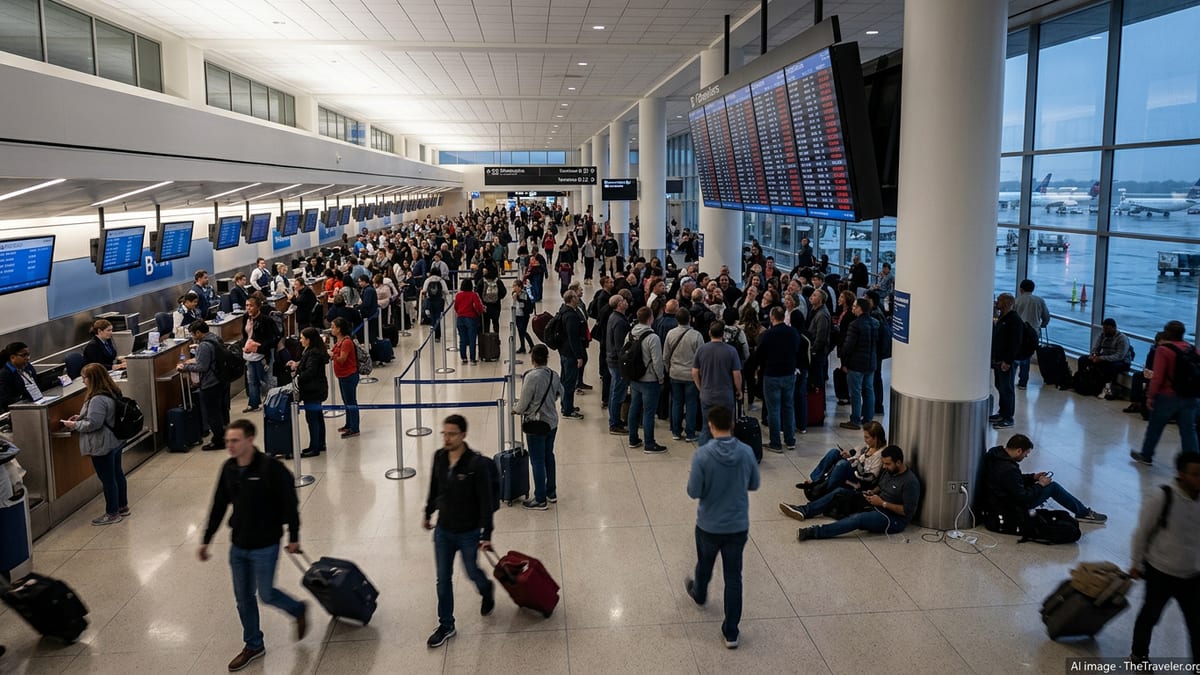
Passengers passing through Philadelphia International Airport in the current environment should be prepared for a more crowded and uncertain terminal experience. Reports from recent travel days describe longer queues at ticket counters and security, along with busier gate areas as multiple delayed flights overlap during peak banks.
Airlines are adjusting by offering more proactive rebooking options and encouraging travelers to use digital channels to change flights before they reach the airport. However, when thunderstorms or snow trigger rapid-fire schedule changes, gate assignments and departure times can shift frequently. Staying close to departure monitors and carrier apps is increasingly important for anyone connecting through PHL.
Within the terminal, some passengers are also encountering the effects of phased construction, including temporary wayfinding signage, blocked-off seating areas and equipment staging zones. While these changes are intended to support long-term improvements to the airport’s infrastructure, they can amplify the perception of crowding and add a layer of confusion for infrequent flyers.
For visitors ultimately bound for the city itself, ground transportation options such as regional rail, rideshares and taxis are operating as normal, and the airport’s role as the primary gateway to the metropolitan area remains secure. The immediate challenge lies less in getting from the terminal to Center City and more in ensuring that flights into and out of Philadelphia depart on time in a national air system currently buffeted by storms and staffing pressures.