

More news on this day
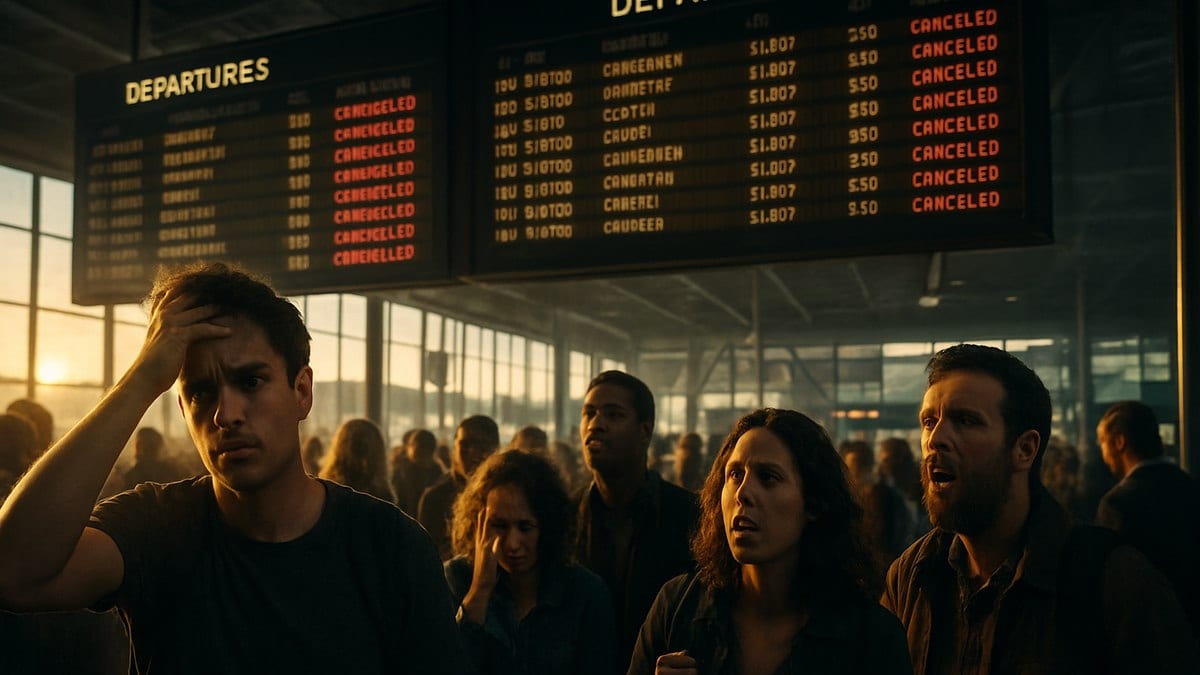
Air travel across the United Arab Emirates, Egypt and Afghanistan is facing a new wave of cancellations and schedule cuts as a deepening regional crisis forces airlines to continually redraw routes, thin out frequencies and hold aircraft on the ground.
Get the latest news straight to your inbox!
Regional Conflict Keeps Key Airspace Under Strain
The latest round of disruption is unfolding against the backdrop of an intensifying conflict centered on Iran and its neighbors, which has triggered repeated airspace closures and capacity reductions since late February 2026. Publicly available assessments of the 2026 Iran war and its economic impact describe thousands of daily cancellations across the Middle East at the height of the crisis, along with significant damage to infrastructure in several Gulf states.
Although the heaviest initial shock has passed, restrictions on overflight corridors and intermittent security incidents continue to shape airline decision making. Aviation data and travel advisories point to a fragmented operating environment in which carriers can no longer rely on traditional high volume corridors over the Gulf, Iran and Iraq, leading to longer routings, tighter aircraft rotations and frequent last minute changes.
In this environment, hubs in the UAE, Egypt and Afghanistan sit at particularly sensitive junctions for East West traffic flows. Disruption at any one of them now has the potential to ripple rapidly across networks that link Europe, Asia and Africa, magnifying the effect of each cancellation or extended ground hold.
UAE Hubs See Repeated Cancellations Amid Missile and Drone Threats
The United Arab Emirates remains at the heart of the current aviation crisis. Reports on the Iranian strikes against the UAE detail how missile and drone attacks in late February and early March prompted authorities to partially close national airspace, resulting in hundreds of cancellations at Dubai International and Abu Dhabi. Subsequent incidents, including debris and fires linked to intercepted drones near Dubai’s main airport, have led to additional short term suspensions of departures and arrivals.
Travel advisories updated through March and early April describe Dubai International operating with limited capacity, with airlines instructed to trim schedules and prioritize certain long haul links. Industry publications tracking the economic fallout of the conflict note that carriers based in the Gulf, including those in the UAE, sharply reduced operations in response to airspace closures affecting the Emirates, Qatar, Kuwait and Bahrain, among others.
Even as schedule data for early April shows leading UAE carriers planning hundreds of departures per day from Dubai, the picture for travelers is uneven. Regional outlets and traveler accounts highlight repeated cancellations on specific routes, such as flights between Dubai and select Asian cities, as well as short notice changes to services connecting via Bahrain or Kuwait. Some foreign airlines that serve Dubai and Abu Dhabi have temporarily suspended rotations or capped frequencies into late April while they evaluate security conditions and the reliability of alternate routings.
For passengers with imminent itineraries through the UAE, publicly available airline statements emphasize flexibility policies including free date changes, rerouting on remaining services and refunds where flights are canceled outright. However, with airspace restrictions still in effect across multiple Gulf states, options to rebook at similar times or prices are increasingly limited on popular corridors to Europe and South Asia.
Egypt Emerges as a Fragile Detour for Europe Asia Traffic
As parts of Gulf and Levantine airspace became difficult or impossible to use, Egypt’s location has turned its airports and flight information regions into critical alternates for long haul traffic. Recent coverage from Egyptian media notes that airports in the country have received diverted international flights amid regional tensions, underscoring Cairo’s role as a pressure valve when neighboring routes are constrained.
At the same time, Egyptian hubs have not been immune from the knock on effects of the crisis. Operational tallies from early April show Cairo International Airport experiencing hundreds of delays and a series of cancellations within a short span, with the resulting congestion compounding disruption for connecting passengers. Travel trade reports describe days when flight delays at Cairo, Istanbul and Dubai together ran into the hundreds, with at least a dozen cancellations scattered across major carriers.
National airline updates reflect this dual role of Egypt as both beneficiary of diverted flows and victim of wider instability. Egypt’s flag carrier has announced a gradual resumption of some services to the UAE after earlier interruptions linked to security concerns and regional airspace changes. The airline is restoring flights in phases, adding back frequencies to major Emirati cities while cautioning that further adjustments remain possible should the security picture shift again.
For travelers routing through Egypt, the new reality is one of greater unpredictability. While the country’s airspace is generally open and receiving extra overflights, ground operations at Cairo and coastal gateways can quickly become congested when surrounding hubs experience shutdowns or emergencies. This dynamic has produced rolling waves of missed connections, overnight stays and schedule changes for passengers attempting to bridge Europe, Africa and the Gulf on tight itineraries.
Afghanistan Caught Between Conflict Zones and Transit Pressures
Afghanistan’s aviation sector has long been vulnerable, and the current regional crisis is adding strain to an already fragile environment. In recent years, many airlines avoided the Kabul Flight Information Region due to security concerns, only gradually returning to contingency routes when conditions allowed. The wider 2026 conflict has again thrust Afghan airspace into focus as carriers look for westbound transit options that avoid high risk zones in the Gulf and Levant.
At the same time, Afghanistan itself has been affected by separate security incidents, including airstrikes and attacks within its territory, that have periodically disrupted operations at Kabul International and other airfields. Public documentation from aviation and security authorities highlights ongoing threats near key infrastructure, which can trigger temporary suspensions of flights, extended ground holds or abrupt rerouting of overflights.
The result is that Afghanistan now sits at the intersection of two overlapping crises: a regional war that is closing off traditional corridors around it, and domestic instability that constrains its own ability to function as a reliable transit zone. Airlines that had tentatively reintroduced limited use of Afghan routes are once again recalibrating, with some carriers reportedly pausing overflights or trimming planned frequencies to and from Kabul as conditions evolve.
For travelers, this translates into a pattern of cancellations and schedule thinning on direct links to Afghanistan from major hubs, as well as sudden changes to routings for flights that previously overflew the country. With alternative corridors already crowded by diversions from the Gulf, passengers heading to or from Afghan cities are facing longer journeys, narrower choice of carriers and a heightened risk of last minute disruption.
Passengers Confront Rolling Disruptions and Limited Alternatives
Across the UAE, Egypt and Afghanistan, the common thread for passengers is uncertainty. Operational data compiled by travel industry analysts in early April indicates that dozens of flights have been canceled or subjected to prolonged ground delays at key hubs over just a few days, often on top of pre existing schedule cuts introduced when the crisis first erupted.
Travelers transiting through Dubai and Abu Dhabi report multiple instances of canceled flights followed by rebookings on later departures or different carriers, especially where itineraries rely on airports in Bahrain, Kuwait or other states with ongoing airspace restrictions. Similar experiences are being relayed by passengers using Cairo as a substitute hub, with some itineraries unraveling after a single delayed departure cascades through a chain of tight connections.
Guidance from airlines and corporate travel managers now routinely urges passengers to build additional buffer time into itineraries that pass through the wider Middle East, to monitor flight status until just before departure, and to understand refund or rebooking rules before travel. With the regional conflict still fluid and airspace restrictions subject to rapid change, industry observers warn that cancellations and delays across the UAE, Egypt and Afghanistan are likely to remain a defining feature of long haul travel patterns in the weeks ahead.