

More news on this day
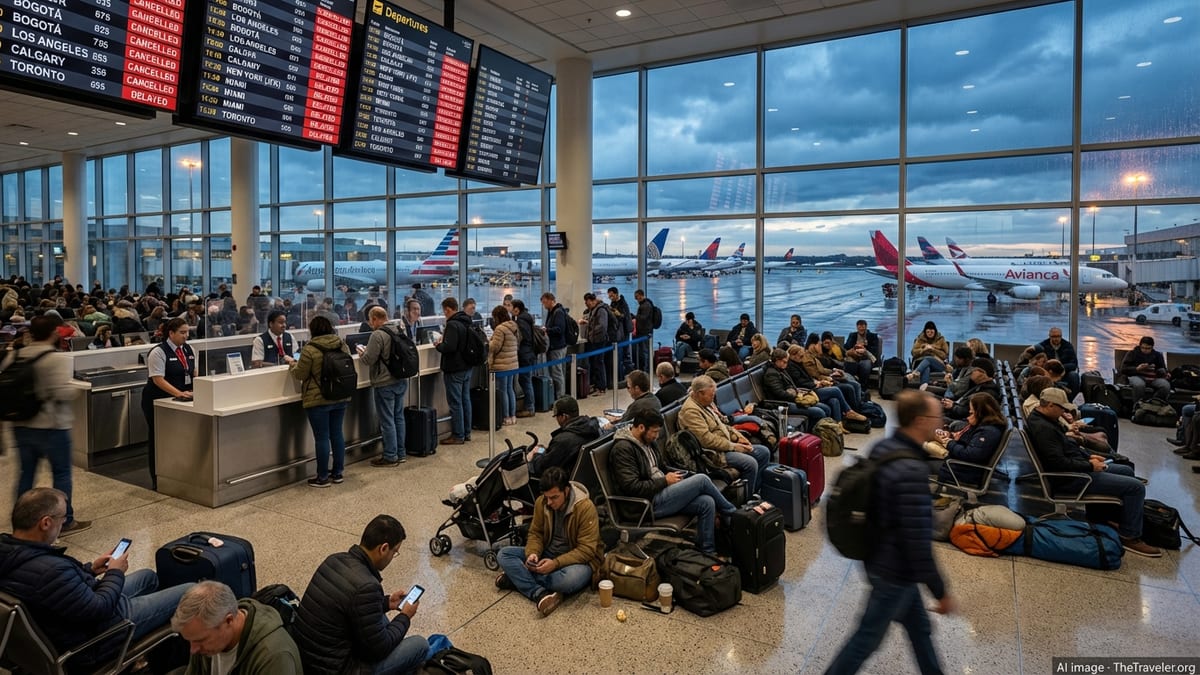
Travellers across Canada faced another difficult day at the country’s airports as 311 flights were delayed and 29 were cancelled, with disruptions concentrated at major hubs in Calgary, Montreal, Halifax, Toronto and Vancouver and affecting operations for Air Canada, WestJet, Porter Airlines, Air Transat and several regional carriers.
Get the latest news straight to your inbox!
Major Hubs See Knock-On Disruptions
Publicly available flight-tracking data for today, April 11, indicates that the bulk of delays and cancellations were clustered at Canada’s largest airports, led by Toronto Pearson and Vancouver International. These hubs, already among the country’s busiest, saw departures and arrivals pushed back throughout the day as airline schedules absorbed earlier knock-on delays.
Toronto Pearson once again emerged as a focal point, with dozens of departures departing behind schedule and a smaller but still significant group of flights cancelled outright. Operations at Vancouver showed a similar pattern, with far more delays than cancellations, suggesting airlines were attempting to keep most of the schedule intact while working within reduced operating margins.
Montreal and Calgary also experienced elevated disruption levels, though with fewer outright cancellations than Toronto and Vancouver. In both cities, the pattern skewed heavily toward delayed rather than scrapped flights, leading to rolling queues at check-in, security and boarding gates as passengers waited out shifting departure times.
Halifax and several other regional airports reported a smaller share of the absolute totals but a noticeable impact relative to their more modest traffic volumes. Even a handful of cancellations at mid-sized and smaller facilities can translate into long waits for rebooking when alternative departures are limited.
Air Canada, WestJet, Porter And Air Transat Among Hardest Hit
Today’s disruption numbers show that the country’s largest carriers bore much of the impact. Air Canada, with its dense network that threads through Toronto, Montreal, Vancouver and Calgary, registered the highest volume of affected flights, with a double-digit number of cancellations and a far larger pool of delayed services across domestic and transborder routes.
WestJet, whose operations are heavily concentrated in western Canada through Calgary and Vancouver, also recorded extensive delays. While fewer of its flights were cancelled compared with Air Canada, the cumulative effect of late departures and arrivals contributed to schedule pressure across the airline’s network, including connections into eastern Canada.
Porter Airlines, which has expanded rapidly from its Toronto City and Ottawa bases into western markets, appeared throughout today’s disruption data as well. Delays on Porter’s short-haul and new longer-haul routes added to congestion at Toronto and Montreal, as tight turnaround times left little room to absorb minor operational setbacks.
Air Transat, more focused on leisure and transatlantic flying, was less numerically prominent but still affected, particularly on services intersecting major hubs where gate and runway congestion slow ground handling. Several regional and niche carriers also appeared in the cancellation and delay tallies, highlighting how quickly strain at major hubs radiates outward into thinner secondary routes.
Weather, Congestion And Tight Scheduling Under Scrutiny
Published coverage and airline operations data suggest a combination of factors behind today’s nationwide disruption. Seasonal weather variations have continued to complicate operations at multiple Canadian airports, with changing conditions affecting runway availability, de-icing requirements and air traffic flow management. Even when conditions are safe to operate, additional spacing between aircraft and longer ground-handling times can erode schedule reliability.
At the same time, Canadian carriers have been operating dense schedules through the winter and early spring, leaving limited slack to recover from early-morning or mid-day irregularities. When a small number of flights depart late from large hubs, aircraft and crew rotations are pushed back throughout the day, leading to the kinds of rolling delays that were visible across Toronto, Vancouver, Montreal and Calgary today.
Industry analysis also points to broader structural pressures in Canada’s aviation system, including high demand on key domestic trunk routes, finite runway capacity at central hubs, and ongoing staffing and resource challenges in parts of the sector. These issues may not be unique to a single day, but they become most visible when combined with adverse weather or technical constraints.
Regulatory reporting from federal agencies shows that, on average, Canadian airports have maintained relatively low cancellation rates in recent months, but that day-to-day fluctuations remain significant. Days like today, where cancellations remain limited but delays spike into the hundreds, underline the difference between flights that are technically operating and journeys that remain predictably on time.
Impact On Travellers Across Domestic And Transborder Routes
The practical effect of 311 delayed flights and 29 cancellations is most sharply felt by passengers navigating last-minute schedule changes, missed connections and extended waits in crowded terminals. With the largest disruptions centered on Toronto, Vancouver, Montreal, Calgary and Halifax, travellers on some of the country’s most heavily used domestic corridors experienced longer travel days and uncertain arrival times.
According to publicly available information from airport operations dashboards, a substantial share of today’s affected flights involved domestic segments linking major Canadian cities, while a smaller but still notable portion related to transborder routes serving destinations in the United States and beyond. When a domestic leg into a hub such as Toronto Pearson or Montreal Trudeau runs late, onward international connections can quickly come into question.
For travellers departing from or bound for smaller communities that rely on single daily connections into these hubs, a cancelled or significantly delayed flight can mean an overnight stay or the loss of an entire travel day. Today’s disruption data show that while smaller airports contributed fewer flights to the national totals, the relative impact per passenger can be greater where alternative lift is limited.
Extended delays also strain airport infrastructure and services, from terminal seating and concessions to baggage handling systems. As aircraft depart late and arrive in compressed waves, baggage delivery and gate availability can lag, prompting further inconvenience even for those whose flights ultimately operate.
What Passengers Can Do On A Disrupted Travel Day
Consumer-rights resources note that, under Canada’s Air Passenger Protection Regulations, travellers may be entitled to assistance or compensation depending on the cause and length of a delay or cancellation, and whether the disruption is within an airline’s control. Documentation such as boarding passes, confirmation emails and written notices of disruption can be important when seeking remedies after a difficult travel day.
Publicly accessible guidance from airlines and airports advises passengers to monitor flight status frequently on days with elevated disruption, using official channels rather than relying solely on static booking confirmations. Many carriers encourage travellers to use mobile apps or online tools to rebook or join standby lists when a delay or cancellation appears likely.
Travel planning experts also stress the value of leaving additional buffer time for connections through Canada’s largest hubs, particularly during seasons where weather-related slowdowns are more common. Booking earlier departures, avoiding very tight minimum connection times and considering flexible tickets where possible can reduce the risk that a single disruption cascades into missed events or non-refundable costs at the destination.
With Canadian airports again grappling with widespread delays and targeted cancellations today, the experience serves as another reminder that even in a high-performing system, travellers benefit from extra preparation and real-time awareness when moving through the country’s busiest air corridors.