

More news on this day
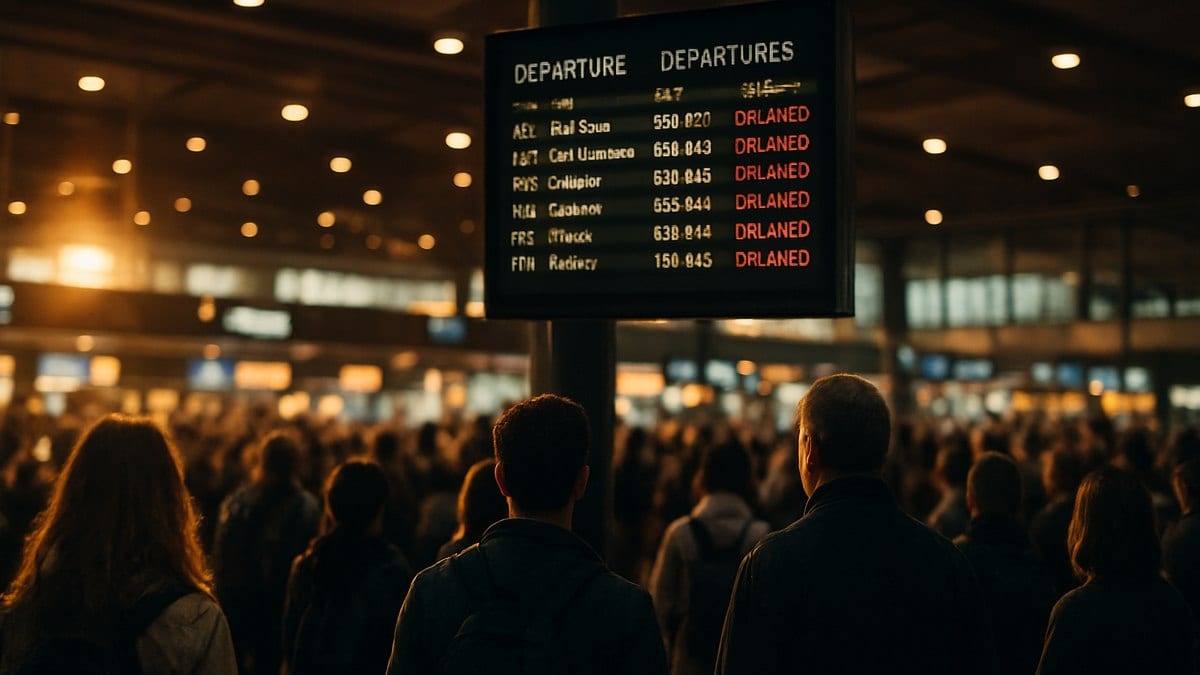
Air travel across Canada faced significant disruption on April 11, as publicly available tracking data showed 311 delayed flights and 29 cancellations nationwide, affecting major hubs and regional airports alike.
Get the latest news straight to your inbox!
Major Canadian Hubs See Knock-on Operational Strain
Tracking platforms and aviation data services for April 11 indicate that the bulk of delays and cancellations were concentrated at Canada’s largest airports, including Toronto Pearson, Vancouver, Montreal Trudeau, and Calgary. These hubs reported the highest volumes of late departures and arrivals, underscoring how even modest schedule disturbances can quickly cascade through tightly timed national networks.
Reports from travel-industry coverage describe a pattern in which flights tended to operate rather than be removed from the schedule, but with departure times pushed back, sometimes by more than an hour. This delay-heavy profile suggests airlines were attempting to preserve connectivity and aircraft utilization while coping with staffing, weather, and congestion pressures across the system.
At Toronto Pearson in particular, earlier April data already showed triple-digit delay counts on busy days, and the situation on April 11 followed a similar trajectory, with late-running services ripple-effecting into onward connections. Comparable patterns were observed at Vancouver and Montreal, where dense banks of domestic and transborder flights left little room in the timetable to absorb disruptions.
Regional and secondary airports, including locations in Atlantic Canada and the North, saw fewer overall flights but sometimes higher ratios of disruption relative to local traffic. A small number of cancellations at these airports had an outsized impact, as passengers often had limited alternative departure times or routings available the same day.
Air Canada, WestJet, Porter and Others Among Most Affected
Published coverage from aviation and travel outlets highlights that multiple carriers were touched by the April 11 disruption figures, with Air Canada and its regional affiliates, WestJet, Porter Airlines, and Air Transat all appearing prominently in delay and cancellation tallies. The mix reflects each airline’s footprint at Canada’s major hubs and the interdependence of their schedules.
Data from recent days show Air Canada and its partners managing a high number of delayed departures while keeping outright cancellations relatively limited compared with the total schedule. WestJet has likewise been contending with rolling delays across key western and transcontinental routes, reflecting ongoing network congestion and aircraft-rotation challenges.
Porter Airlines, which has rapidly expanded jet operations from Toronto and other cities, has also appeared in tracking lists of affected flights on busy days in April. Industry commentary notes that smaller carriers with growing fleets can be especially vulnerable when a single aircraft or crew rotation falls out of place, leaving limited backup capacity.
While precise causes for each individual delay were not detailed in aggregated statistics, recent seasons in Canada have seen a mix of factors, including residual technical issues, staffing constraints, and weather-related air traffic management programs. The April 11 numbers fit into this broader context of a system still operating close to its limits at peak times.
Travelers Confront Missed Connections and Lengthy Waits
The 311 delays and 29 cancellations recorded on April 11 translated into hours of uncertainty for passengers across the country. Missed connections were a particular concern at hub airports, where late inbound flights from regional communities arrived too close to departure times for onward transcontinental or international services.
Reports from consumer forums and travel advisories in recent months show that even delays under two hours can have cascading consequences if travelers are on tight itineraries, especially when evening flights are involved and same-day alternatives are limited. April 11’s disruption profile, skewed toward delays rather than mass cancellations, likely produced a substantial number of rebookings and overnight stays for those with complex routings.
In several recent Canadian and North American disruption episodes, passengers have described long lines at airport service counters and heavy demand on airline call centers as travelers seek new options. While specific anecdotal accounts from April 11 are still emerging, the pattern of high delay counts across multiple hubs suggests similar strains on customer-service channels and airport facilities.
Domestic leisure travelers, business passengers, and international visitors all appear to have been affected by the timing of the disruptions, which spanned morning, afternoon, and evening banks. For some, the impact was limited to a late arrival; for others, the combination of missed connections and limited seat availability turned a routine trip into an overnight or multi-day ordeal.
Regulatory Protections and Passenger Options Under Scrutiny
The April 11 figures come as Canada’s air travel framework continues to attract attention from passengers and advocacy groups. Canada’s Air Passenger Protection Regulations set out compensation and assistance requirements in defined circumstances, particularly when delays or cancellations are within an airline’s control and not caused solely by weather or air traffic control constraints.
Recent public discussions have pointed to recurring confusion over when travelers are entitled to financial compensation, meal vouchers, hotel stays, or rebooking at no additional cost. The mixed causes that typically underlie a day of disruption, such as April 11, can make it difficult for travelers to immediately understand which rules apply to their particular case.
Regulatory proposals under consideration in Ottawa aim to clarify responsibilities and reduce the scope for carriers to classify disruptions in ways that limit compensation. Passenger-rights advocates argue that clearer standards and enforcement could reduce the burden on individuals who currently must navigate complex claims processes after missed vacations, business meetings, or family events.
In practice, experts and consumer groups often advise travelers facing long delays or cancellations to document communications, keep receipts for additional expenses, and submit formal claims under the existing regulations and any applicable international rules. The scale of April 11’s disruptions is expected to translate into a new wave of such claims in the weeks ahead.
Practical Guidance for Navigating Future Disruptions
With April’s statistics underscoring how quickly Canada’s air system can tip into widespread delays, travel specialists recommend that passengers build additional flexibility into their plans whenever possible. This includes allowing longer connection times, especially when changing airlines or terminals, and opting for earlier flights in the day to reduce exposure to rolling late-afternoon and evening disruptions.
Publicly available advisories increasingly emphasize the value of airline mobile applications and direct text or email alerts, which often update faster than gate-area display screens. On heavily affected days like April 11, travelers who receive early notice of likely misconnects sometimes have more options to switch to different flights or routings before seats are fully taken.
For essential trips, some seasoned travelers have turned to refundable fares or robust travel insurance policies that explicitly cover delays and cancellations. While these options can add upfront cost, they may mitigate financial risk when itineraries are disrupted and last-minute alternatives are expensive.
As airlines and regulators review performance data from April 11 and other recent disruption days, industry observers suggest that operational resilience, transparent communication, and clear compensation standards will remain central themes. For passengers, the events of April 11 offer another reminder that even on days without major storms or headline-grabbing outages, Canada’s air travel network can still deliver significant and unpredictable delays.