

More news on this day
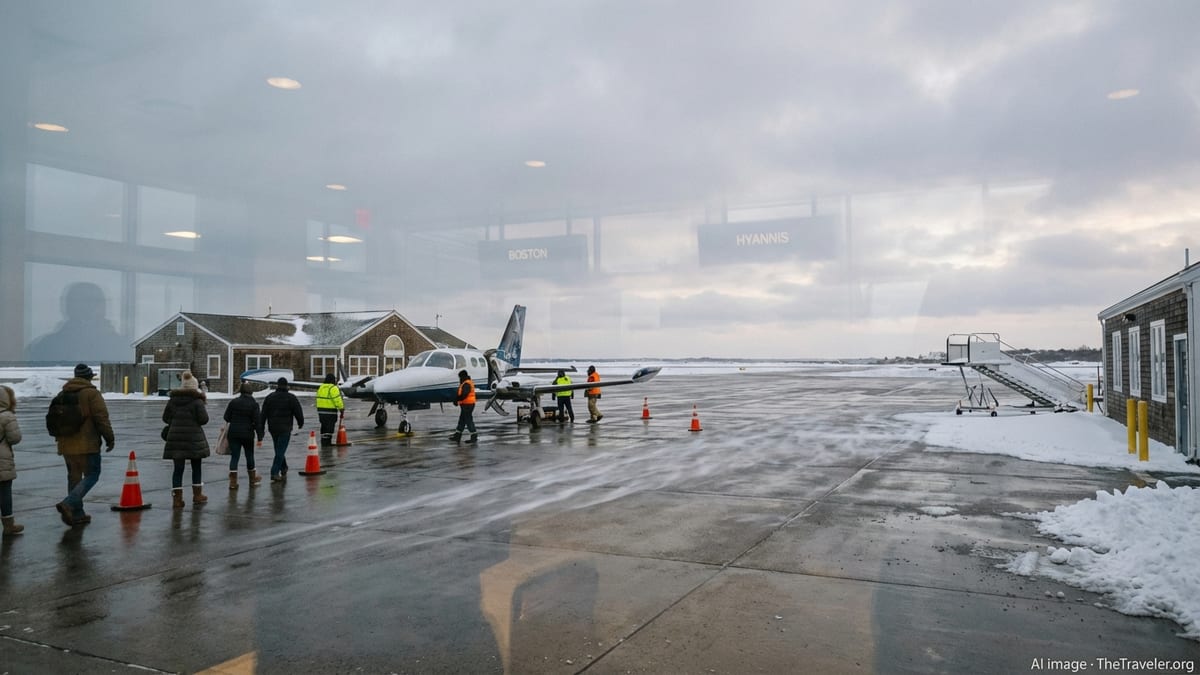
New England’s fragile air travel recovery hit another setback on February 27 as five flight cancellations and three delays at Nantucket Memorial Airport triggered fresh disruptions across Boston Logan International and Barnstable Municipal, stranding island travelers and complicating already stressed regional connections.
Fresh Turbulence in a Fragile Recovery
The latest round of disruptions at Nantucket Memorial Airport comes just days after a historic blizzard crippled air traffic across the Northeast, with Boston Logan still working through residual delays and cancellations. While major hubs have been slowly restoring normal schedules, small island and regional airports remain vulnerable to even modest operational hiccups.
On Thursday, airport and industry data indicated that Nantucket Memorial recorded five cancellations and three delayed departures and arrivals, a relatively small number in national terms but a significant blow for an island heavily dependent on short-haul links to Boston and Hyannis. Many of the affected flights were operated by regional carriers using small turboprop aircraft to connect passengers to larger networks at Boston Logan and Barnstable Municipal in Hyannis.
Passengers already juggling rebookings from earlier in the week found themselves facing another round of schedule changes, overnight stays and missed onward connections. With winter weather still lingering offshore and airline operations tightly compressed after the storm, there was little slack left in the system to absorb fresh disruptions.
While federal aviation data showed no ongoing ground stop or large-scale FAA program in effect for Nantucket, the combination of residual weather, aircraft positioning issues and crew time limits left airlines with few options other than cancelling or delaying services.
Ripple Effects on Boston Logan and Barnstable Municipal
The cancellations at Nantucket quickly echoed along the short but strategically important routes linking the island to Boston and Hyannis. At Boston Logan, where carriers have been gradually rebuilding schedules after earlier mass cancellations, Thursday’s missed and delayed island flights complicated the task of reconnecting travelers onto long-haul services throughout the United States and Canada.
Regional operators serving Cape Cod and the islands routinely bank multiple connecting flights through Logan, meaning a single scrubbed departure from Nantucket can cascade into missed connections for passengers booked onward to Chicago, New York, the West Coast and beyond. Airline staff at Logan reported a familiar scene of rebooked itineraries and passengers queueing at customer service counters as they sought alternative routes around the latest disruption.
Barnstable Municipal Airport in Hyannis, which has itself faced elevated levels of cancellations this week, also felt the strain. The airport functions as a key backup and redistribution point when island services falter, absorbing displaced travelers who shift to ferries or rerouted flights. With Hyannis operators still managing their own backlog from earlier days of heavy disruption, even a handful of additional affected Nantucket flights added to gate pressure and customer handling demands.
Local tourism officials warned that while the raw numbers of affected flights might appear modest, the intertwined nature of Cape and islands air service amplifies the impact. A canceled turboprop run between Nantucket and Hyannis, for example, can strand dozens of travelers who had been relying on tight same-day connections to Boston and beyond.
Passengers Face Renewed Stress on Island Routes
For travelers at Nantucket Memorial, the latest cancellations and delays produced a sense of deja vu after a week dominated by shifting schedules. Families, commuters and second-home owners arrived at the compact terminal to find departure boards flickering with revised times and, in several cases, outright cancellations.
Airport staff and airline agents worked to rebook travelers onto later departures or alternative routings through Boston, Hyannis or, in some cases, ferry services to the mainland. However, with aircraft utilization running near maximum and crew schedules tightly constrained after days of weather-related disruption, available seats remained scarce on popular morning and late afternoon departures.
Some passengers opted to extend their stays on Nantucket rather than risk uncertain connections further down the line, particularly those facing international departures out of Boston. Others scrambled to secure last-minute accommodation on Cape Cod after being rerouted through Hyannis, adding unplanned costs to already expensive winter travel.
Travel advisors recommended that passengers booked on Cape and islands routes build in extra buffer time for connections and monitor flight status closely on a day-of-travel basis, especially while airlines continue to reposition aircraft and crews in the wake of the recent storm systems.
Airlines and Authorities Work to Stabilize Operations
Regional airlines operating into Nantucket and Barnstable have been adjusting schedules, consolidating lightly booked flights and deploying additional staff at key times of day in an effort to stabilize operations. While the core of the week’s chaos was driven by the February blizzard, carriers now face the slower work of restoring reliable patterns on some of New England’s most weather-sensitive routes.
Industry analysts note that island airports like Nantucket Memorial are particularly exposed during recovery phases. Limited runway capacity, small terminal footprints and a heavy reliance on turboprop fleets leave little room for error when weather or operational issues arise. Even minor mechanical problems can take an aircraft out of rotation for an entire day, triggering follow-on cancellations along its route network.
Airport officials emphasized that safety remains the overriding priority and that conservative decisions on deicing, visibility thresholds and crew duty limits are non-negotiable despite passenger frustration. They added that coordination with Boston Logan and Barnstable Municipal has been stepped up, with regular calls aimed at aligning schedules, gate availability and ground handling capacity across the three airports.
Transportation authorities are also using the episode as another data point in broader conversations about regional resilience. With New England’s air network increasingly strained during extreme weather events, local leaders are weighing investments in upgraded deicing infrastructure, improved terminal space and more flexible contingency planning for the Cape and islands.
Outlook for Travelers in the Days Ahead
Forecasts for the coming days suggest gradually improving conditions across coastal Massachusetts, offering hope that the latest turbulence at Nantucket Memorial will prove short-lived. Airlines have indicated that they expect to restore most scheduled services as aircraft and crews are fully repositioned, though isolated delays remain likely, particularly on early morning and late evening departures.
For travelers planning to fly between Nantucket, Boston and Hyannis, industry experts advise treating schedules as fluid rather than fixed. Checking in online as early as possible, signing up for airline alerts and maintaining flexible ground plans on either end of a journey can help mitigate the impact of last-minute changes.
Travel planners also point out that winter ferry services, while weather dependent in their own right, remain an important backup option when air links are unstable. Coordination between ferry operators, ground transport and regional airports has improved in recent years, giving passengers more multimodal choices when conditions deteriorate.
As New England’s aviation sector continues to recover from one of its most challenging winter stretches in recent memory, the situation at Nantucket Memorial Airport underscores how quickly localized disruptions can ripple through the broader U.S. travel system, especially where small island communities and regional hubs intersect.