

More news on this day
Flights into and out of five major airports serving Washington, D.C., Baltimore and parts of Virginia were briefly halted Friday evening after a strong chemical odor was reported at an air traffic control facility that manages traffic across the region.
Get the latest news straight to your inbox!
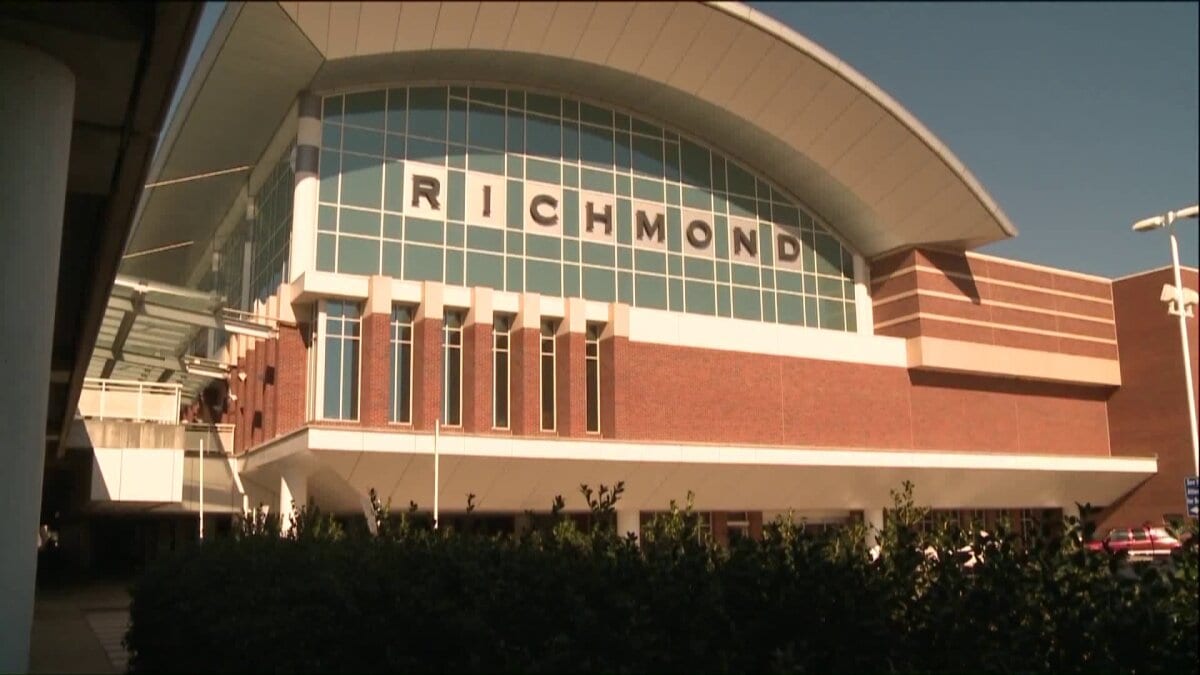
Image by wtvr.com
Regional Ground Stop Hits RIC and Other Major Hubs
According to published coverage, the disruption began Friday evening when operations at the Potomac TRACON, a terminal radar approach control center in Northern Virginia, were affected by what was described as a strong chemical smell. The facility directs arriving and departing traffic for several of the busiest airports in the Mid-Atlantic.
Publicly available information shows that the Federal Aviation Administration temporarily halted traffic at Ronald Reagan Washington National, Washington Dulles International, Baltimore-Washington International Thurgood Marshall, Charlottesville-Albemarle, and Richmond International Airport. The pause affected both arriving and departing flights, leading to knock-on delays across airline networks.
Initial reports indicate that flights were held on the ground and some arrivals were placed into airborne holding as controllers adjusted to the interruption. Airlines began issuing delay notices through their apps and websites as the scope of the ground stop became clear to passengers already at the airport.
Within a short period, controllers reportedly began returning to their positions at the Potomac TRACON and the ground stop was lifted, allowing operations to resume. However, residual delays continued into the evening as carriers worked through the backlog of flights.
What Is Potomac TRACON and Why It Matters
The incident drew attention to the pivotal role of the Potomac TRACON in East Coast air travel. The facility manages approach and departure flows for airports that include Reagan National, Dulles, Baltimore-Washington, and several smaller fields in Virginia and surrounding states, making it a critical node in the region's aviation infrastructure.
Unlike airport control towers, which handle traffic on the ground and in the immediate vicinity of runways, a TRACON facility sequences aircraft in the wider terminal area, managing climb and descent paths and ensuring safe separation as planes funnel into busy corridors. Any disruption at such a facility can quickly ripple across multiple airports served by the same radar and communications systems.
Published descriptions from the Federal Aviation Administration emphasize that TRACON facilities are designed with significant redundancy, including backup systems and contingency procedures for staff relocation. Even so, incidents involving unusual odors or suspected chemical exposure can trigger immediate safety protocols that require controllers to leave their work areas.
In this case, reports indicate that the odor was strong enough to prompt a temporary halt to operations while assessments took place. Once personnel were cleared to return and equipment was verified as safe, normal traffic levels began to recover.
Passenger Impact from Richmond to Baltimore
The timing of the ground stop, during a busy Friday evening travel period, amplified the disruption for passengers across the affected airports. Public updates from airport operators pointed to a mix of delayed departures, late arrivals, and gate changes as airlines worked to realign schedules.
At Richmond International Airport and Charlottesville-Albemarle Airport, the pause in regional air traffic meant that some short-haul flights were held, while connections to larger hubs faced cascading delays. Travelers heading to and from Washington and Baltimore reported longer waits at gates and on taxiways as the system slowly restarted.
Airport communications channels urged passengers to monitor flight status closely and to expect residual delays even after the formal ground stop ended. Industry experience shows that when multiple airports in a shared control area slow down at once, aircraft and crews often end up out of position, affecting operations for several hours.
Despite the disruption, initial accounts did not indicate any injuries, and the interruption was relatively short compared with previous large-scale system outages. For many travelers, however, even a brief halt translated into missed connections and late-night arrivals.
Second Odor-Related Disruption in the Same Facility
According to recent coverage, this was not the first time in March that a chemical smell at the Potomac TRACON interfered with air traffic. Earlier in the month, a similar incident led to a shorter ground stop affecting some of the same airports, including those serving Washington, Baltimore and Richmond.
Publicly available information from that earlier episode indicated that the odor was ultimately traced to an overheated circuit or related electrical component, which was replaced. Firefighters and safety personnel examined the facility before controllers fully resumed normal duties.
The recurrence of odor-related disruptions within a single month has prompted renewed scrutiny of the facility's infrastructure and environmental controls. Aviation analysts note that while such issues are rare compared with weather or staffing disruptions, they highlight the sensitivity of air traffic operations to any potential safety concern in the control environment.
Regulators and facility managers are expected to review maintenance records, air-handling systems and recent work in the building to determine whether there are underlying problems that could lead to further interruptions.
Context Within a System Already Under Pressure
The brief shutdown in the Washington and Virginia region comes at a time when the national air traffic system faces continued strain from high travel demand, staffing challenges and a series of recent safety-related incidents. Earlier in the week, operations at Newark Liberty International Airport were temporarily paused after a burning smell in its control tower led controllers to evacuate to a backup facility.
In addition, the system has experienced several high-profile disruptions in recent years, including a nationwide halt to departures in 2023 after a critical safety-notice system failed. While the latest incident at the Potomac TRACON was far smaller in scale, it underscores how even localized technical or environmental issues can quickly affect travelers across multiple states.
Aviation safety specialists note that conservative decision-making is central to air traffic control procedures, especially when there is any indication of unusual fumes or possible chemical exposure in a confined workspace. Temporarily slowing or stopping traffic is treated as a necessary step to protect personnel who are essential to safe flight operations.
For passengers at Richmond, Washington, Baltimore and Charlottesville, the episode translated into another reminder of the complexity behind daily air travel and the cascading effects that can follow a problem at a single control facility, even when the interruption lasts less than an hour.