

More news on this day
Flight operations across the Baltimore and Washington region began recovering Friday night after the Federal Aviation Administration lifted a ground stop that had temporarily halted departures to and from Baltimore/Washington International Thurgood Marshall Airport and several nearby airports.
Get the latest news straight to your inbox!
Ground Stop Ends After Chemical Odor Forces Precaution
According to published coverage, the disruption began Friday evening, March 27, when airports serving the U.S. capital region briefly halted flights because of a strong chemical odor reported at the Potomac Terminal Radar Approach Control facility, known as Potomac TRACON. The center manages approach and departure traffic for much of the mid Atlantic, including Baltimore/Washington International Thurgood Marshall Airport, Ronald Reagan Washington National Airport and Washington Dulles International Airport.
Reports indicate the Federal Aviation Administration implemented a ground stop that affected traffic at BWI-Marshall as well as Reagan National, Dulles, Charlottesville-Albemarle Airport and Richmond International Airport. A ground stop is a traffic management measure that temporarily prevents flights from departing for affected airports, allowing air traffic managers to resolve a safety or operational issue before accepting additional arrivals.
Publicly available information shows that the odor prompted an evacuation of the Potomac TRACON facility while the situation was assessed, effectively pausing much of the region’s approach control capability. With controllers temporarily unable to work in the building, the FAA limited operations until staffing and systems could be restored.
By later in the evening, the ground stop was lifted at the affected airports. BWI-Marshall confirmed via its official social media channels that the FAA action impacting flights to and from the airport had ended, while cautioning that passengers should continue to expect delays.
Impact on BWI-Marshall and Nearby Airports
The lifting of the ground stop allowed airlines at BWI-Marshall to resume departures and accept inbound flights, but ripple effects spread through schedules for the rest of the night. According to flight tracking data and airline status pages, some aircraft remained out of position and departure banks were compressed into a shorter operating window, leading to continued delays.
Travelers at the airport reported extended waits on board aircraft and in terminal gate areas during the pause in operations. Similar scenes played out at Washington Reagan National and Dulles, where flights queued for takeoff slots once the FAA began releasing departures again. Regional airports in Charlottesville and Richmond also experienced temporary suspensions followed by gradual recovery.
Published reports note that some flights were canceled outright when it became clear that scheduled departures would push into crew duty limits or conflict with overnight curfews at destination airports. For passengers, that translated into same-day itinerary changes, rebookings into the weekend and, in some cases, unexpected overnight stays.
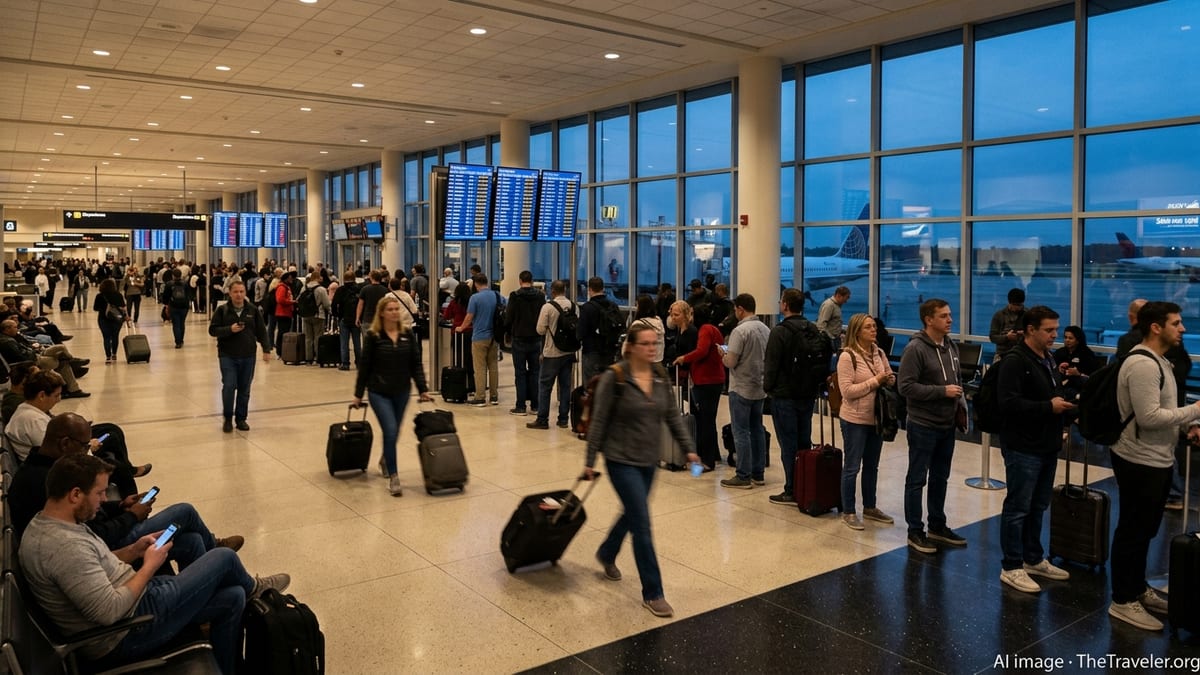
Airport information boards at BWI-Marshall on Friday evening showed clusters of delayed flights across multiple carriers. Even after the ground stop ended, residual congestion in the airspace and on airport ramps meant that operations did not immediately return to normal flow.
What Travelers Can Expect Through the Weekend
While the immediate halt to flights has ended, publicly available information suggests travelers using BWI-Marshall and other Washington-region airports should plan for lingering disruption into Saturday, March 28. Airlines typically require several hours and multiple flight cycles to fully recover from a sudden, systemwide pause.
Carriers are expected to prioritize restoring mainline domestic routes and key connections from BWI-Marshall to major hubs, followed by regional services and late-evening frequencies. Some overnight aircraft repositioning may reduce the number of early-morning cancellations, but the first wave of departures often reveals how quickly the network is stabilizing.
Travel industry guidance commonly recommends that passengers departing within 24 hours of a major operational event monitor their airline’s app or website closely and enable flight alerts. Given the recent ground stop, travelers heading to BWI-Marshall, Reagan National, Dulles, Charlottesville or Richmond are likely to benefit from checking their flight status before leaving for the airport and allowing additional time for security screening and boarding.
For those making tight connections through BWI-Marshall, same-day flexibility may be limited on popular routes if earlier flights have already absorbed disrupted passengers. Rebooking options may improve later in the weekend as aircraft and crew rotations normalize.
Safety Systems and Recent Pattern of Disruptions
The incident underscores the central role of regional air traffic control facilities such as Potomac TRACON in managing dense corridors of East Coast air traffic. When approach control centers encounter issues involving safety, staffing or equipment, standard procedure calls for slowing or suspending traffic until those concerns are resolved.
According to previous coverage earlier in March, airports in the same region experienced a similar interruption tied to a chemical odor at the Potomac TRACON building, which also led to a temporary ground stop that was lifted after flight operations were deemed safe to resume. The latest event on March 27 fits into a broader pattern of precautionary pauses that prioritize controller safety and system integrity, even at the cost of short-term disruption for travelers.
Industry analysts note that ground stops, while inconvenient, are a well established tool used by the FAA to manage unexpected situations ranging from severe weather to technical outages and localized incidents inside air traffic facilities. The goal is to avoid compounding an already constrained situation with additional arriving flights that cannot be safely sequenced or supported.
For BWI-Marshall, which serves as a major base for low cost carriers and an important gateway for both business and leisure travel in the mid Atlantic, even brief interruptions can affect tens of thousands of passengers. The quick lifting of the latest ground stop, however, suggests that the underlying issue was contained within hours.
Advice for Passengers Traveling Through BWI-Marshall
Given the likelihood of residual delays, travelers using BWI-Marshall over the next day are likely to have the smoothest experience if they arrive early, travel with carry on baggage when possible and maintain real time access to airline updates. Most carriers continue to encourage customers to use digital boarding passes and self service tools to adjust itineraries when disruptions occur.
Publicly available guidance from airlines indicates that some carriers may offer limited fee waivers or flexible rebooking options when operational events significantly affect a region, particularly for passengers scheduled to travel on the day of the disruption. Terms vary by airline and fare type, so passengers are encouraged to review conditions carefully.
For arriving passengers, ground transportation at BWI-Marshall, including ride share pickups, parking shuttles and regional rail connections, can also see short surges as multiple delayed flights arrive in quick succession. Allowing extra time to reach final destinations, particularly late at night, can help account for these bottlenecks.
While the FAA ground stop at BWI-Marshall and neighboring airports has now been lifted, the episode highlights how quickly regional travel plans can be upended by localized issues in the aviation system. For many passengers across the Baltimore and Washington area, the focus now shifts from waiting out the halt in flights to navigating a gradual return to more predictable schedules.