

More news on this day
Flight operations at Istanbul’s Sabiha Gokcen International Airport are gradually returning to normal after severe weather on March 29 triggered mass cancellations, diversions and delays across the busy low-cost hub.
Get the latest news straight to your inbox!
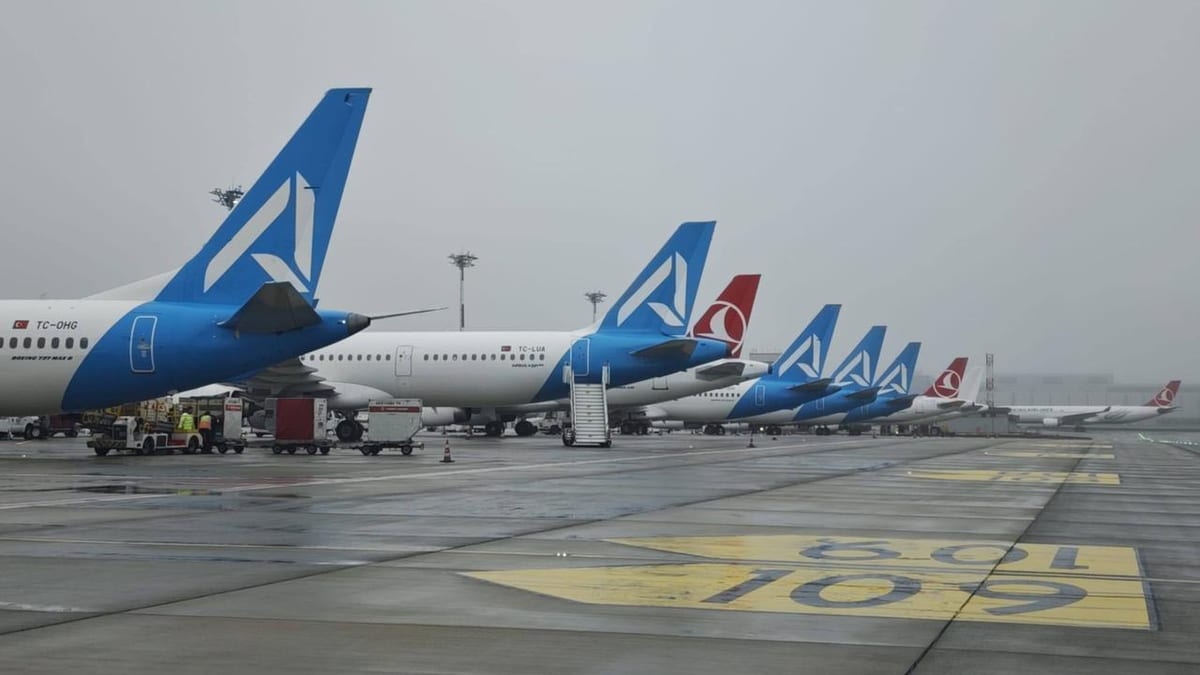
Image by Türkiye Today
Operations Restart After Widespread Cancellations
Published reports indicate that heavy rain and reduced visibility around Istanbul on March 29 led to extensive disruption at Sabiha Gokcen, with more than one hundred departures and arrivals affected. Many aircraft were unable to land on schedule and were forced to circle or divert, placing additional pressure on the city’s wider air network.
By March 30, traffic data and airport information show that arrivals and departures were once again operating from the airport, although on a reduced and delayed basis as airlines worked through the backlog of displaced aircraft and passengers. The shift marks a transition from crisis management toward recovery, with schedules inching back toward regular patterns through the day.
While the worst of the weather has passed, residual delays remain common, particularly on routes that experienced multiple rotations of cancellations. For travelers, this means flights are generally running again but not always at their originally advertised times, and last minute gate or time changes are still possible.
The return of flights is particularly significant at Sabiha Gokcen, which serves as a major base for low-cost carriers and handles millions of point-to-point passengers every month. Any prolonged stoppage quickly ripples across regional networks in Europe, the Middle East and domestic Turkish routes.
Low-Cost Carriers Lead Recovery Efforts
According to coverage in Turkish media, carriers such as Pegasus Airlines and AJet were among the hardest hit by the disruption, with dozens of flights canceled or rerouted at the height of the weather event. Timetables for popular domestic links, including services to Antalya and other coastal destinations, as well as several international routes, were temporarily pulled from schedules.
As visibility improved and airspace capacity increased, updated schedules show these airlines gradually restoring operations from Sabiha Gokcen. Early recovery has focused on core domestic routes and high-demand international connections, enabling aircraft and crews to be repositioned efficiently and helping to reconnect passengers stranded by the earlier shutdown.
The knock-on effects of the cancellations are likely to persist for at least several rotations, as aircraft displaced to other airports work their way back into normal patterns. Some flights have been retimed or consolidated, and a limited number of services remain canceled as airlines balance aircraft availability, crew duty limits and demand.
Travelers booked on low-cost carriers are being urged through public advisories and airline updates to monitor their flight status closely on the day of departure. Even with operations resumed, day-of-travel flexibility remains important while schedules stabilize.
Passengers Face Backlogs and Rebooking Challenges
The sudden wave of cancellations created large backlogs of passengers at Sabiha Gokcen and at alternate airports where flights had been diverted. Publicly available reports and passenger accounts describe long queues at service desks, with many travelers needing new connections, overnight accommodation or refunds after missed onward journeys.
As flights resume, airlines are prioritizing rebooking for those stranded, filling the first available seats on operating services. However, on busy domestic and regional routes, limited spare capacity has made it difficult to accommodate every disrupted traveler immediately, particularly for groups and those tied to fixed itineraries.
Travel guidance from consumer advocates in Turkey and across Europe emphasizes that passengers should retain documentation of delays, diversions and additional expenses such as accommodation or ground transport. Depending on the ticket type, route, and applicable regulations, travelers may be entitled to refunds or assistance, although adverse weather is often categorized as an exceptional circumstance for compensation purposes.
With operations normalizing, same-day stand-by options and voluntary date changes may become easier to secure, especially where airlines are adding capacity or upgauging aircraft on certain routes to clear the backlog. Still, those with tight onward plans or nonrefundable arrangements should expect some continued disruption in the short term.
What Travelers Should Expect Over the Next 24–48 Hours
For passengers flying into or out of Sabiha Gokcen over the next one to two days, flight tracking data and airline statements point to a pattern of near-normal operations overlaid with pockets of irregularity. Most scheduled flights are expected to operate, but minor delays remain common, and a small number of services may still be canceled or retimed at short notice.
Travelers are advised in public information notices to arrive at the airport with extra time, especially for international departures, given the potential for longer queues at check-in and security as rebooked passengers converge on peak departures. Allowing additional buffer time for ground transport in Istanbul’s often congested traffic is also prudent.
In addition, weather-related disruptions can have cascading effects along an aircraft’s entire route. A delay on an early morning rotation from Sabiha Gokcen can translate into late departures later in the day at outstations, impacting travelers who may not realize their flight is linked to the Istanbul operation.
Those booking new tickets in the immediate aftermath of the disruption may find some routes temporarily busier or priced higher due to limited remaining inventory and the need to accommodate previously disrupted passengers. Flexibility in travel dates or times can help secure more options while the network resets.
Renewed Focus on Resilience at Istanbul’s Second Airport
The weather disruption and rapid recovery at Sabiha Gokcen have renewed attention on the resilience of Istanbul’s second airport, which plays a crucial role in Turkey’s aviation system. Traffic and performance statistics published by the airport operator and regional air traffic authorities already highlight tight capacity during peak hours, making operations particularly sensitive to temporary constraints such as low visibility or intense rainfall.
Analysts note that over recent years Sabiha Gokcen has consistently ranked among Europe’s more delay-prone large airports, in part due to its heavy reliance on point-to-point low-cost traffic and a dense schedule of short- and medium-haul flights. When weather restricts runway movements or forces holding patterns, delays can build quickly and are more difficult to absorb.
In response to repeated episodes of disruption driven by adverse conditions, public discussions in Turkey have increasingly focused on the need for continued investment in air traffic management tools, surface infrastructure and contingency planning. The latest weather event is likely to feed into that conversation, particularly as airlines and passengers review performance data from the weekend.
For now, with flights again taking off and landing, the immediate priority for Sabiha Gokcen and its airline partners is to move passengers to their destinations and clear the backlog. How the lessons from this disruption are applied may shape how resilient the airport proves to future bouts of severe Istanbul weather.