

More news on this day
Air travel across parts of the Middle East and South Asia is facing a fresh wave of cancellations and reroutings, as airports in the United Arab Emirates, Egypt and Afghanistan adjust operations amid an escalating regional crisis that has disrupted key air corridors and triggered rolling airspace restrictions.
Get the latest news straight to your inbox!
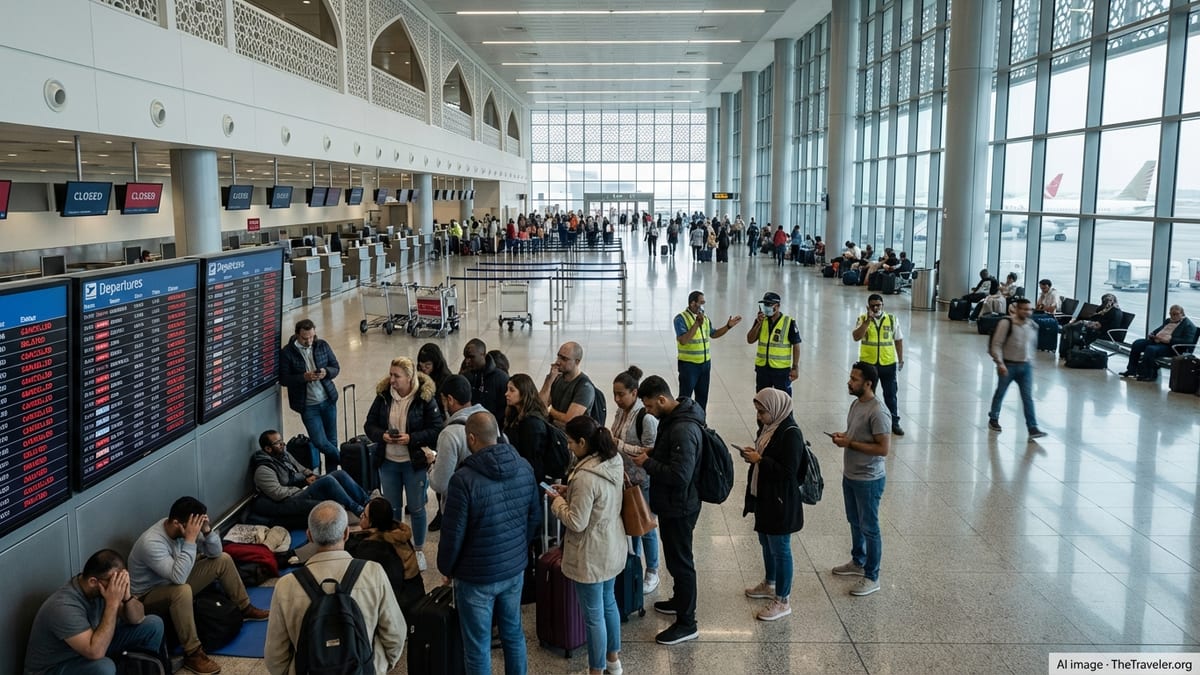
UAE Hubs Cut Schedules as Conflict Spills Into the Skies
Major airports in the United Arab Emirates remain at the center of the disruption, with Dubai and Abu Dhabi recording repeated waves of cancellations and delays since late February. Regional reporting describes how temporary airspace closures and missile and drone interceptions around the Gulf have forced airlines to thin out schedules, consolidate services and continue operating under revised flight plans.
Coverage of recent operations indicates that Emirates, flydubai and other carriers are still flying reduced networks relative to pre crisis levels, even as some services have resumed following earlier blanket suspensions. Public advisories highlight that passengers booked through the end of April are being offered fee free rebooking options or refunds, underscoring how planners expect instability to persist well into the spring travel period.
Specialist aviation assessments show that Dubai International and Zayed International in Abu Dhabi have repeatedly appeared among the hardest hit hubs during peak phases of the crisis, with hundreds of delays and dozens of outright cancellations in some 24 hour periods. Travel advisories compiled in recent days continue to list canceled services on routes linking the UAE to Bahrain, Kuwait and several Egyptian cities.
Security and risk bulletins for corporate travelers also point to a pattern of intermittent airspace restrictions across the Emirates, with missile and drone activity reported in recent weeks and at least temporary closures to civilian traffic. These interruptions have amplified knock on effects across airline networks that depend on UAE hubs as critical east west transfer points.
Egypt Balances Cancellations With Role as Detour Corridor
Egypt’s aviation sector has been pulled in two directions by the unfolding crisis. On one hand, EgyptAir and other operators have canceled or suspended a series of flights to Gulf and Levant destinations since late February as airspace along traditional routes became constrained. Notices to customers outline a rolling window of cancellations stretching from late February through late April, with passengers urged to check bookings and seek alternative dates where possible.
At the same time, Egyptian airports have emerged as important detour corridors for international traffic seeking to avoid the most heavily impacted airspace. Recent coverage describes Cairo and other airports receiving diverted flights after neighboring countries restricted or halted operations, turning Egypt into an alternate bridge between Europe, Africa and Asia even as some of its own regional services are scaled back.
Senior figures in Egypt’s civil aviation sector have acknowledged that the region is experiencing one of its most serious aviation disruptions in years, with thousands of flights reportedly canceled daily at the height of the crisis. Publicly available information indicates that authorities and operators are maintaining heightened readiness to reroute aircraft, adjust schedules or expand transit capacity as conditions shift.
For travelers, this dual role means that Egypt may simultaneously appear as a source of cancellations on certain Gulf bound routes and a relative haven for long haul connections. Industry analysis suggests that flexibility on routings, dates and even departure airports inside Egypt is becoming essential for passengers seeking to keep itineraries intact.
Afghan Airspace Disruptions Add to Regional Complexity
While immediate missile and drone activity has focused on Gulf states and the eastern Mediterranean, Afghanistan’s already fragile aviation environment has also been affected. International guidance on Kabul’s flight information region instructs airlines to exercise particular caution, with decisions on whether to overfly Afghan territory left to individual operators’ risk assessments.
The latest regional crisis has reinforced concerns about relying on Afghan airspace as a transit shortcut between Europe and South or East Asia. Commercial routing data and aviation advisories indicate that a growing number of carriers continue to favor longer detours around Afghanistan, contributing to extended flight times, higher fuel costs and in some cases the cancellation of marginally profitable services.
In recent weeks, these constraints have intersected with broader disruptions emanating from the Gulf and Levant, tightening the available corridors for east west traffic. As a result, operational planners face a more complex puzzle, with several historically important overflight zones in and around Afghanistan subject to elevated risk ratings, special procedures or avoidance recommendations.
For passengers whose journeys involve Afghan airports directly, contingency plans have become more limited. With relatively few international carriers serving the country even before the current crisis, any suspension or rerouting by a major airline can leave travelers facing prolonged waits for rebookings or circuitous journeys through third country hubs.
Ripple Effects for Global Networks and Travellers
The combination of cancellations in the UAE, Egypt and Afghan airspace is being felt far beyond the immediate region. Travel industry analysis compiled over recent days points to several dozen outright cancellations and hundreds of delays in a single 24 hour snapshot across key hubs including Dubai, Abu Dhabi, Cairo and Jeddah, with knock on effects at airports in Europe and Asia.
Reports from specialist travel outlets describe how a single canceled departure in the Gulf can cascade through airline rosters, disrupting connections to cities as far flung as Paris, Amsterdam, Kuala Lumpur and Nairobi. With many carriers still operating trimmed schedules, the margin for absorbing such shocks has narrowed, meaning that passengers often face overnight layovers or multi day rebookings when flights are canceled.
Industry commentaries also note that cargo flows are being caught up in the same web of disruption. Rerouted freighter flights, longer detours and temporary suspensions are adding time and cost to shipments that typically transit through UAE and Egyptian hubs, with logistics providers warning of potential delays for high value and time sensitive goods.
Airlines are responding with a mix of schedule cuts, aircraft swaps and alternative routings designed to keep as many corridors open as safety and economics allow. However, planners concede in public statements and advisories that significant uncertainty remains, particularly if the regional security situation deteriorates again or if airspace closures are reimposed with little notice.
What Passengers Should Expect in the Coming Weeks
For travelers with upcoming itineraries touching the UAE, Egypt or Afghanistan, publicly available guidance from airlines and travel risk consultancies converges on a single message: expect change. Schedules that appear confirmed today may be subject to last minute adjustments, as operators continue to react to shifting security assessments and regulatory decisions.
Many major carriers serving the region have introduced flexible booking policies for travel through at least the end of April, allowing date changes or refunds in cases where flights are canceled or significantly rerouted. Passengers are being urged in advisories to monitor their reservations closely, rely on official airline channels for status updates and build in extra time for connections when possible.
Analysts suggest that travelers may wish to favor routings that avoid the most constrained airspace where alternatives are available, even if that means accepting longer journey times or unconventional connection points. In particular, services via relatively less affected hubs on the fringes of the crisis zone may offer a more reliable, if less direct, path.
While there are tentative signs of stabilization in some parts of the regional network, the scale of the cancellations already recorded across the UAE, Egypt and Afghan airspace, together with the broader geopolitical backdrop, point to a protracted period of elevated disruption. For now, flexibility and real time information remain the most valuable tools for anyone planning to fly through this volatile part of the world.