

More news on this day
Travelers moving through Dallas–Fort Worth International Airport on April 11 faced a challenging day, as publicly available tracking data pointed to six cancellations and 197 delays affecting a mix of domestic and international services, including flights to Canada, the United Kingdom and Germany.
Get the latest news straight to your inbox!
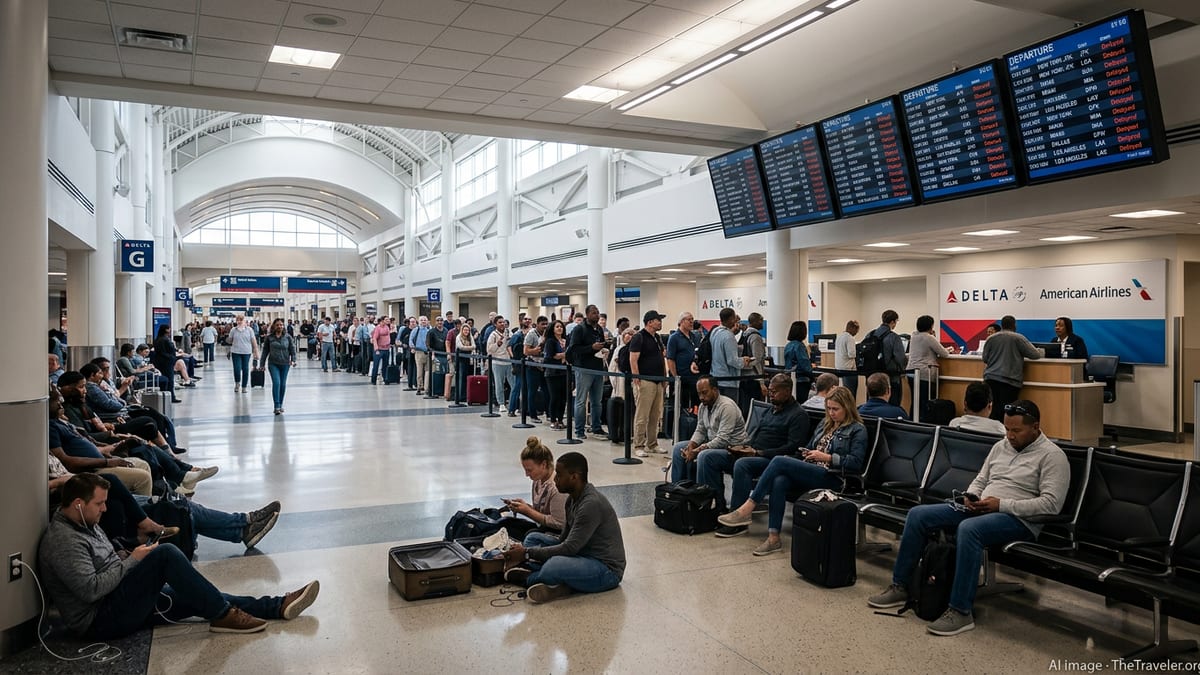
Operational Disruptions Slow Traffic Through DFW
By early evening on April 11, Dallas–Fort Worth International Airport had emerged as one of Texas’s most disrupted hubs, with aggregated flight status data indicating six cancellations and 197 delays for services within, into or out of the airport. The figures placed DFW among a cluster of U.S. airports experiencing widespread schedule problems that day, as national totals climbed into the thousands of delayed flights.
Reports indicate that the disruption at DFW was driven by a familiar combination of operational constraints and broader network pressure. Tight aircraft rotations, crew availability challenges and residual weather impacts elsewhere in the country all contributed to departures leaving late and arriving out of sequence, straining the airport’s carefully choreographed schedule.
The knock-on effect was immediately visible across departure boards. Short-haul domestic services that feed DFW’s role as a national connecting hub were among the most affected, with delays compounding as aircraft cycled through multiple cities. Passengers reported extended waits at gates and longer-than-usual lines at rebooking counters as airlines worked to absorb the disruptions.
While six cancellations may appear modest compared with the volume of delays, each scrubbed flight removed critical capacity from an already tight system. With many routes operating near full loads during the spring travel period, even a handful of cancellations translated into hundreds of travelers vying for limited seats on later departures.
Major Carriers Hit: Spirit, Delta, Lufthansa and More
Among the airlines most visible in the disruption at Dallas–Fort Worth were Spirit Airlines and Delta Air Lines, alongside European carrier Lufthansa and several other domestic and international operators. Publicly available industry coverage for the same travel period shows that Spirit and Delta were already contending with elevated delay and cancellation levels across the United States, leaving little slack when schedules tightened at a major hub like DFW.
Spirit, which runs a lean, high-utilization model, has drawn attention in recent months for how quickly localized issues can cascade into broader network delays. When a single aircraft or crew falls out of position, subsequent flights on that routing often incur knock-on delays, a pattern that appeared again in Texas as the day progressed. For travelers at DFW, this meant that even flights still listed as operating could depart significantly behind schedule.
Delta, with a larger and more diversified fleet, also appeared in delay tallies associated with Dallas–Fort Worth and other Texas airports. Network monitoring on April 11 pointed to Delta coping with hundreds of late departures nationwide, suggesting that bottlenecks at crew bases and congestion at other hubs contributed to the difficulties passengers experienced in North Texas.
Lufthansa’s presence in the DFW disruption came against the backdrop of ongoing operational strain in Germany. Published reports on April 11 described cabin crew walkouts and related industrial actions that disrupted hundreds of Lufthansa services at Frankfurt and other German airports. Those issues reverberated outward, with late-arriving aircraft and crew rotations in Europe complicating transatlantic schedules, including services touching Dallas–Fort Worth.
Transatlantic and Canada Links to London, Frankfurt and Toronto Affected
Although the majority of the 197 delays at DFW involved domestic flights, long-haul and near-international connections were not spared. Published flight data and airline route information show Dallas–Fort Worth linked to London, Frankfurt and Toronto through a mix of direct and connecting services operated by major U.S., Canadian and European carriers, including partnerships with British and German hubs.
On April 11, travelers bound for London faced extended gate holds and revised departure times as aircraft arriving from congested U.S. hubs slotted into already crowded transatlantic departure banks. The delays risked misconnecting passengers onto onward flights within the United Kingdom and across Europe, adding another layer of complexity for those on multi-leg itineraries.
Services linking DFW and Frankfurt, a key Lufthansa hub, were similarly pressured. With Frankfurt dealing with residual schedule instability from cabin crew strikes and subsequent aircraft repositioning, departures to and from Germany operated with limited margin, making them highly sensitive to even minor slowdowns in Texas. Travelers reported longer-than-expected transit times and tighter connections when they finally reached continental Europe.
Toronto-bound traffic from Dallas–Fort Worth also felt the strain. Industry reporting for the broader North American market on April 11 highlighted elevated delay levels across multiple Canadian and U.S. gateways, and the DFW–Toronto corridor was part of that pattern. Even where flights ultimately operated, passengers encountered late boarding, extended taxi times and arrival delays that prompted missed connections onto domestic Canadian routes.
Part of a Wider Web of U.S. Flight Disruptions
The turbulence at Dallas–Fort Worth on April 11 did not occur in isolation. Nationwide statistics compiled from live tracking feeds for that date pointed to roughly 79 cancellations and more than 1,700 delays across the United States, with major hubs such as Chicago, Atlanta and New York also facing substantial schedule stress. Coverage from multiple travel-industry outlets framed the day as another in a series of difficult operational periods for North American carriers.
Texas in particular emerged as a pressure point. Separate reporting for April 12 highlighted continuing travel difficulties across Austin, Dallas, Houston and San Antonio, underscoring how quickly localized challenges can spread along heavily trafficked corridors. While the headline numbers shifted day by day, the pattern was consistent: once delays built up at one or two large airports, they rippled through the broader network.
The timing added further complexity. Early April marked a busy spring break and Easter-adjacent travel window, with high load factors on both domestic and international flights. When a system is already running near capacity, even short-lived weather issues, staffing shortages or technical problems can trigger disproportionate disruption, leaving airlines with limited options to rebook affected travelers in a timely way.
For passengers moving through DFW and other hubs, the cumulative effect was a sense of rolling uncertainty. Flights that appeared on time in the morning sometimes slipped into delay categories by midday, while others were quietly canceled as carriers attempted to reset their schedules. In many cases, the ultimate impact depended less on a single airport’s performance than on how an individual flight fit into a much larger, interconnected network.
What Travelers Can Do When DFW Grinds to a Halt
For those caught up in the April 11 disruption at Dallas–Fort Worth, practical steps made a measurable difference. Travel-industry advisories consistently recommend that passengers rely on official airline apps and airport status pages for the most accurate, real-time information about departure times, gate changes and potential cancellations. These tools typically update faster than third-party aggregators and display options for same-carrier rebooking when seats become available.
Publicly available consumer guidance also emphasizes the value of acting early when a delay stretches beyond an hour or two. Travelers who proactively requested re-accommodation, including routings via alternative hubs, often secured scarce seats before flights filled up. In some cases, passengers facing extensive hold times at DFW explored ground transport between major Texas cities to reach different departure points with more favorable schedules.
For international itineraries involving London, Frankfurt or Toronto, experts typically advise allowing generous connection windows and monitoring each segment individually. On heavily disrupted days like April 11, a missed domestic connection into DFW can unravel a long-haul journey, making it essential to track not only the final transatlantic or transborder leg but also the feeder flights that lead into it.
Finally, consumer-rights resources note that travelers affected by long delays or cancellations should retain boarding passes, delay notifications and receipts for any out-of-pocket expenses, as these records can support later claims under airline policies or, where applicable, regional compensation rules. While the regulatory framework differs between the United States, Canada and Europe, careful documentation gives passengers the best chance of securing partial refunds, vouchers or other remedies after a difficult travel day at Dallas–Fort Worth.