

More news on this day
Travelers passing through Ronald Reagan Washington National Airport in recent days have faced mounting disruption as at least 13 flights were suspended and numerous others delayed, with regional operators such as PSA Airlines and Jazz Aviation, along with major carrier Delta Air Lines, affecting connectivity between Washington, Toronto, Detroit, Augusta, Des Moines and several other cities.
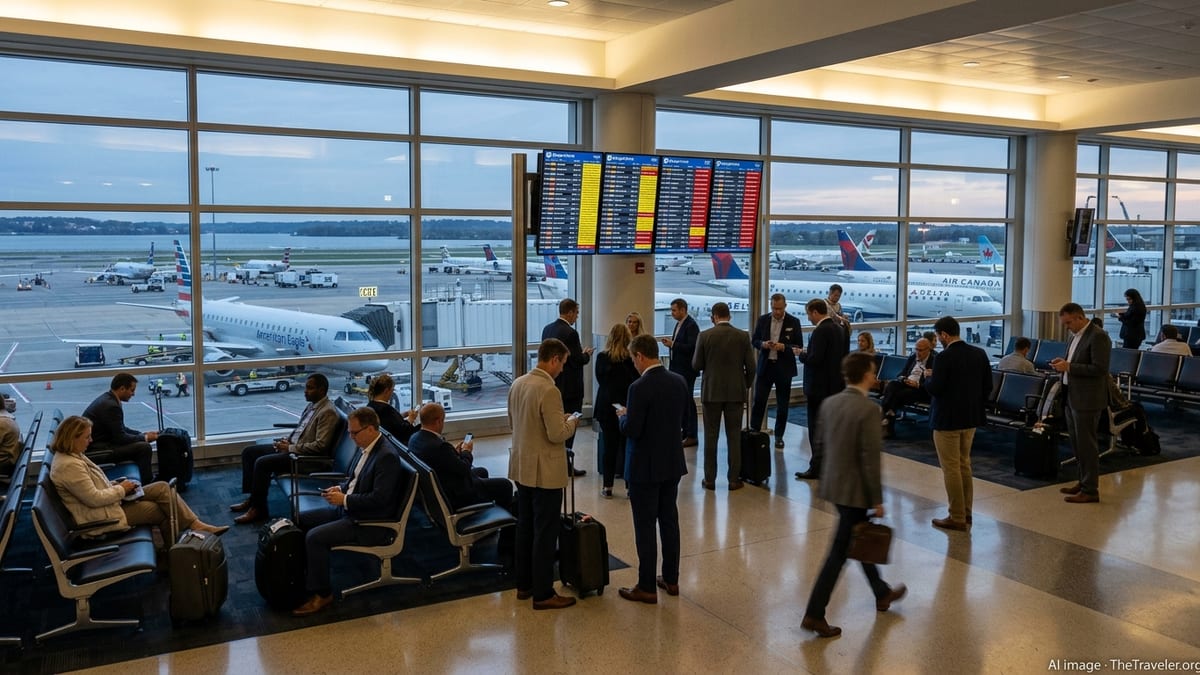
Cluster of Cancellations Hits Key Regional Carriers
Publicly available flight status boards and tracking data for Ronald Reagan Washington National Airport in March 2026 indicate a concentrated wave of suspended services involving PSA Airlines, Jazz Aviation and Delta-operated flights. At least 13 departures and arrivals linked to these carriers were removed from schedules or listed as canceled within a short window, suggesting an operational issue extending beyond a single aircraft or crew.
The disruption appears to center on short-haul and regional routes that underpin business and government travel in and out of the U.S. capital. Flights operating under the American Eagle banner via PSA, as well as Air Canada Express services operated by Jazz between Washington and Toronto, show a series of cancellations and lengthy delays, limiting options for passengers relying on frequent daily frequencies.
Delta’s network, which connects Reagan National with hub airports such as Detroit and other Midwest and Southeast cities through regional affiliates, also shows scattered suspensions. These cancellations, although modest in absolute number compared with the overall daily schedule at Reagan National, have had an outsized impact on travelers with tight connections or limited alternative flights on comparable routes.
Operational snapshots from recent days also reflect schedule thinning and aircraft swaps as airlines attempt to consolidate remaining services. Some flights appear re-timed by several hours, while others are replaced by larger aircraft to absorb displaced passengers, contributing to shifting departure times and gate changes throughout the day.
Routes Between Washington, Toronto and Detroit Disrupted
The corridor linking Washington with Toronto and Detroit has been notably affected. Flight-status records show multiple Washington–Toronto services on Air Canada Express, operated by Jazz, either heavily delayed or withdrawn from the schedule, tightening capacity on one of the most important cross-border business routes in the region.
Similarly, connections between Reagan National and Detroit, an important hub for Delta, have seen gaps where flights are usually staggered throughout the day. The reduction in frequencies, paired with rolling delays on those that remain, complicates connections for travelers heading onward to Midwestern cities and international long-haul departures.
Published coverage and online tracking platforms suggest that some passengers have been rerouted through alternative Washington-area airports, notably Dulles International, or via other hubs where additional seats are available. This rerouting often means longer total journey times and additional security screenings, particularly for international travelers moving through Toronto.
Travelers attempting same-day round trips for meetings or events between Washington, Toronto and Detroit face particular challenges. With fewer back-up options and reduced evening departures, a single cancellation can require overnight stays or complete itinerary changes, especially when weather or congestion at other hubs narrows rebooking opportunities.
Secondary Impacts for Smaller Cities Like Augusta and Des Moines
While the focus of the latest disruptions is on Reagan National and its major cross-border and hub links, smaller markets such as Augusta and Des Moines are also feeling the effects. These cities are frequently reliant on single daily flights or limited frequencies operated by regional affiliates like PSA or other partner carriers.
When an upstream leg into Reagan National is canceled or delayed, the aircraft and crew that would have continued on to smaller airports can be left out of position. Publicly accessible schedules for routes connecting Washington with Augusta and Des Moines show select services canceled outright, with others retimed, reflecting a familiar cascading pattern in regional aviation.
Passengers in these secondary markets have fewer alternatives when a flight disappears from the board. Rebooking often involves traveling through different hubs, such as Charlotte, Atlanta or Chicago, with longer connections and potential overnight stays. The result is a disproportionate impact on travelers originating in or destined for smaller communities, compared with those in major hubs who may have multiple competing services.
In addition, disruptions on Reagan National feeder routes can affect onward connectivity for medical appointments, collegiate events, and government-related travel that depends on predictable arrival times. Even a small cluster of canceled flights can therefore have a wide-reaching effect across personal, business and institutional plans in these cities.
Operational and Infrastructure Strains Behind the Flight Board
Multiple strands of recent aviation reporting point to a complex mix of factors behind recent schedule volatility at Reagan National and other East Coast airports. Winter and early spring weather systems in 2026 have contributed to congestion and ground delays across major hubs, pushing aircraft and crews out of their planned locations and reducing the margin for on-time operations.
Reagan National’s constrained airfield and gate capacity, along with longstanding airspace complexity around central Washington, leave limited flexibility when irregular operations occur. When aircraft are diverted, held in ground stops or slowed by air-traffic flow controls, small disruptions can quickly show up on the flight board as downstream cancellations and multi-hour delays.
Recent years have also highlighted infrastructure and safety scrutiny around Reagan National, including high-profile incidents involving regional jets and close calls in the surrounding airspace. While current cancellations are not tied to a single publicly reported event, the cumulative effect is a system that can be more susceptible to knock-on effects when weather, equipment outages or crew-availability challenges arise at the same time.
Publicly available airline performance data for large U.S. airports underscores how regional operators like PSA Airlines and Jazz, flying under major-carrier brands, carry a significant share of departures. When these partners adjust schedules or encounter technical and staffing hurdles, the visible impact for travelers is often felt under household carrier names such as American and Delta, even when the operating airline is a regional affiliate.
What Travelers Can Expect in the Coming Days
Given the interconnected nature of airline networks, observers expect that residual delays and occasional cancellations may persist around Reagan National and its feeder routes in the short term, even as weather patterns shift and airlines work to restore normal operations. Historical data from previous periods of irregular operations suggests that it can take several days for aircraft and crew rotations to fully realign.
Public guidance from airlines and travel platforms consistently emphasizes the importance of monitoring flight status closely on the day of travel, particularly for passengers connecting through affected hubs such as Washington, Toronto and Detroit. Same-day rebooking tools, mobile notifications and access to customer-service channels can be critical for those seeking alternative routings when a cancellation appears.
Flexible ticket policies that have become more common in recent years may offer some relief to travelers whose plans are impacted by suspended flights. Many carriers now allow fee-free changes in the event of significant schedule disruptions, although fare differences can still apply, especially when last-available seats are in higher booking classes.
For travelers planning upcoming trips that rely on regional links into Reagan National, publicly available schedule data suggests that most listed services remain in operation, but with a higher-than-usual risk of timing changes. Allowing extra connection time, avoiding the last flight of the day where possible, and considering alternative airports in the Washington region may help reduce the likelihood of severe disruption if further cancellations occur.