

France is one of the world’s most visited countries, and its air network reflects that status, with dozens of international gateways and hundreds of routes linking Europe, North America, the Middle East, Asia, and beyond. For travelers, this breadth of choice is both an opportunity and a challenge. Picking the right airport and route can save hours in transit, ease jet lag, and set the tone for a smoother arrival in France.
Understanding France’s Air Gateway Network
France’s aviation map is dominated by Paris, but it is far from a one‑airport country. Charles de Gaulle and Orly together handle tens of millions of passengers each year, connecting France to every continent with a dense web of long‑haul and European flights. Beyond the capital, a ring of regional gateways from Nice to Lyon, Marseille, Toulouse, and Bordeaux serves specific regions and offers alternatives to backtracking through Paris.
For most long‑haul travelers, especially from North America and Asia, Paris Charles de Gaulle is the primary entry point. The airport is the main hub for Air France and a key base for major alliance partners, which means extensive options for connections onward to French and European cities. Orly, by contrast, leans more toward domestic and short‑haul European traffic, along with some services to the French overseas territories and select international destinations.
Regional airports matter because they can position you closer to where you actually plan to stay. If your trip focuses on the Riviera, the Alps, or Provence, flying directly into Nice, Lyon, or Marseille can cut a full travel day compared with arriving in Paris and then transferring by rail or domestic flight. Many European and low‑cost carriers now offer seasonal and year‑round routes to these airports, which broadens the options for savvy travelers prepared to mix and match airlines.
When weighing airports and routes, it helps to think in three layers: your intercontinental flight to Europe, your intra‑European hop if needed, and your ground transport on arrival in France. The optimal combination depends on where you are starting, where in France you are headed, and how much you value time savings over potentially lower fares with longer routings.
Paris Charles de Gaulle: France’s Primary Long‑Haul Hub
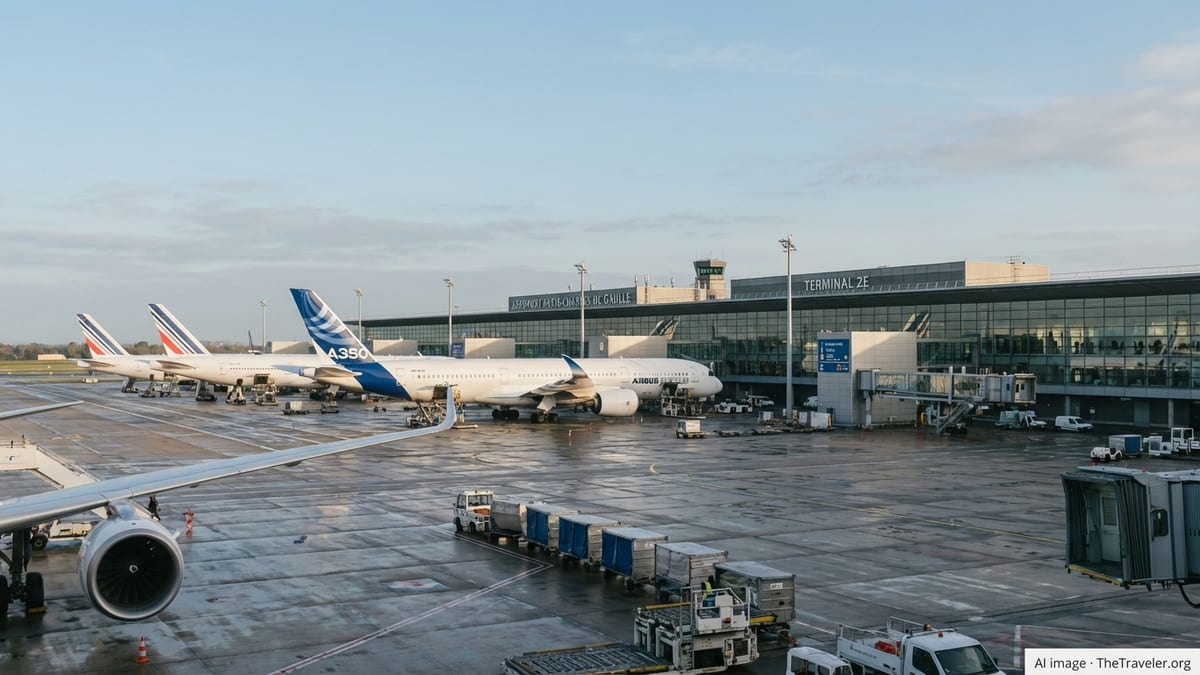
Paris Charles de Gaulle Airport, located to the northeast of the capital, is the country’s main gateway for intercontinental flights. It ranks among Europe’s busiest hubs by passenger numbers and is served by more than one hundred airlines. For travelers from the United States, Canada, Latin America, Asia, and the Middle East, Charles de Gaulle offers the broadest choice of nonstop and one‑stop itineraries into France.
The airport is structured around several terminals, with Air France and its SkyTeam partners concentrated primarily in Terminal 2. This clustering matters during connections, because staying within the same terminal complex usually shortens walking times and avoids an extra security screening. Most transatlantic and long‑haul widebody flights arrive in the morning, feeding mid‑day departures to cities across France and Europe, while evening departures from Paris create overnight connections back across the Atlantic and toward Asia.
Ground access is a key strength of Charles de Gaulle. The RER B suburban rail line links the airport directly with central Paris in roughly 30 to 40 minutes, and high‑speed TGV trains from the station beneath Terminal 2 connect to major French cities such as Lyon, Lille, Strasbourg, and Bordeaux. For some travelers, it can be faster to land at Charles de Gaulle and connect to a TGV than to recheck bags and board a domestic flight, especially during peak travel seasons.
Because Charles de Gaulle is such a busy hub, it does come with typical large‑airport drawbacks: long walks, sometimes lengthy security and passport control queues, and occasional congestion around peak banks of flights. Allowing adequate connection time, enrolling in any available expedited border‑control options, and familiarizing yourself with terminal maps before departure can help offset these challenges and make the experience more predictable.
Paris Orly: Convenient Alternative for Domestic and Short‑Haul Flights
Paris Orly Airport, situated south of the city, plays a different yet complementary role to Charles de Gaulle. Historically Paris’s main airport and still significant in terms of passenger numbers, Orly focuses heavily on domestic French routes, European leisure destinations, and services to North Africa and the French overseas departments. For trips centered on Paris or the western and southwestern regions of France, Orly can be a practical choice.
Several full‑service and low‑cost carriers operate from Orly, including Air France on many domestic routes. Travelers connecting from long‑haul flights into Charles de Gaulle sometimes choose to transfer across the city to Orly for a regional departure. While this cross‑airport transfer adds complexity, it can occasionally unlock better schedules or fares to cities such as Montpellier, Biarritz, or Ajaccio that have strong seasonal demand and a robust Orly presence.
In recent years, Orly’s ground transport links have improved significantly. A station on the Paris Metro network now serves the airport, joining existing tram, bus, and dedicated shuttle connections into the city and nearby suburbs. Travel times from Orly to central Paris can be comparable to, or slightly shorter than, those from Charles de Gaulle, which makes the airport particularly appealing if your accommodation is on the southern side of the city or along Metro lines that directly connect to the airport.
Because Orly is more compact than Charles de Gaulle, many travelers find it less overwhelming to navigate. However, like many city airports with a strong mix of business and leisure traffic, peak‑time crowding and queueing are common. Booking flights at less congested times of day, when possible, and arriving early for popular holiday departures can reduce stress and improve your chances of a smooth transit.
Key Regional Gateways: Nice, Lyon, Marseille and Beyond
For travelers whose main focus is outside Paris, France’s regional airports can be compelling alternatives. Nice Côte d’Azur Airport is the principal gateway to the French Riviera and Monaco, with a mix of year‑round European services and seasonal long‑haul routes. During the summer season, airlines add capacity from cities such as New York, Toronto, and Dubai, reflecting the strong demand for direct access to the Mediterranean coast.
Lyon–Saint‑Exupéry Airport serves the Auvergne‑Rhône‑Alpes region, including access to the Alps, culinary capital Lyon, and many ski resorts via road or rail. It is a key base for both full‑service and low‑cost carriers, offering direct flights from a wide range of European cities and selected medium‑haul destinations. For winter sports travelers, flying into Lyon and continuing by coach or train can be more efficient than transiting through Paris and then doubling back toward the mountains.
Marseille Provence Airport acts as a major entry point for Provence, the Camargue, and the Mediterranean coast west of Toulon. Regular bus connections link the airport to Marseille’s main Saint‑Charles station, typically in about half an hour, with onward rail links to regional towns. The airport also offers a combination of domestic flights and European routes, including services from major hubs that allow one‑stop access from intercontinental origins.
Further west and north, airports such as Toulouse‑Blagnac and Bordeaux‑Mérignac provide gateways to Occitanie, the Atlantic vineyards, and the Basque coast. While these airports see fewer long‑haul services than Paris or Nice, they are well connected to European hubs including Amsterdam, Frankfurt, Madrid, and London. For travelers willing to connect in another European city, these secondary gateways can bring you closer to your final destination while avoiding an extra domestic leg within France.
Best Routes to France from North America, Europe and Beyond
The strongest nonstop links to France originate in North America and across Europe, reflecting tourism, business, and diaspora ties. Major US cities such as New York, Boston, Washington, Atlanta, Chicago, Los Angeles, and San Francisco typically have nonstop services to Paris, operated by a mix of European and American carriers. From Canada, Montreal and Toronto are well connected to Paris and, in some seasons, to regional airports like Nice.
Travelers from Europe enjoy an extensive network of direct flights into both Paris airports and regional French cities. Legacy carriers use their own hubs to funnel traffic to France, while low‑cost airlines operate point‑to‑point services from secondary cities, particularly in the United Kingdom, Ireland, Germany, Scandinavia, and Central Europe. Seasonal schedules often add more capacity to Mediterranean destinations such as Nice, Marseille, and Corsica during the summer peak.
From the Middle East and North Africa, major Gulf carriers and regional airlines provide one‑stop connections to French cities via their hubs. These routes can be attractive for travelers originating in Asia or Africa, who may find more competitive fares or better schedules via Doha, Dubai, or Abu Dhabi compared with transiting through another European capital. Likewise, flights from North African cities into Marseille, Lyon, and Paris are frequent, supporting both leisure and visiting‑friends‑and‑relatives travel.
Asia‑to‑France traffic is concentrated on routes into Paris from cities such as Tokyo, Seoul, Beijing, Shanghai, and various Southeast Asian capitals. Some of these flights operate nonstop, while others rely on one‑stop connections through alliance partner hubs. Because travel times are long and demand is highly seasonal, schedules and aircraft types can shift from year to year. Checking for recently added routes or capacity increases before booking can reveal new options, especially during busy summer and winter periods.
Choosing the Right Airport for Your French Itinerary
When deciding which French airport to fly into, the most important question is where you intend to spend most of your time. If your trip centers on Paris and nearby day‑trip destinations, landing at either Charles de Gaulle or Orly will generally make the most sense. Both airports have strong rail and bus connections into the city, and Paris’s rail network can easily carry you onward to places like Normandy, the Loire Valley, or Champagne.
For holidays on the Riviera, in Provence, or along the Mediterranean coast, flying directly to Nice or Marseille can significantly reduce internal travel time. These airports bring you closer to resort towns such as Cannes, Antibes, Aix‑en‑Provence, and Avignon. From Nice, coastal trains and regional buses hug the shoreline, while from Marseille, intercity and regional trains radiate across Provence and into the Languedoc. Choosing a regional gateway also reduces the need to navigate Paris’s large hubs after a long‑haul flight.
If you are planning a ski trip or an itinerary built around the Alps and eastern France, Lyon or even Geneva, just across the border in Switzerland, can be more convenient than Paris. Many ski transfer services operate directly from these airports to major resorts, and winter timetables are often tailored to weekend arrivals and departures. For wine‑focused travel, airports in Bordeaux, Toulouse, and Lyon provide good access to vineyard regions without lengthy surface connections.
Travelers combining multiple regions may find that open‑jaw tickets, arriving in one French airport and departing from another, offer the best balance of efficiency and cost. For example, you might land in Paris, travel south by train through Lyon and Provence, and then fly home from Nice. While open‑jaw itineraries can be slightly more complex to search, they often save backtracking and can be priced competitively when booked as part of a single ticket.
Connection Strategies, Alliances and Seasonal Capacity
Because France is integrated into the broader European and global airline alliance networks, your frequent‑flyer program and preferred alliance can shape the best routing. Travelers loyal to SkyTeam, for example, will typically route through Paris Charles de Gaulle on Air France or partner carriers, while those aligned with Star Alliance might prefer connections via Frankfurt, Zurich, or Lisbon before continuing to French destinations. Oneworld travelers often pass through London or Madrid on their way to France.
Seasonality plays a major role in the availability of routes. Airlines regularly add capacity into France for the northern summer, especially from late spring through early autumn, in response to leisure demand. That can mean extra frequencies on trunk routes to Paris, as well as entirely new seasonal flights to coastal and island destinations. Conversely, some services scale back or pause during the quieter shoulder months and winter, so it is important to verify schedules for your exact travel dates rather than relying on last year’s options.
When planning connections, it is wise to build in generous buffers at large hubs, particularly if you are arriving on an intercontinental flight that could be affected by weather or air‑traffic congestion. Booking a through‑ticket on a single airline or alliance often protects you better in case of disruption than separate tickets, since the operating carrier has clearer responsibilities for reaccommodation. If you do choose separate tickets, leave additional time between flights and consider travel insurance that covers missed connections.
Low‑cost carriers can be useful tools for reaching secondary French airports, but their operations are usually based out of secondary terminals and they may not interline baggage with long‑haul airlines. If your itinerary pairs a long‑haul flight on a full‑service carrier with a separate low‑cost connection, you will likely need to collect and recheck your luggage and clear security again. Factoring in this extra time, and the risk of misalignment if your first flight is delayed, is essential to avoid stressful sprints across terminals.
Practical Tips for Booking Flights to France
Finding the right fare into France is partly art, partly science. Booking several months ahead for peak summer travel or major events, such as international sporting tournaments and festivals on the Riviera, tends to produce more choice and better prices. For shoulder‑season trips in spring and autumn, waiting slightly longer can sometimes yield competitive fares as airlines adjust capacity and seek to fill remaining seats.
Flexibility is one of the strongest tools you have. Searching across a range of nearby departure airports, experimenting with different arrival airports in France, and adjusting your travel dates by a few days can uncover substantial price differences. Midweek departures, early‑morning or late‑evening flights, and itineraries involving a connection rather than a nonstop can all be priced more attractively, though the trade‑off is added travel time or less convenient schedules.
Pay attention to the total journey time rather than the number of stops alone. An itinerary with one efficient connection through a well‑organized hub can be more comfortable than a slightly cheaper routing involving a long layover or an airport change. Tools that display minimum connection times and on‑time performance statistics can help you identify hubs where tight connections are realistic and those where extra leeway is advisable.
Finally, consider the value of ancillary services such as included checked baggage, seat selection, and the ability to change or cancel your ticket. A slightly higher base fare that includes these elements, or is sold as part of a more flexible fare category, can be worthwhile for long‑haul trips. This is especially true when connecting within Europe, where ultra‑low‑cost tickets may appear inexpensive but can become more costly once necessary add‑ons are factored in.
The Takeaway
Choosing the best flights to France is less about finding a single correct answer and more about aligning airports and routes with your specific itinerary. Paris Charles de Gaulle will remain the primary gateway for most long‑haul travelers, with Orly offering a convenient secondary option for domestic and short‑haul European trips. Yet for many itineraries, regional airports in Nice, Lyon, Marseille, Toulouse, and Bordeaux can bring you closer to your final destination and reduce time spent in transit.
By weighing factors such as proximity to your planned destinations, alliance preferences, seasonal capacity, and the reliability of connecting hubs, you can design an itinerary that balances cost, comfort, and convenience. Building in sensible connection times, considering open‑jaw tickets, and understanding the strengths of each French airport all contribute to a smoother journey.
As France’s air network continues to evolve, with new routes and improved ground transport links, travelers have more choice than ever in how they arrive. A thoughtful approach to selecting flights and airports will help ensure that your trip begins not with a stressful dash through unfamiliar terminals, but with a confident, well‑planned arrival ready to enjoy everything France has to offer.
FAQ
Q1. Which French airport is best for first‑time visitors to Paris?
For most first‑time visitors, Paris Charles de Gaulle is the most practical choice because it offers the widest selection of international flights and has frequent rail links into central Paris. Orly can be equally convenient if your airline serves it and your accommodation is on the southern side of the city.
Q2. Is it worth flying directly to Nice instead of connecting via Paris?
If your itinerary focuses on the French Riviera, flying directly to Nice often saves time and avoids an extra domestic leg. During peak seasons many airlines offer nonstop or one‑stop connections to Nice from major European and some long‑haul cities, which can be more efficient than routing everything through Paris.
Q3. How far in advance should I book flights to France?
For peak summer or major events, booking three to six months in advance usually provides the best balance of choice and price. For shoulder‑season travel, you may find reasonable fares closer to departure, but availability can tighten on popular routes, so monitoring prices early remains a good idea.
Q4. Are open‑jaw tickets within France more expensive than round‑trip fares?
Open‑jaw tickets, where you arrive in one French city and depart from another, are not automatically more expensive. Many airlines price them similarly to standard returns, particularly when both endpoints are major gateways. They can also save ground travel time and costs by reducing backtracking.
Q5. Which French airports are best for ski trips in the Alps?
Lyon–Saint‑Exupéry is a strong choice for access to many French Alpine resorts, with dedicated winter transfer services and good rail links. Depending on your resort, Geneva in neighboring Switzerland can also be convenient, as many shuttle companies serve French ski areas from there.
Q6. Is it better to connect by train or by plane after landing in Paris?
The answer depends on your destination. For cities served by high‑speed TGV from Charles de Gaulle or central Paris, the train is often competitive with flying once airport transfers and security checks are factored in. For more remote regions, a short connecting flight may still be the fastest option.
Q7. Do low‑cost airlines fly to major French airports?
Yes. Low‑cost carriers serve both major airports like Paris Charles de Gaulle and Orly, as well as regional gateways such as Nice, Marseille, Bordeaux, and Toulouse. However, they often use different terminals and typically do not interline baggage with long‑haul airlines, so connecting requires extra planning.
Q8. How busy are French airports in summer?
Summer is the busiest period for French airports, particularly at coastal and island destinations. Passenger numbers typically rise significantly from late June through August, which can mean fuller flights, longer queues, and higher fares. Booking early and allowing extra time for connections is especially important during these months.
Q9. Can I easily reach smaller French towns from regional airports?
In many cases, yes. Regional airports are usually linked to nearby rail hubs or bus networks, making it straightforward to continue to smaller towns. Planning your arrival around local train or bus timetables helps minimize waiting times and ensures a smoother onward journey.
Q10. Are French airports well connected to public transport?
Most major French airports offer a mix of rail, tram, and bus services into nearby cities. Paris Charles de Gaulle and Orly have particularly strong public transport links, and regional airports such as Nice, Lyon, and Marseille also provide regular shuttle or train options to their respective city centers.