

Germany draws travelers with half-timbered towns, cutting-edge cities and picture-perfect Alpine scenery, but the cost of getting there can vary dramatically. With airfares influenced by everything from seasonality to airport choice and labor disruptions, finding a reasonably priced ticket takes more than a quick search. By understanding how the market works and using the right tools, you can consistently uncover better deals on flights to Germany from the United States and other long-haul gateways.
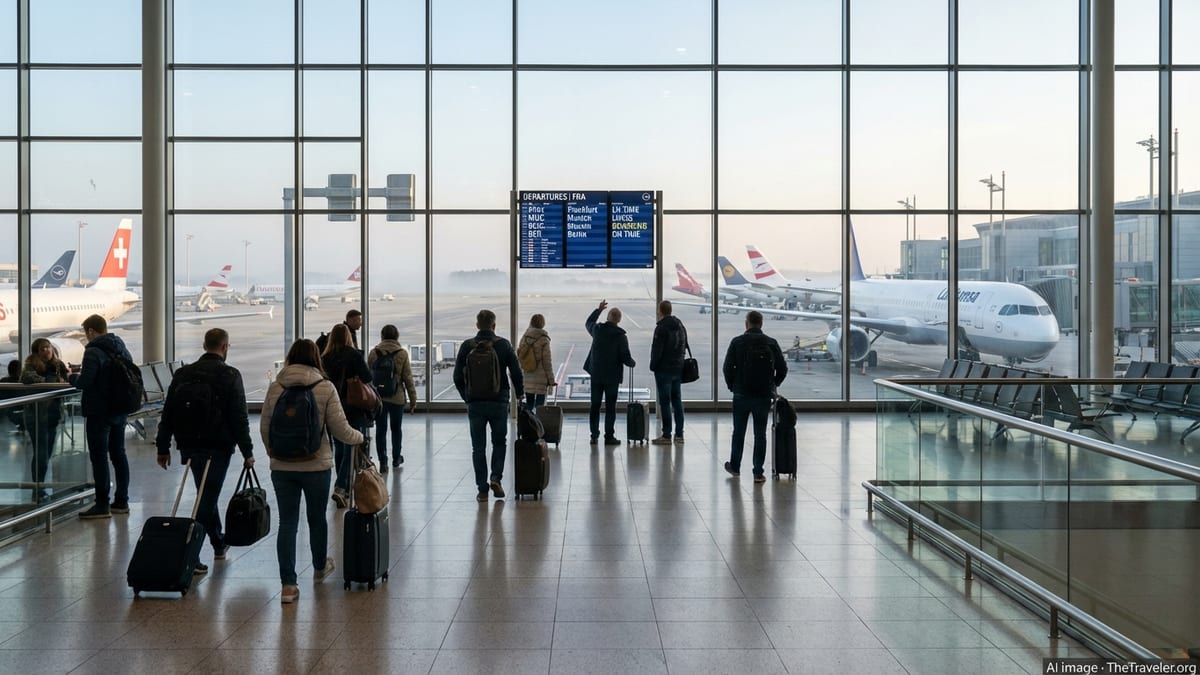
Key German Gateways and How They Affect Your Fare
Most transatlantic travelers still arrive in Germany via a handful of major hubs, and which one you choose can shape both your ticket price and your on-the-ground experience. Frankfurt and Munich are Germany’s two primary intercontinental gateways, with extensive long-haul connections and large transfer facilities. Berlin Brandenburg, Düsseldorf and Hamburg round out the list of major airports that handle substantial international traffic, especially from within Europe, the Middle East and North America.
Frankfurt is the country’s busiest airport by passenger numbers and the main hub for the national carrier Lufthansa, with extensive connections across Europe and beyond. Munich serves as a second major Lufthansa hub and often features in competitive transatlantic fares, particularly for travelers continuing to Southern and Eastern Europe. Berlin Brandenburg, which replaced the former Tegel and Schönefeld airports, is now the principal airport for the capital and a growing focus for both full-service and low-cost carriers within Europe, creating useful one-stop options for travelers willing to connect.
Secondary airports can be valuable for cost-conscious travelers, especially if you are willing to piece together an itinerary. Airports such as Hamburg, Stuttgart, Cologne Bonn and Hanover have robust European networks and are often served by low-cost carriers on intra-European routes. While nonstops from North America may be limited or nonexistent at these smaller fields, combining a competitively priced long-haul flight into a major hub with a separate ticket on a regional or budget carrier to your final German city can sometimes reduce the total cost, provided you build in generous connection time and understand the risks of separate tickets.
It is important to balance airport choice with your travel goals. A cheaper ticket to an airport several hours by train from your final destination may still make sense if Germany’s extensive rail network allows you to connect efficiently. On the other hand, if you are planning a short city break, paying slightly more for a nonstop into your actual destination airport can save valuable time and reduce stress at the start and end of your trip.
When to Book Flights to Germany
Timing your purchase is one of the most effective ways to reduce the cost of a ticket to Germany. Airfare analysts who track millions of prices generally find that international routes follow a pattern: fares start high when schedules are first published, trend downward several months out as airlines respond to demand, then climb again as departure approaches and the cheapest fare classes sell out. For transatlantic trips to Europe, including Germany, many experts suggest looking seriously at fares roughly three to eight months before your intended departure.
Seasonality matters as much as the booking window. Travel to Germany is in highest demand from roughly mid June through August, when school holidays drive up leisure travel and business travel remains steady. December, especially around Christmas markets and New Year, is another strong period that pushes fares higher. Outside these peaks, shoulder seasons such as late March to early May and mid September to early November often bring more moderate pricing, as well as fewer crowds once you land.
Even within the same week, prices can fluctuate depending on your departure day. Analyses from airfare search platforms frequently show that departures on Tuesdays and Wednesdays are more likely to be among the cheaper options, while Sundays tend to be the most expensive. The pattern is not a fixed rule, but if your schedule is flexible enough to search a full week of dates at once, you will often see meaningful savings for midweek departures, especially on economy tickets.
Finally, the earlier you are able to define at least your approximate travel window, the better. International fares can change several times in a single day, particularly during sales or in the lead-up to peak travel periods. Setting alerts on multiple platforms two to three seasons ahead of your intended trip gives you a sense of what constitutes a genuinely low fare for your route, so when prices do drop into an attractive range you will recognize the opportunity and can book quickly.
Choosing Routes, Airlines and Fare Types
There are now more ways than ever to fly between the United States and Germany, and the best option for you will depend on how you value time, comfort and cost. Nonstop flights from major US gateways such as New York, Chicago, Washington, Los Angeles, San Francisco and others connect directly with German hubs on Lufthansa and US carriers. These nonstops usually command a pricing premium, especially in summer, but they eliminate the risk and time cost of connecting through a third country.
One-stop itineraries can dramatically expand your options. Many travelers reach Germany by connecting through other European hubs such as London, Paris, Amsterdam, Zurich, Vienna or hubs in Scandinavia and Southern Europe. Depending on current competition and seat availability, it is not unusual for a one-stop itinerary via another European city to be substantially cheaper than a nonstop into Frankfurt or Munich, with total travel time only marginally longer. For travelers on tight budgets, routing via a competitive hub that is running a promotion can make the difference between going and staying home.
Low-cost and leisure-oriented carriers also play a role, though the pure ultra-low-cost transatlantic model has seen significant consolidation in recent years. At present, most budget options revolve around inexpensive intra-European segments that you connect to after a standard long-haul flight. This “build your own connection” strategy can unlock big savings, especially into cities like Berlin, Hamburg or regional airports served by low-cost carriers, but it comes with risks: separate tickets mean separate contracts, so if your inbound flight is delayed and you miss the onward budget flight, the second airline has no obligation to rebook you without additional cost.
Fare type is another important variable. Basic economy tickets on both US and European airlines can look significantly cheaper in search results, but they often limit your ability to choose seats, make changes, or bring a checked bag. When comparing options, it is wise to click through to the fare rules and calculate the real cost once you factor in luggage, seat selection and flexibility to change dates. For longer trips such as vacations to Germany, a standard economy fare that includes at least one checked bag and allows modest changes can be better value than a bare-bones fare that becomes expensive once you add essentials.
Using Tools, Alerts and Flexible Search
Modern airfare search engines make it far easier to track prices and identify genuine deals for flights to Germany, provided you take full advantage of their features. Most major platforms allow you to set alerts for specific city pairs and travel windows, notifying you when fares fall below a threshold or when there is a meaningful change. Setting multiple alerts, for example one for your nearest major airport and one for an alternative hub you can reach by a short domestic flight, can reveal patterns you might not see with a one-time search.
Flexibility is a powerful lever. Instead of searching rigid dates, use calendar views or “flexible dates” tools that show fares across an entire month. This broader perspective often reveals that shifting your departure or return by even one or two days can cut the price significantly. If you can travel outside school holidays, major European festivals or big trade fairs that push up local hotel demand in cities like Frankfurt, Cologne or Hanover, you may find that both flights and accommodation drop into a more comfortable range.
Hidden-city ticketing or other advanced tricks occasionally get attention, but they carry serious caveats. Booking a ticket to one city with the intention of exiting at a German connection point may violate airline terms and can create problems with checked baggage, return segments and frequent flyer accounts. For most travelers, safer and more sustainable tactics include combining flexible search with multi-airport queries, watching price history graphs where available and acting quickly when a reputable carrier offers a clearly below-average fare on your route.
Do not overlook metasearch platforms and airline direct sites. While third-party agencies sometimes display marginally lower prices, airlines increasingly match or undercut those fares on their own websites while offering clearer information about seat availability, fare families and disruption handling. Once you have used comparison tools to identify candidates, cross-checking directly with the airline can confirm that you are genuinely getting a deal and not sacrificing consumer protections for a minor saving.
Managing Risks, Strikes and Disruptions
Over the past several years, travelers to Germany have periodically faced large-scale disruptions from strikes affecting airport security, ground handling and public transport. When such actions occur at major hubs like Frankfurt, Munich or Berlin, cancellations can ripple across the entire network, especially on short notice. While labor actions are part of the European travel landscape and are usually announced in advance, they highlight the importance of planning for contingencies when choosing flights.
One practical step is to favor itineraries with longer connection times when routing through Germany during times of elevated disruption risk, such as school vacation periods when airports are already busy or days bracketed by public holidays. A one-hour connection might look convenient in theory but can become stressful if security lines, passport control or aircraft handling are slowed by reduced staffing. Allowing an extra hour or two can make your journey more resilient without significantly extending total travel time.
It is also sensible to pay attention to which airline actually operates your flight. Codeshares are common on routes to Germany, with one carrier marketing the flight while another operates it. In the event of delays or cancellations, rights and rebooking options typically follow the operating airline. Understanding this in advance, and favoring airlines with robust operations and customer support, increases your chances of being accommodated smoothly if your plans are disrupted.
Travel insurance and flexible fares can provide an additional layer of protection. Policies that cover missed connections, significant delays or strike-related cancellations can offset the financial impact of a disrupted trip. In parallel, booking directly with airlines and ensuring they have your contact details for notifications helps you receive real-time updates and alternative options quickly if your flight to Germany is affected by unexpected events.
Squeezing More Value from Your Ticket
Price is only one dimension of value. When comparing options to Germany, it is worth looking at the entire travel experience you are purchasing. A slightly more expensive ticket that includes a checked bag, the ability to choose an aisle seat on a long overnight flight and a reasonable connection time at a modern hub may feel significantly better than the absolute cheapest fare with cramped connections and multiple extra fees. Comfort translates into arriving more rested and ready to explore.
Loyalty programs can also tilt the equation. If you fly regularly with a particular airline alliance, selecting flights to Germany on partner carriers might earn you valuable miles or progress toward elite status, which in turn can unlock benefits such as priority check-in, extra baggage or lounge access. While you should not overpay substantially just to collect points, modest fare differences can be justified if they contribute meaningfully to your broader travel goals.
Another way to stretch value is to consider open-jaw tickets instead of strict round trips. For example, you might fly into Frankfurt and return from Munich, or arrive in Berlin and depart from Hamburg, allowing you to see more of the country without backtracking. Many airlines price such itineraries competitively, and when combined with Germany’s efficient rail network, they can form the backbone of an efficient multi-city itinerary that maximizes your time on the ground.
Finally, keep ancillary costs in mind. Transfers between airports and city centers, overnight layovers in connecting hubs, and the cost of food and lodging during long connections can erode the savings from a marginally cheaper base fare. When evaluating itineraries, consider the door-to-door journey in both time and money, not just the number on the booking screen. The best deal is usually the one that balances price with reliability, comfort and the overall quality of your trip.
The Takeaway
Finding an affordable flight to Germany is part art, part science. Understanding the role of major hubs like Frankfurt and Munich, identifying when to book within the typical three to eight month window for international travel, and remaining flexible on dates and routing all work together to reduce the price you pay. At the same time, it is important not to chase the lowest headline fare at the expense of comfort, airport convenience and protection against disruptions.
Smart use of modern tools, from fare alerts to flexible-date calendars, gives you a clear view of what is normal for your route so you can recognize a genuine bargain when it appears. Thinking beyond a single city, whether by combining rail and air or booking an open-jaw itinerary, often adds value without significantly increasing cost. With a bit of research and a willingness to be flexible where it counts, you can secure a flight to Germany that fits your budget and leaves more of your travel funds free for exploring once you arrive.
FAQ
Q1. How far in advance should I book a flight to Germany?
For most travelers, starting to watch fares four to ten months before departure and aiming to book around three to eight months out often yields competitive prices, especially outside the busiest summer and Christmas periods.
Q2. Which US airports usually have the best deals to Germany?
Large coastal gateways such as New York, Boston and Washington frequently see competitive fares thanks to high capacity and competition, while major hubs like Chicago, Los Angeles and San Francisco also offer a wide range of options, though prices can vary by season and demand.
Q3. Is it cheaper to fly nonstop or with a connection to Germany?
Nonstop flights are usually more expensive because they are more convenient, while one-stop itineraries via other European hubs or secondary airports often come in cheaper, at the cost of longer travel time and slightly higher disruption risk.
Q4. What is the cheapest time of year to fly to Germany?
Outside of school holidays and major festivals, months such as late winter, early spring and the autumn shoulder season often offer more moderate fares compared with peak summer and the December holiday period.
Q5. Do midweek departures really save money on flights to Germany?
Data from many airfare studies suggest that Tuesday and Wednesday departures are more likely to be on the lower end of the price range, although the exact difference varies and there are always exceptions, so it is wise to compare a full week of dates.
Q6. Are basic economy fares to Germany worth it?
Basic economy can be good value for very light packers with fixed plans, but restrictions on changes, seat selection and checked bags often make standard economy fares better value once you factor in all costs and the length of the journey.
Q7. Is it safe to book separate tickets to save money?
Booking separate tickets, such as a long-haul flight to a hub and a budget carrier onward to a German city, can reduce the total fare but increases risk if delays cause you to miss the second flight, so you should allow generous connection times and be prepared for less protection.
Q8. How do strikes in Germany affect flight bookings?
Strikes involving airport staff or public transport can lead to cancellations and long queues, so if you are traveling during periods when labor actions are more common, consider longer connection times, flexible tickets and close monitoring of airline updates.
Q9. Can I use points or miles effectively on flights to Germany?
Transatlantic routes are often a strong use of miles, especially during peak seasons when cash fares are high, but availability can be limited, so booking award tickets early and being flexible on dates and routings increases your chances of securing good value redemptions.
Q10. Are open-jaw tickets a good idea for visiting Germany?
Open-jaw tickets, such as flying into one German city and out of another, can be a smart way to see more of the country without backtracking, and they are often priced competitively, particularly when combined with train travel between cities.