

Flying to India has never been more accessible. Whether you are visiting family, exploring India’s cultural landmarks for the first time, or returning to a favorite region, planning your flights well can save you significant time and money. From choosing the right airport to understanding seasonal price swings and mastering booking strategies, a bit of preparation will make your long-haul journey smoother and more affordable.
Understanding India’s Major International Gateways
For most travelers from the United States, the first big decision is where to land. India is vast, and choosing your gateway airport wisely can cut hours off your total travel time and reduce the number of connections. The busiest international hubs include Delhi, Mumbai, Bengaluru, and Hyderabad, with additional strong options in Chennai and Kochi depending on your final destination. These airports handle the bulk of long-haul traffic and offer extensive domestic connections onward.
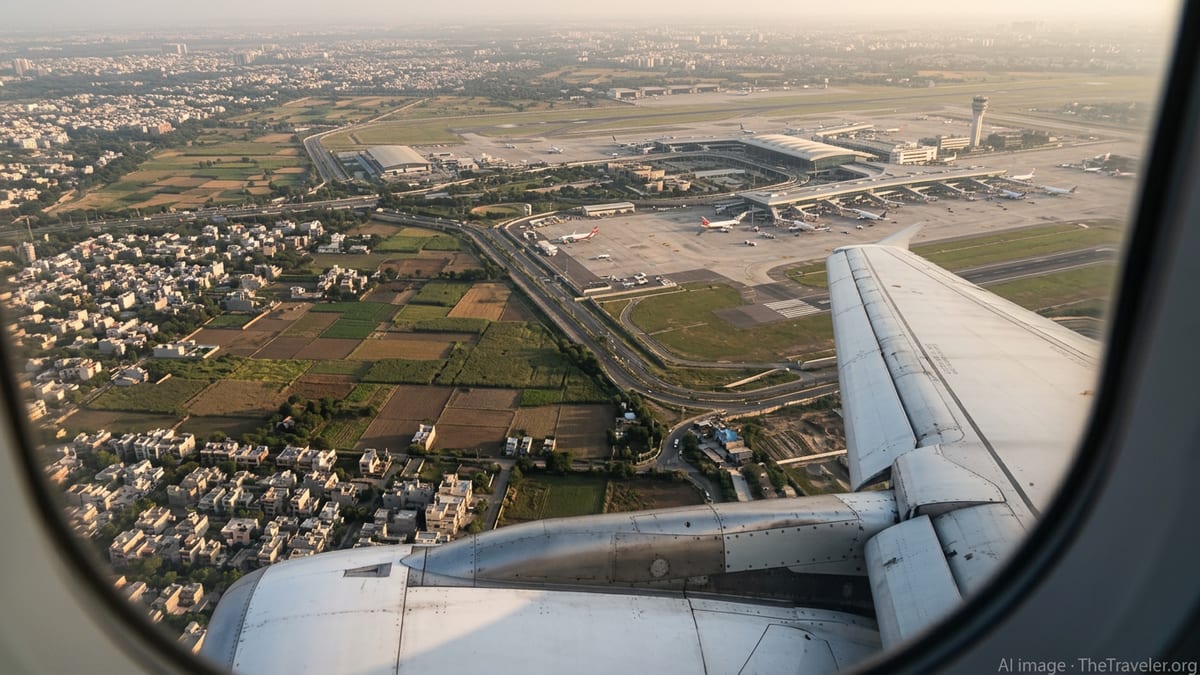
Delhi’s Indira Gandhi International Airport is currently India’s primary global gateway, with a large number of nonstop and one-stop connections from North America, Europe, and the Middle East. Its main international terminal is modern, with a wide range of lounges, dining, and shopping options that make layovers more comfortable. For travelers heading to northern India, the Himalayas, or Rajasthan, Delhi is typically the most convenient arrival point.
Mumbai’s Chhatrapati Shivaji Maharaj International Airport is another key entry for travelers from the United States, especially those bound for the west coast of India, Goa, or coastal Maharashtra. The airport offers strong links through European and Gulf carriers and serves as a major domestic hub, with frequent onward flights to business centers and beach destinations. Its design and services have improved steadily in recent years, making transits reasonably efficient by regional standards.
In southern India, Bengaluru’s Kempegowda International Airport and Hyderabad’s Rajiv Gandhi International Airport have grown into important gateways, especially for tech and business travelers. They also serve as convenient entry points for exploring Karnataka, Telangana, Andhra Pradesh, and neighboring states. For travelers whose itineraries focus on the south, flying directly into these airports instead of backtracking from Delhi or Mumbai can save both time and money.
Regional Hubs and Secondary Airports Worth Considering
Beyond the big four, several regional airports can make your journey more efficient if you plan your route carefully. Chennai International Airport is a key hub for Tamil Nadu and eastern coastal regions, with international flights from Asia, the Middle East, and some European cities. Kochi and Thiruvananthapuram in Kerala handle significant traffic from the Gulf and are excellent choices for travelers targeting Kerala’s backwaters, beaches, and hill stations.
Other growing airports such as Ahmedabad, Pune, and Lucknow offer limited but expanding international connections and strong domestic networks. If you are visiting family in specific states or smaller cities, it can be worthwhile to compare fares that route you into a regional hub with a single domestic hop instead of landing in Delhi or Mumbai and connecting twice. Often, a one-stop long-haul flight into a regional city via a Middle Eastern or Southeast Asian hub can be competitively priced.
In recent years, some tier-two airports have seen upgraded runways, navigation systems, and terminal facilities, improving reliability during adverse weather and winter fog. This enhances their appeal as arrival points for travelers who previously had no choice but to route through the largest metros. While these smaller airports may not offer the same range of amenities, they often provide faster immigration and shorter queues, which can be welcome after a long intercontinental journey.
When assessing whether to fly into a secondary airport, consider your full door-to-door journey time, including any overland travel. A slightly higher airfare into a regional airport could still be a net gain if it eliminates an overnight layover or a long domestic connection from a major hub.
Seasonality: When Flights to India Are Usually Cheapest
India’s tourism and travel patterns follow the climate, and airfare prices tend to move in parallel. Broadly, the main tourist season for many parts of India runs from October through March, when weather is cooler and more pleasant in most of the country. This period often sees higher demand and higher fares, especially around major festivals such as Diwali, Christmas, and New Year, and during school holidays in both India and source markets like the United States, Europe, and the Gulf.
Shoulder periods around the edges of peak season can offer better value. Late September, early October before the main festival rush, and late February to March outside specific festival dates often see more moderate fares. During these months, weather is still generally comfortable in many regions, but demand is slightly lower, which can translate into more competitive prices. Travelers with flexible dates can benefit by shifting their trips away from the busiest festival weeks.
The least expensive times to fly from the United States to India are often aligned with India’s hotter months and the monsoon, roughly April through early September, excluding school holiday peaks and occasional festival spikes. During mid-summer and monsoon, demand from leisure travelers typically softens, and airlines may use promotional fares to keep planes reasonably full. However, prices can still vary significantly depending on your route, carrier, and specific travel dates, so it is wise to monitor fares over several weeks rather than relying on a single search.
One notable pattern is that prices can drop sharply just after the year-end holiday period. Many experts note that the weeks following early January frequently see lower fares on certain long-haul routes, as the surge of holiday and family travel eases and airlines seek to stimulate demand. Travelers who are not tied to holiday dates and can travel later in January or February may find that this window offers a good balance of comfortable weather and more attractive pricing.
Best Time to Book: Current Trends for Long-Haul Fares
Finding the right moment to book flights to India is part art, part science. In recent years, data from major travel platforms and fare trackers has suggested that the sweet spot for many international routes lies between about two and six months before departure, with some variation by season. For long-haul itineraries from North America to Asia, a lead time of around three to five months is often cited as a reasonable starting point, giving you time to track trends and pounce when prices dip.
Studies focusing on upcoming travel seasons in 2025 and 2026 suggest that for peak summer travel, booking international flights as early as four to ten months in advance can be beneficial, particularly when flying in school holiday windows or around major religious festivals. For off-peak periods such as late January or early spring shoulder months, a shorter window of one to three months before travel may be sufficient, with some analyses even finding that prices can be competitive two to four weeks before departure on certain routes when demand is softer.
Booking behavior also matters. Some research indicates that certain days of the week, often Sundays or early-week days, may see slightly better average prices because of how airlines load and adjust fares. While the savings are generally modest and not guaranteed, setting fare alerts and checking prices on multiple days can reveal small but meaningful differences. Morning and late-night searches sometimes produce lower fares as inventory updates roll through global distribution systems, though this too is not a rule you can bank on every time.
More important than the specific day of the week is consistent monitoring. Because airlines increasingly rely on dynamic pricing systems that react to demand in real time, fares can change several times a day. Setting price alerts for your preferred routes and dates and watching the pattern over a few weeks is often the best way to identify a genuine deal. Once you see a fare that is significantly below the typical range you have observed, it is usually wise to book rather than waiting for an elusive further drop.
Route Choices: Nonstops, One-Stop Options, and Hubs
For travelers from the United States, most flights to India involve at least one connection. Nonstop services exist on certain routes between major American cities and hubs such as Delhi and Mumbai, and they offer clear advantages in total travel time and convenience. However, these nonstops are often priced at a premium compared with one-stop itineraries routed through Europe, the Middle East, or East Asia. Deciding whether the time savings justifies the fare difference is a personal calculation that depends on budget, tolerance for long flights, and any mobility or health considerations.
One-stop options typically connect through major hubs such as London, Frankfurt, Paris, Istanbul, Doha, Abu Dhabi, or Dubai, among others. These routings often produce competitive fares because airlines based in these hubs aggressively compete for long-haul traffic to India. For example, Gulf carriers carry millions of passengers a year between India and the rest of the world, and this intense competition can help keep prices in check on certain routes. Travelers who are open to a wide range of carriers and routing combinations tend to have the best chance of finding lower fares.
When comparing options, consider total journey time, layover duration, and the risk of missed connections. A very tight connection after a long transatlantic segment may look attractive on paper but can cause major headaches if your first flight is delayed. Conversely, an extremely long layover may add stress and fatigue, particularly when traveling with children or older relatives. Many travelers find that a layover of three to five hours in a major hub strikes a reasonable balance between safety and comfort.
It is also worth thinking about where you want to clear immigration and customs. Depending on your route, you may process immigration either in India or at your intermediate hub. For many travelers, clearing formalities only once, at your final destination, is simpler. However, those who appreciate a mid-journey break might welcome the chance to stretch, refresh, and then board a shorter onward flight into India, even if it involves additional checks.
Smart Booking Strategies to Cut Costs
There are several practical strategies that can help reduce the cost of flights to India without compromising too much on comfort. Flexibility is the single biggest lever. If you can shift your trip by a few days or fly in late January instead of around New Year, you may see substantial savings. Searching with flexible date tools that show fares across a full month can reveal patterns you might miss when only checking exact dates.
Similarly, flexibility with departure and arrival airports can pay off. In the United States, fares to India from major coastal hubs such as New York, Newark, Chicago, San Francisco, or Los Angeles are often more competitive than from smaller regional airports. Sometimes, booking a separate positioning flight to a major hub and then flying to India from there can reduce your overall cost, though you need to allow ample connection time and factor in baggage considerations. On the India side, comparing fares into multiple possible gateways, such as Delhi versus Mumbai or Bengaluru, can also uncover better deals.
Another tactic is to mix and match airlines and booking classes. While round-trip tickets remain common, there are cases where two one-way tickets on different carriers, or an open-jaw itinerary into one Indian city and out of another, can be cheaper and more convenient. This approach requires careful attention to minimum connection times and ticketing conditions, but it can be especially useful for multi-city itineraries that cover several regions of India in one trip.
Travel credit cards, airline loyalty programs, and bank reward schemes can also significantly reduce the effective cost of long-haul trips. Earning and redeeming miles or points for one leg of your journey, using companion certificates, or leveraging credit card benefits such as free checked bags and airport lounge access can improve comfort and bring down out-of-pocket expenses. Because the value of points redemptions and perks varies by carrier and card, it is best to focus on a small number of programs that align with your home airport and preferred airlines.
On-the-Ground Realities: Choosing Arrival Times and Connections
When booking flights to India, it is easy to focus only on price and basic routing, but on-the-ground logistics matter just as much. Arrival times can have a big impact on how smoothly your first day goes. Many long-haul flights from North America and Europe arrive in India either late at night or very early in the morning. While late-night arrivals can be efficient in terms of immigration queues and traffic, they may also mean fewer public transport options and a greater reliance on pre-booked taxis or hotel transfers.
Early morning arrivals, particularly into high-traffic hubs like Delhi and Mumbai, can coincide with peak domestic departure banks. This can be advantageous if you are connecting onward to a smaller city, as you may have more flight options. However, it also increases the chance of congestion at security and check-in. Building sufficient buffer time between your international arrival and domestic connection is essential, especially during winter months in northern India when fog can disrupt early-morning schedules.
Weather is another factor. Northern India commonly experiences fog-related delays in December and January, while parts of the country see heavy rain during the monsoon, usually from June through September. Although major airports now have improved landing systems and better procedures for low visibility, disruptions do still occur. If your itinerary includes tight same-day connections in these periods, consider leaving extra time or scheduling an overnight stop in your gateway city instead of attempting an ambitious same-day transfer.
Finally, think about your first-day workload. After a long-haul overnight journey, many travelers appreciate a lighter schedule with time to rest and adjust to the time zone. Choosing flights that allow you to arrive, clear formalities, travel to your accommodation, and then enjoy a relaxed evening often leads to a better start than trying to connect immediately to another several-hour domestic flight or a long road journey.
The Takeaway
Planning flights to India from the United States involves several moving parts, but each can be managed with a structured approach. Start by choosing the right gateway airport for your itinerary, weighing India’s major hubs against emerging regional options. Keep seasonality in mind, aiming for shoulder periods or off-peak months if your schedule allows, and pay special attention to post-holiday windows when fares often soften.
Use current booking trends as a guide, looking in general at a two to six month window for most long-haul trips, and longer lead times for peak seasons. Combine flexible dates, airports, and routings with steady fare monitoring, and consider how loyalty programs and credit card rewards can offset costs. Finally, think through the practical realities of arrival times, connections, and weather to ensure that your first day in India is as smooth as possible.
With a bit of upfront research and a willingness to adjust your plans around price signals, you can secure flights that are both cost-effective and reasonably comfortable. That, in turn, lets you focus your energy and budget on the experiences that truly define a trip to India: the landscapes, food, culture, and connections that await once you land.
FAQ
Q1. Which Indian airport is best to fly into from the United States?
Delhi and Mumbai are the most common gateways for travelers from the United States, thanks to their extensive long-haul connections and strong domestic networks. Delhi often works best for northern India, while Mumbai is convenient for the west coast and some southern itineraries.
Q2. What are usually the cheapest months to fly to India?
Fares are often lower during India’s hotter and monsoon months, roughly April through early September, outside major holiday peaks. Late January and some shoulder periods in February or March can also offer better value compared with the core year-end holiday season.
Q3. How far in advance should I book flights to India?
Many recent analyses suggest booking long-haul international flights about two to six months before departure, with four to ten months recommended for peak seasons such as summer or major festivals. The ideal window can vary by route and demand, so monitoring prices over time is still important.
Q4. Are nonstop flights to India worth the extra cost?
Nonstop flights can significantly reduce travel time and remove the stress of connecting through another hub, which is valuable for families, older travelers, or those on tight schedules. However, they are often more expensive than one-stop itineraries, so the choice depends on your budget and tolerance for longer total journey times.
Q5. Is it cheaper to fly into one Indian city and out of another?
Open-jaw itineraries, where you arrive in one city and depart from another, can be cost-effective, especially if your plans involve traveling overland between regions. Sometimes these tickets are priced similarly to regular round trips, and they can save you the time and expense of backtracking to your original arrival city.
Q6. Do certain days of the week offer cheaper fares to India?
Some travel industry reports have found modest average savings when booking flights on Sundays or early in the week, and when flying on midweek days instead of weekends. These are patterns rather than rules, so the best approach is to check a range of dates and use flexible-date tools to see how fares shift.
Q7. Should I book my India flights directly with the airline or through an online travel agency?
Both options have pros and cons. Online travel agencies can make it easier to compare multiple airlines and complex routings, which is useful when you are price-sensitive or flexible. Booking directly with the airline can simplify changes or disruptions and sometimes provides better access to customer service or added benefits.
Q8. How risky is a short layover on the way to India?
Short layovers may look appealing but can be risky on intercontinental trips, especially during busy or weather-affected seasons. A missed connection can lead to long delays and extra costs. For flights to India, many travelers prefer layovers of at least three hours at major hubs to allow for delays, security checks, and terminal transfers.
Q9. Do I need to worry about winter fog or monsoon disruptions?
Yes, weather can affect flight reliability. Northern India often experiences fog during December and January, which may cause delays, while heavy rain during the monsoon months can affect operations in some regions. Major airports have improved systems, but allowing extra time for connections during these periods is still prudent.
Q10. What is the best way to track fares for India flights?
Using price alerts on multiple travel sites or airline apps is an effective strategy. Set alerts for your preferred routes and dates, watch how prices move for a few weeks, and aim to book when you see a noticeable drop compared with the typical range. Combining alerts with flexible dates and airports gives you the strongest chance of finding a good deal.