

Indiana may be known for race cars, rolling farmland, and quiet small towns, but it is also surprisingly easy to reach by air. Whether you are planning a city break in Indianapolis, a summer escape to the Indiana Dunes on Lake Michigan, or a road trip through the hills and river towns of Southern Indiana, choosing the right airport can save hours of driving and often reduce your overall travel costs. This guide walks you through the best airport options for each part of the state, along with practical tips on routes, ground transportation, and how to decide between multiple nearby gateways.
Understanding Indiana’s Air Travel Geography
Indiana sits in the heart of the Midwest, within a day’s drive of many major cities, and a short flight from most hubs in the eastern half of the United States. Yet the state’s air service is concentrated in a few key airports, each serving a different slice of the travel market. For most visitors, flights will funnel through Indianapolis International Airport, the primary commercial airport in the state, while regional airports fill in the map for those heading to the dunes or the Ohio River valley.
Because Indiana is surrounded by major aviation centers such as Chicago, Detroit, and Cincinnati, many travelers plan trips that combine Indiana airports with those across state lines. This is particularly useful if you are visiting the Indiana Dunes or Southern Indiana, where driving across nearby borders can significantly broaden your choice of airlines and fares. It also means you can often fly into one airport and out of another, structuring a one-way road trip across the state.
The decision on where to fly will usually come down to three factors: how close the airport is to your final destination, the breadth of nonstop routes available, and the overall value of the fare once you factor in ground transportation. Some airports offer shorter security lines and easier parking, which can offset the need for a connection. Others, especially the large Chicago and Louisville hubs, provide more nonstop options that can cut down on travel time from distant origins.
With that in mind, it helps to think about Indiana in three travel zones: central Indiana anchored by Indianapolis, the Lake Michigan shoreline around the Indiana Dunes, and the rolling countryside and river towns of Southern Indiana. Each zone has its own set of airport choices and logistical trade-offs.
Indianapolis International Airport: The State’s Main Gateway
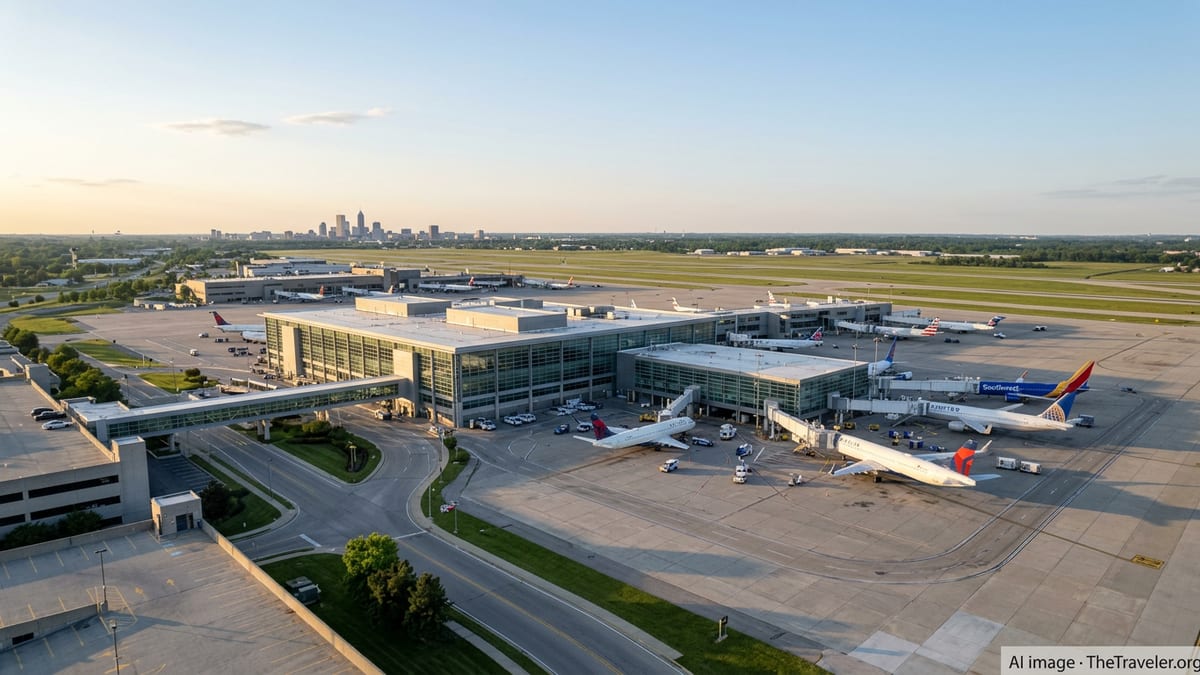
For most trips to central Indiana, Indianapolis International Airport, known by its code IND, is the obvious first choice. Located roughly seven miles southwest of downtown Indianapolis, it has consistently been recognized in passenger surveys for its modern terminal design, efficient operations, and relative ease of navigation. For a city of its size, Indianapolis benefits from robust connectivity to major U.S. hubs, along with a growing roster of leisure destinations.
Major U.S. carriers and low-cost airlines alike operate from Indianapolis, offering frequent service to large hubs such as Atlanta, Chicago O’Hare, Dallas Fort Worth, Denver, Charlotte, and New York LaGuardia. From these gateways, you can connect onward to almost any destination in North America and many international cities. In recent years, Indianapolis has also seen the addition of more international routes, including seasonal or year-round flights to warm-weather beach destinations and at least one transatlantic link, giving travelers the option to start long-haul trips directly from Indiana rather than backtracking through another state.
When planning an Indianapolis city stay or business trip, flying into IND minimizes your time on the road. Depending on traffic, you can be downtown in roughly 20 to 30 minutes by car or rideshare. The airport is directly connected to the interstate network, making it simple to continue onward to cities such as Bloomington, Lafayette, or Muncie. Rental car facilities are integrated into the terminal complex, which keeps arrival and departure logistics straightforward even for first-time visitors.
Compared with some large hubs, Indianapolis typically offers a calmer experience at security and check-in, particularly outside peak holiday periods. Travelers often find that they can arrive slightly closer to departure time than they would in larger coastal gateways, while still leaving a safe buffer. That said, during major sporting events or conventions, flights can fill quickly and fares rise, so early booking is advisable if you plan to visit during the Indianapolis 500, Big Ten events, or national-level conferences.
Secondary Indiana Airports for Central and Northern Destinations
While Indianapolis International is the primary gateway, several smaller Indiana airports can be more convenient depending on your itinerary. Fort Wayne International Airport in the northeast and South Bend International Airport in the north-central part of the state both provide commercial service and can reduce driving time if you are heading to nearby cities or lake communities.
Fort Wayne International Airport primarily serves travelers bound for northeastern Indiana and parts of western Ohio. It offers nonstop service to a collection of major hubs such as Chicago O Hare, Dallas Fort Worth, Atlanta, Detroit, Minneapolis, and Charlotte, along with seasonal or leisure routes to Florida and other sun destinations. The airport is compact and typically easy to navigate, which appeals to travelers who prefer shorter security lines and quick curb-to-gate transfer times, even if that means connecting through another city.
South Bend International Airport, on the other hand, plays a dual role. It serves northern Indiana communities and the University of Notre Dame but also functions as a smaller alternative for those headed toward the eastern side of the Indiana Dunes or southwestern Michigan. South Bend has nonstop flights to several hubs, including Chicago O Hare via regional connections, as well as service to cities such as Detroit and seasonal leisure destinations. An on-site rail station connects the airport to the broader region, offering another way to reach nearby communities and even central Chicago.
For travelers deciding between a flight into Indianapolis, Fort Wayne, or South Bend, the key questions involve where you plan to spend most of your time and whether nonstop options exist from your home airport. If you are visiting family or conducting business in smaller northern cities, landing close to your final destination can be worth a connection. If your plans are more statewide and flexible, Indianapolis’ larger network can offer more competitive fares and scheduling options.
Best Airports for Visiting the Indiana Dunes
The Indiana Dunes, protected as both a national and a state park along the southern shore of Lake Michigan, are among the state’s standout outdoor destinations. Reaching the dunes by air typically involves flying into a nearby commercial airport and then driving or taking rail service to the shoreline communities. Because of the area’s proximity to Chicago, most travelers will use airports in Illinois or northern Indiana rather than fly into Indianapolis.
The closest general aviation airport to the Indiana Dunes is Gary Chicago International in Gary, Indiana, but scheduled commercial service there is limited and intermittent. For most visitors, the primary gateways will be Chicago O Hare International Airport, Chicago Midway International Airport, and South Bend International Airport. O Hare offers the broadest range of domestic and international flights, including long-haul routes from Europe, Asia, and Latin America. Midway is a major base for low-cost carriers, with an emphasis on U.S. domestic and near-international flights, which can appeal to cost-conscious travelers willing to connect through Chicago.
From O Hare or Midway, the drive to the main areas of Indiana Dunes National Park and Indiana Dunes State Park typically ranges from about an hour to two hours, depending on traffic and the precise beach or town you are heading to. South Bend International sits to the east and is often the best option if you are coming from a city that offers nonstop service there, particularly if your final destination is closer to the eastern stretches of the park or the small lakefront communities nearby. Car rentals are widely available at all three airports, and driving is usually the most flexible way to explore the dunes, trailheads, and neighboring towns.
Travelers who prefer to avoid driving in Chicago’s traffic may consider combining air and rail. From O Hare or Midway, train connections can bring you to downtown Chicago, where you can board the South Shore Line commuter rail toward the dunes area. Several stations along that route are within a short walk or quick ride of park access points. This approach takes more time but allows you to experience the region without renting a car, useful for longer stays focused around a single base near the shoreline.
Airports Serving Southern Indiana and the Ohio River Valley
Southern Indiana covers a broad region, stretching from the college town of Bloomington to historic riverfront communities along the Ohio River. Because this part of the state lies closer to Kentucky and in some cases to Ohio, the most convenient airport may be outside Indiana’s borders. Your decision will depend on exactly where you plan to stay, whether in the rolling hills near state parks or in one of the small cities along the river.
Evansville Regional Airport, located in the southwestern corner of Indiana, is the principal commercial airport within the region. It serves the broader tri-state area of southwestern Indiana, western Kentucky, and southern Illinois. Airlines operating at Evansville generally connect through major hubs such as Atlanta, Dallas Fort Worth, Chicago, or Detroit, offering onward access to the national network. The airport’s compact size makes arrivals and departures relatively smooth, which is a strong advantage for short trips or frequent fliers visiting the same communities repeatedly.
Many travelers headed to Southern Indiana also consider Louisville Muhammad Ali International Airport just across the river in Kentucky. Louisville offers a wider range of nonstop domestic flights and serves as a significant cargo and logistics hub. If your destination includes towns such as New Albany, Jeffersonville, Madison, or the scenic areas along the Ohio River, Louisville can be the most practical choice, with driving times often under an hour. For destinations farther west, such as the Hoosier National Forest or small towns near the Illinois border, Evansville or even St. Louis Lambert International Airport can compete as viable options.
For visitors whose trips combine Indianapolis with Southern Indiana, a common strategy is to fly into IND, rent a car, and drive south. The road journey to Bloomington takes roughly an hour, while reaching the core Southern Indiana river towns can take two to three hours depending on distance. This approach gives you the flexibility to explore multiple regions in a single itinerary, especially if you plan to return north via a scenic route and fly home from the same airport.
Choosing Between Indianapolis and Neighboring Hubs
Travelers often face a decision between using Indianapolis as their primary gateway or taking advantage of larger hubs in neighboring states. The answer is rarely one-size-fits-all. For many domestic itineraries, especially from medium and smaller U.S. cities, flying directly to IND offers a balance of convenience and reasonable fares, particularly when the alternative involves a long drive from Chicago, Detroit, or another major hub after a flight.
If you are coming from overseas, however, nonstop transatlantic or long-haul options into Chicago O Hare, Detroit Metropolitan, or Cincinnati/Northern Kentucky can be more frequent and sometimes more competitively priced than connecting twice to reach Indianapolis. In these cases, some travelers choose to arrive at one of these larger hubs, clear immigration, and then drive or take a short onward flight to Indiana. The choice will be influenced by how comfortable you are driving after an overnight flight, your schedule, and whether you prefer to keep all segments on a single ticket for baggage and delay protection.
For trips focused on the Indiana Dunes or the northern border region, it is generally more time-efficient to use Chicago or South Bend rather than fly into Indianapolis and then drive several hours north and west. Conversely, if your primary focus is central Indiana, the added ground travel from a Chicago or Detroit arrival can negate any savings you might find in airfare. Using flight search tools that allow you to compare multiple origin or destination airports at once can highlight when a nearby hub delivers a substantially better deal.
Cost-conscious travelers sometimes look at one-way itinerary combinations, such as flying into Indianapolis and out of Chicago, especially if they are planning a broader Midwest road trip. While this can introduce additional planning complexity and potential one-way rental car fees, it may allow you to see more of the region without backtracking. As always, reading the fine print on rental car agreements and airline change policies is essential to avoid surprises.
Practical Tips for Booking Flights to Indiana
When booking flights to Indiana, flexibility on dates and airports tends to yield the best results. If your travel plans allow, search fares across several days or even an entire month to identify patterns in pricing. Midweek flights often cost less than peak Friday and Sunday departures, and early morning or late evening arrivals can sometimes be significantly cheaper than midday options. Factor in the additional costs and time associated with connections, baggage fees, and parking when comparing what appears to be a lower fare from a more distant airport.
Rental cars remain the most practical way to explore much of Indiana, particularly if you want to combine urban and rural destinations. Check whether your preferred airline allows you to bundle car hire with flights and compare that price against booking separately. In Indianapolis, Fort Wayne, South Bend, Evansville, and the major neighboring hubs, on-airport rental facilities allow for quick pick-up and drop-off. If you plan to visit during peak summer season at the Indiana Dunes or during major events in Indianapolis or Louisville, consider reserving vehicles and accommodations well in advance.
Weather can influence flight reliability in Indiana and the broader Midwest, especially in winter when snow and ice can lead to delays. While the state’s airports are well-practiced at handling winter operations, connecting through multiple northern hubs can increase your exposure to disruptions. If your schedule is tight, consider routing through hubs with historically robust winter operations or building in longer connection times. In summer, thunderstorms can also affect departures and arrivals, though these are often shorter interruptions.
Finally, consider your comfort preferences when deciding between a small regional airport and a larger hub. Smaller facilities like Evansville, Fort Wayne, or South Bend offer shorter walks and a quieter atmosphere but usually involve at least one connection. Larger airports such as Chicago O Hare, Louisville, or Detroit may provide more direct flights but require more time for security, terminal transfers, and potential congestion. Balancing price, time, and stress level is the key to crafting an itinerary that fits your travel style.
The Takeaway
Choosing the right airport for a trip to Indiana is less about finding a single “best” option and more about matching your flight with your itinerary on the ground. For most travelers heading to Indianapolis or central Indiana, Indianapolis International Airport provides the simplest, most direct access, with a solid network of domestic routes and a growing set of international options. Its manageable size and modern facilities make it a pleasant introduction to the state.
If your plans revolve around the Lake Michigan shoreline and Indiana Dunes, Chicago’s major airports and South Bend International usually offer the most efficient path, with short onward drives or rail links. For the river valleys and small cities of Southern Indiana, Evansville Regional and Louisville Muhammad Ali International stand out as practical gateways, keeping you closer to historic main streets, wineries, and forested hills.
By taking a few minutes to consider where you will spend most of your time, which airports your preferred airlines serve, and how comfortable you are with driving or rail connections, you can often build an itinerary that saves both hours and money. Indiana’s location amid several major Midwestern hubs works in your favor, presenting a variety of routes into the state whether you are visiting for a weekend event, a beach holiday at the dunes, or a longer road trip through its small towns and back roads.
FAQ
Q1. What is the best airport to fly into for visiting Indianapolis?
For stays in Indianapolis or central Indiana, Indianapolis International Airport is usually the best choice thanks to its strong domestic network, short transfer to downtown, and straightforward terminal layout.
Q2. Which airport should I use for the Indiana Dunes?
Most visitors to the Indiana Dunes fly into Chicago O Hare, Chicago Midway, or South Bend International, then drive one to two hours to reach the shoreline communities and park entrances.
Q3. Is there an airport directly at Indiana Dunes National Park?
No, there is no commercial airport inside the park. The closest general aviation field is in Gary, while practical commercial options are in Chicago or South Bend.
Q4. What is the main airport in Southern Indiana?
Evansville Regional Airport is the principal commercial airport within Southern Indiana, serving the wider tri-state area and offering connections through major U.S. hubs.
Q5. Should I fly into Louisville for Southern Indiana?
Yes, Louisville Muhammad Ali International Airport can be very convenient for towns along the Ohio River and eastern parts of Southern Indiana, with relatively short driving times.
Q6. Is it better to connect into Indianapolis or drive from Chicago?
For central Indiana, connecting into Indianapolis often saves time over driving from Chicago, while for northern destinations near the dunes, arriving in Chicago and driving is typically more efficient.
Q7. Are there international flights directly to Indiana?
Indianapolis International offers some international routes to leisure and regional destinations, but many long-haul journeys still connect through larger hubs such as Chicago or Detroit.
Q8. Do I need a rental car when flying into Indiana?
In most cases a rental car is helpful, especially if you want to explore beyond city centers, visit the dunes, or tour the small towns and parks of Southern Indiana.
Q9. When is the best time to book flights to Indiana?
Booking several weeks to a few months in advance generally provides better availability and pricing, especially for peak summer, holiday periods, or major events like the Indianapolis 500.
Q10. How does winter weather affect flights to Indiana?
Winter storms can cause delays across the Midwest, so it is wise to allow extra connection time, monitor forecasts, and stay flexible with your schedule during the coldest months.