

More news on this day
Travelers heading to and from Mexico are facing fresh disruption as more than a dozen flights operated by Aeroméxico, JetBlue, Viva Aerobus, United and other carriers are cancelled, affecting busy routes linking Mexico City, New York, Toronto, Newark and other major cities across North America.
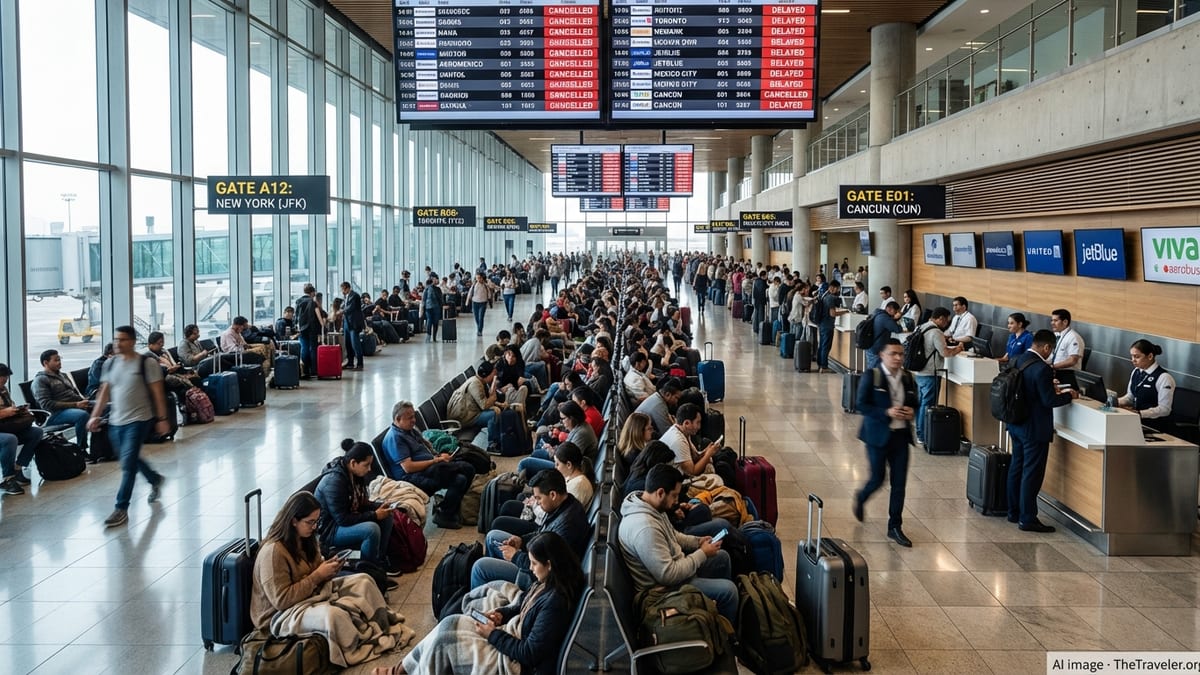
Widespread Cancellations Across Major Mexican Hubs
Air travel in and out of Mexico saw another wave of disruption on February 27 and 28 as airlines scrubbed over 20 flights across key airports, including Mexico City, Cancún, Monterrey and Tijuana. Operational data reviewed by industry trackers and local outlets shows a concentrated cluster of cancellations touching both domestic and international routes, particularly those connecting Mexico with the United States and Canada.
Among the most affected carriers were low cost operator Viva Aerobus and flag carrier Aeroméxico, alongside major North American airlines such as United and JetBlue. The cancelled services hit some of the region’s highest demand city pairs, including flights between Mexico City and New York, as well as services into Toronto, Montreal, Newark and Houston from popular Mexican gateways.
The disruption has come at a busy late-winter travel period, leaving aircraft out of position and creating knock-on effects for evening and next-day departures. While no single cause has been cited for all cancellations, a mix of lingering operational challenges, security-related rerouting earlier in the week, and congested schedules has added strain to already tight networks.
At General Mariano Escobedo International Airport serving Monterrey, four flights were cancelled and more than a dozen delayed on Saturday alone, impacting connections to Guadalajara, Cancún, Mexico City and multiple U.S. destinations. Similar pockets of disruption were recorded at Mexico City’s Benito Juárez International Airport and at Cancún, one of the country’s busiest leisure hubs.
Impact on Routes Linking Mexico, the U.S. and Canada
The latest cancellations have been especially disruptive on cross-border routes, where capacity between Mexico and key U.S. and Canadian cities is heavily relied upon by both leisure and business travelers. Services involving New York, Newark, Toronto and Montreal saw particular pressure as airlines adjusted schedules in response to operational constraints.
Industry data for the past several days shows more than two dozen departures cancelled across seven Mexican airports, touching flights to and from New York City’s airports, Toronto and Montreal in Canada, and major U.S. gateways including Houston and other Texas cities. Some Mexico City departures bound for the U.S. Northeast were among the services affected, forcing travelers to scramble for scarce rebooking options.
Aeroméxico, which operates a key trunk route between Mexico City and New York’s John F. Kennedy International Airport, has seen at least one recent cancellation on this corridor amid otherwise regular operations. United, which maintains an extensive Mexico network from hubs such as Houston and Newark, has also been adjusting schedules while keeping in place a civil unrest travel waiver for Jalisco state that covers travel through late March for Guadalajara and Puerto Vallarta.
Canadian travelers have not been spared. Flights linking Mexican resort cities with Toronto and Montreal have encountered cancellations and delays as Canadian and Mexican carriers navigate both earlier security disruptions and the ripple effects on aircraft and crew rotations. For some passengers, that has meant unexpected overnight stays or lengthy detours via alternate hubs.
Travelers Stranded Amid Growing Airport Congestion
The operational turmoil has translated into crowded terminals and mounting frustration for passengers. In recent days, local media have reported hundreds of travelers stranded at airports in Mexico City, Cancún, Guadalajara, Monterrey and Tijuana as cancellations and more than a hundred delays stacked up across the country’s main gateways.
At times, departure boards at these airports have shown rows of delayed or cancelled flights, with queues stretching from check in counters to customer service desks. Many travelers have reported difficulties securing timely rebooking, particularly on international routes where alternative flights are limited and remaining seats quickly sell out.
Families returning from beach vacations, business travelers attempting to reach meetings in New York or Toronto, and residents connecting through Mexico’s domestic network have all been caught up in the disruption. For some, unexpected hotel stays and additional ground transport costs have added to the financial burden of the cancellations.
Airports and airlines have urged passengers to arrive early, monitor their flight status closely and, where possible, make use of digital channels and mobile apps to rebook or request assistance. However, intermittent congestion on call centers and customer service chat platforms has left many travelers waiting longer than usual for support.
Airlines Respond With Waivers and Schedule Adjustments
In response to the continued instability, several carriers have introduced or extended flexible travel policies on select routes. United has kept in place a travel waiver for civil unrest in Jalisco, covering travel to and from Guadalajara and Puerto Vallarta for tickets issued before late February, allowing customers to change their plans without incurring standard change fees. Other airlines are offering case by case flexibility depending on route and fare conditions.
Operational teams across Aeroméxico, Viva Aerobus, JetBlue and United have also been working to gradually normalize schedules after earlier disruptions linked to security incidents in western Mexico and severe winter weather in parts of the United States. That combination initially prompted widespread diversions and cancellations, particularly affecting flights into Puerto Vallarta and Guadalajara, and has continued to reverberate through aircraft rotations.
While airlines stress that safety and security remain the overriding priority, frequent last minute adjustments have left passengers with little visibility beyond the next 24 to 48 hours. Network planners are attempting to rebuild resilience by consolidating lower demand frequencies and prioritizing core trunk routes that link Mexico City and major coastal destinations with U.S. and Canadian hubs.
Industry analysts note that carriers operating in Mexico are juggling multiple challenges at once, from volatile demand patterns and evolving security assessments to infrastructure constraints at key airports. That has made it harder to fully absorb irregular operations without resorting to cancellations that cascade throughout the network.
What Travelers Should Do If Their Flight Is Affected
With further schedule changes possible in the coming days, travelers heading to or from Mexico are being advised to treat flight status checks as essential rather than optional. Monitoring airline apps, email alerts and airport information screens frequently on the day of travel can provide early warning of delays or cancellations, giving passengers more time to react.
Passengers whose flights are cancelled are typically entitled to a refund if they choose not to travel, regardless of the reason for the cancellation. Many airlines are also offering the option to rebook on a later date at no additional cost on affected routes, although seat availability can be severely limited on popular city pairs such as Mexico City to New York, or Cancún to major U.S. and Canadian hubs.
Travelers with tight connections, onward cruise departures or time sensitive commitments are being encouraged to build in additional buffer time and to consider routing flexibility where possible, including alternative gateways in both Mexico and the United States. Given the fluid situation, having a backup plan, travel insurance that covers disruption, and key airline support numbers stored in a mobile phone can help ease the strain if plans suddenly change.
For now, airlines and airports across Mexico are working to stabilize operations, but the recent wave of cancellations underscores how quickly conditions can shift on high traffic routes linking Mexico City, New York, Toronto, Newark and other major North American cities.