

More news on this day
Intercity coach operator FlixBus is experiencing a sharp spike in bookings on services into several 2026 FIFA World Cup host cities, with routes serving New York, Boston, Miami and Dallas among those seeing seats snapped up weeks and months ahead of match days.
Get the latest news straight to your inbox!
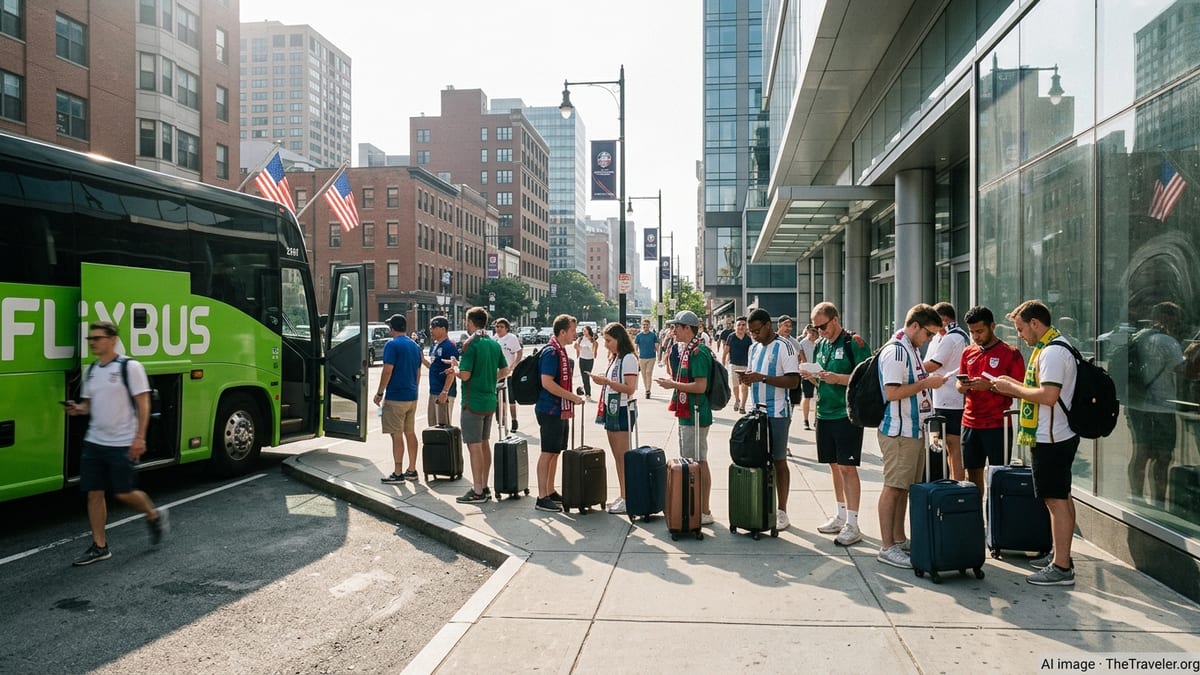
World Cup Schedules Intensify Intercity Bus Demand
The 2026 FIFA World Cup, running from 11 June to 19 July across 16 host cities in the United States, Canada and Mexico, is reshaping long distance travel patterns well before the first whistle. As match calendars, fan festival plans and transport funding packages have been finalized, publicly available data shows fans locking in ground transport early to avoid volatile airfares and limited parking near stadiums.
FlixBus, which has built a wide U.S. network over the past several years, is positioned on many of the domestic corridors linking major population centers with World Cup venues. Industry tracking of booking trends indicates that services into New York, Boston, Miami and Dallas are among the quickest to reach capacity around marquee fixtures, especially on weekends when multiple games and fan events overlap.
Broader travel industry analysis suggests that this demand is not isolated. Accommodation platforms, charter bus firms and mobility planners are reporting booking curves that are steeper than normal for early 2026, particularly in host markets where stadium parking is constrained and road congestion is expected to be severe on match days.
New York and Boston Routes Lead Northeastern Surge
In the Northeast, New York and Boston are emerging as some of the most sought after destinations for World Cup spectators. Tournament schedules give the New York New Jersey region a heavyweight slate of games, including high profile knockout fixtures, while Boston’s Gillette Stadium is expected to attract hundreds of thousands of visitors over its run of seven matches.
FlixBus has steadily expanded its New York network in recent years, adding direct and connecting services that feed in from cities such as Washington, Philadelphia and Chicago. That web of routes is now providing a lower cost alternative to flying for fans planning multi city itineraries or day trips into the metro area for specific games and fan zone activities.
Boston’s situation is slightly different but no less intense. Local planning documents and hospitality analyses indicate that the region has a relatively tight accommodation market and limited on site parking at Gillette Stadium, factors that encourage visitors to rely on transit and intercity buses instead of rental cars. As match days approach, routes linking Boston with New York, Montreal and other New England and Mid Atlantic hubs are showing particularly strong interest from groups coordinating their travel around specific fixtures.
Miami and Dallas See Southern and Sunbelt Crowds Build
In the southern United States, Miami and Dallas are preparing for heavy inflows of both domestic and international supporters. Miami’s role as a gateway for Latin American fans, combined with its fan festival plans and waterfront viewing areas, is driving demand for regional bus travel from across Florida and neighboring states as visitors seek to pair matches with extended beach or city breaks.
Dallas, meanwhile, will host a significant number of matches and serve as a media and operations hub for the tournament. Transportation planning reports highlight that the region is one of a handful of U.S. venues with the capacity for substantial on site parking, yet overall traffic volumes on match days are still expected to strain local highways. For price sensitive fans and those wary of potential road gridlock, intercity coaches such as FlixBus offer a way to arrive closer to central transit connections without navigating stadium parking themselves.
FlixBus has also strengthened its presence in Texas in the run up to the tournament, relocating operations to a new intercity bus terminal in Northwest Dallas and broadening links with other major cities in the state. Those investments are now intersecting with World Cup demand, contributing to faster sell out patterns on peak services into the region.
Ground Transport Rises as Alternative to Flights and Driving
The surge in bookings on key FlixBus routes is part of a wider shift toward ground transport for World Cup travel. Surveys of prospective attendees suggest that many fans remain committed to driving, but concerns around parking availability, dynamic pricing and traffic restrictions are nudging others toward buses and trains for at least part of their journeys.
At the same time, airfare volatility for peak summer travel in North America is pushing cost conscious supporters to consider longer but cheaper overland options. For groups following their teams across multiple host cities or combining matches with tourism in major hubs like New York, Miami and Dallas, intercity buses can provide a consistent price point and predictable journey times when booked in advance.
Publicly available transportation guidance for host cities also emphasizes the role of shared modes in reducing congestion and emissions during the tournament. Intercity operators such as FlixBus are expected to complement local rail and bus networks by delivering fans to downtown gateways and transit hubs, where they can transfer to dedicated match day shuttles or urban rail links.
Capacity Crunch Signals Early Booking Season for Fans
Fast filling buses into World Cup host cities underscore a clear message for travelers: early planning is becoming essential. Services connecting secondary cities and college towns with New York, Boston, Miami and Dallas are already showing limited availability around the busiest match windows, especially for evening departures and weekend returns.
Travel advisers tracking the event recommend that fans treat intercity bus seats much like stadium tickets or centrally located hotel rooms, securing them as soon as match dates and personal schedules are confirmed. In some cases, it may be easier to adjust kick off times or fan festival visits around already booked transport rather than hoping to find last minute options at reasonable prices.
For operators, the emerging pattern provides both an opportunity and a challenge. Strong demand gives companies such as FlixBus an incentive to add frequencies, adjust schedules and explore temporary seasonal routes that link clusters of host cities. At the same time, they must balance the need for extra capacity with operational constraints and the risk that demand could shift quickly if fans change travel plans or match outcomes alter itineraries late in the tournament.
With just months to go until the opening game, the sell out pace on some of FlixBus’s most popular World Cup routes offers an early glimpse of how North America’s transport systems will be tested by one of the largest sporting events ever hosted in the region.