

More news on this day
Thirty passengers on a floating bridge vessel were left stranded in the middle of Chilika Lake after the craft developed a technical problem and drifted off course, according to regional media coverage, before being safely brought back to shore.
Get the latest news straight to your inbox!
Tourist Outing Turns into Mid-Lake Ordeal
Reports indicate that the floating bridge vessel, used to ferry visitors across sections of Chilika Lake, encountered a technical snag during a routine trip, leaving around 30 people temporarily marooned on the water. The incident occurred late in the morning, when visibility was good and lake conditions were relatively calm, limiting the immediate physical danger to those on board but causing considerable anxiety among passengers.
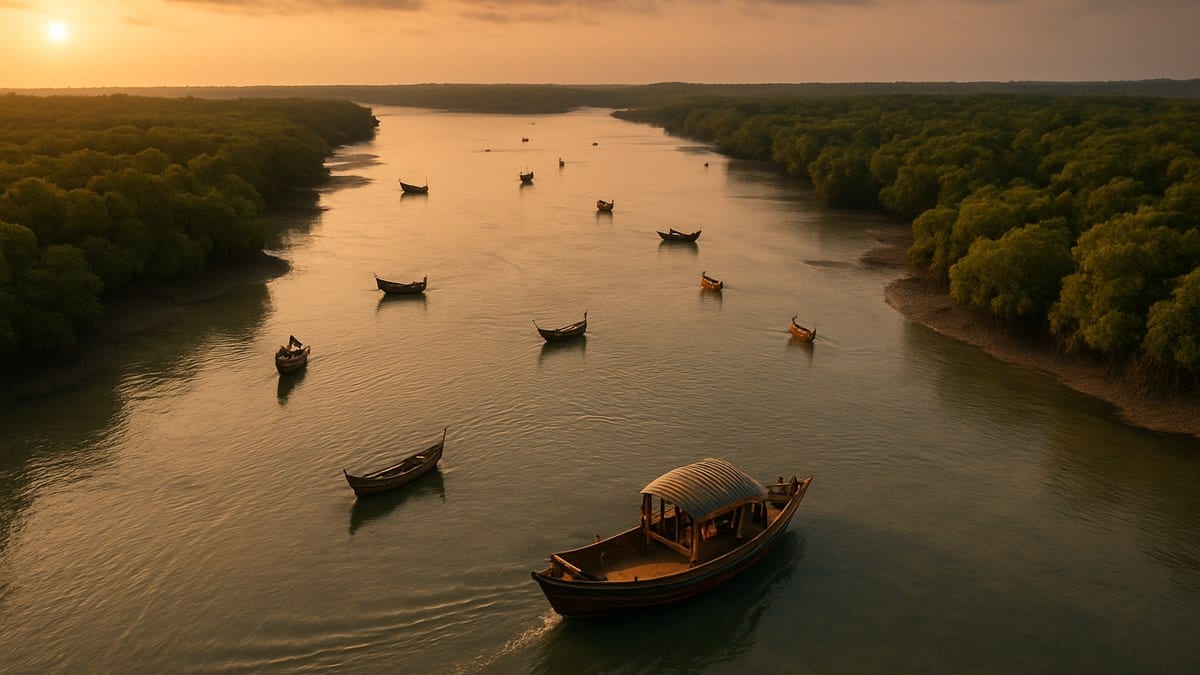
Regional newspapers describe how the vessel lost effective maneuverability and began to drift, eventually coming to a halt away from designated routes. While no serious injuries were reported, passengers were unable to disembark due to the depth of the water and the distance from the shore. Images carried in local outlets show the craft sitting motionless on the expansive lagoon, with other small boats positioned nearby as part of the response.
Chilika Lake, which spreads across the districts of Puri, Khurda and Ganjam in Odisha, is a popular destination for both domestic and international visitors, many of whom arrive specifically to experience boat rides and watch dolphins in the brackish waters. The incident unfolded during a period of steady tourist traffic, underlining how disruptions to lake transport can rapidly affect not only passenger safety but also the wider visitor economy.
Publicly available information suggests that the vessel involved was part of a floating bridge service intended to ease short-distance crossings and provide panoramic views of the lake. These platforms combine aspects of pontoons and powered craft, offering a more stable feel than smaller boats, yet they still rely heavily on engines, moorings and trained crews to operate safely.
Swift Evacuation and Safe Return to Shore
Local coverage notes that nearby boats, including smaller fishing vessels and other service craft, played a key role in ensuring that stranded passengers were not left waiting for extended periods. Responders maneuvered alongside the stationary floating bridge, coordinating to transfer people in small groups where necessary and escort the vessel as it was gradually brought under control.
Published reports emphasize that all 30 passengers were eventually transported to safety, with medical checks made available once they reached the shore. While some individuals experienced stress and discomfort, there were no accounts of life-threatening conditions. The outcome has been described by regional commentators as a fortunate escape, given that sudden shifts in weather or visibility on a large waterbody like Chilika can quickly complicate rescue efforts.
The incident also highlighted the informal emergency networks that often underpin transport across Chilika Lake. Fishing communities and local boat operators, who are deeply familiar with currents, shoals and wind patterns, are frequently among the first to respond when a craft experiences problems. In this case, publicly accessible reports point to their rapid involvement as a stabilizing factor in an otherwise precarious situation.
Once passengers reached land, attention turned to assessing the condition of the floating bridge vessel itself. Technical teams examined the structure and propulsion systems to determine whether mechanical failure, steering issues or anchoring problems led to the mid-lake stranding, with a view to deciding when or if the vessel should return to service.
Spotlight on Safety Standards at Chilika
The latest incident has renewed scrutiny of safety practices across Chilika’s busy waterways. Previous episodes reported in the region have involved passenger boats stalling mid-lake due to engine trouble or rough conditions, though large-scale casualties have generally been avoided. This pattern has fueled a debate over whether existing safety protocols and enforcement are sufficient for an area that sees thousands of visitors each season.
According to publicly available regulatory guidance, passenger-carrying vessels on Indian inland waters are expected to follow norms that cover life jackets, load limits, crew training and periodic inspections. However, regional media commentary suggests that implementation can be inconsistent, particularly for smaller or specialized craft such as floating bridges and pontoons that do not fit traditional categories of ferries or tourist boats.
Observers note that Chilika Lake’s geography presents its own challenges. The lagoon’s combination of shallow stretches, shifting sandbars and deeper channels demands precise route planning and constant attention from pilots. Sudden changes in wind direction or tidal influence can cause a craft with limited maneuverability to drift towards shallow areas or unmarked zones, complicating rescue logistics if an engine or steering fault occurs.
Travel and tourism operators in the area increasingly market Chilika as a premium eco-tourism destination. Following the stranding of the floating bridge vessel, industry voices cited in local reports have argued that a visible commitment to rigorous safety standards is essential to maintain visitor confidence, particularly among first-time travelers who may be unfamiliar with inland-water navigation.
Implications for Tourists and Local Operators
For visitors planning trips to Chilika Lake, the episode serves as a reminder to pay closer attention to safety cues before boarding any vessel. Travel advisories often encourage tourists to check the availability of life jackets, observe whether passenger limits are being respected and favor operators who appear to follow structured boarding procedures. Although the stranded passengers were ultimately rescued without major harm, their experience illustrates how unexpected technical problems can quickly disrupt what is meant to be a leisurely excursion.
Local boat operators, many of whom rely heavily on tourism income, now face renewed pressure to demonstrate compliance with safety norms. Industry-focused reports suggest that some associations are considering additional voluntary measures, such as routine safety briefings before departure and clearer signage in multiple languages to assist non-local visitors.
Floating bridge services, which have been promoted in parts of India as novel attractions and practical connectors between shores, may receive particular attention. Specialists cited in public forums have pointed to the need for robust maintenance regimes for pontoons, hinges, propulsion units and mooring systems, as failures in any of these components can leave passengers stuck far from land.
At the same time, regional commentators have highlighted the importance of coordinated emergency planning among government agencies, private operators and local communities. Joint drills, standard communication channels and clear responsibilities during an incident are seen as crucial steps to minimizing response times when a vessel is in distress on the lake.
Chilika’s Tourism Future After the Scare
Despite the unsettling nature of the floating bridge stranding, early indications are that Chilika Lake will remain a major draw for travelers, particularly those interested in birdwatching, lagoon landscapes and coastal culture. Past disruptions on the water have typically led to short-term concern rather than long-term declines in visitor numbers, provided that visible steps are taken to address underlying issues.
Tourism analysts following Odisha’s coastal circuit note that safety incidents can, paradoxically, act as catalysts for overdue reforms. Enhanced inspection schedules, upgraded equipment and better-trained crew members can raise overall service quality, benefiting both residents who depend on lake transport and tourists seeking reliable, scenic crossings.
For now, the safe recovery of all 30 passengers has been widely regarded in public commentary as a relief, while also underlining the risks inherent in operating complex floating structures on dynamic waterbodies. As investigations into the exact technical cause proceed, the episode on Chilika Lake stands as a cautionary tale for waterfront destinations across the region that are embracing floating bridges and other novel marine attractions.
The balance between innovation in tourist infrastructure and uncompromising attention to safety will likely shape how quickly confidence rebounds. For travelers, informed choices and basic precautions remain key; for operators and regulators, the latest scare on Chilika offers a clear prompt to ensure that every crossing, whether on a traditional boat or a modern floating bridge, is backed by robust preparation and oversight.