

More news on this day
Florida lawmakers are advancing legislation that could effectively torpedo plans for a controversial new cruise port in Tampa Bay, raising fresh questions about the future of large-ship cruising on Florida’s Gulf Coast.
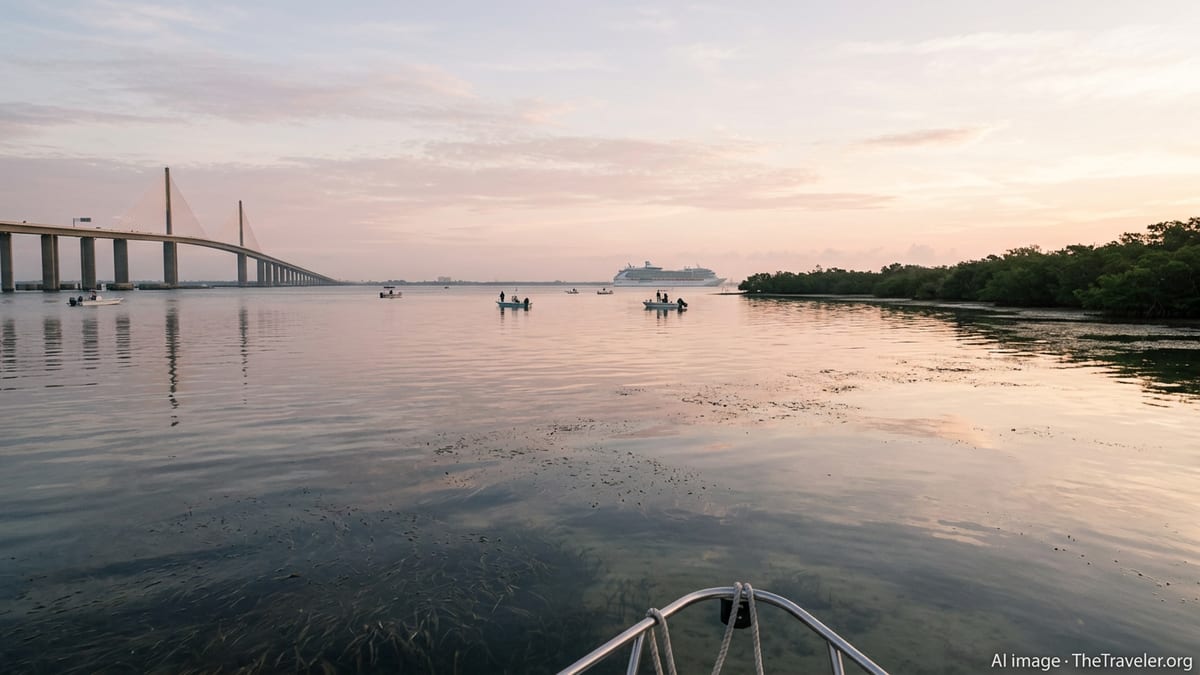
Bill Targets Dredging Needed for Skyway Cruise Port
A measure moving through the Florida Legislature is emerging as a decisive threat to the proposed Skyway cruise port, a large new terminal complex planned near the Sunshine Skyway Bridge at the mouth of Tampa Bay. The project, championed by port developer SSA Marine and local partners, was conceived to handle mega-ships that cannot sail upriver to existing berths in downtown Tampa because of the bridge’s limited clearance.
The proposed facility would require extensive dredging of a new, roughly 4.5 mile channel to create deep-water access for the latest generation of cruise vessels. That work cuts directly through the Terra Ceia Aquatic Preserve, a protected stretch of shallow seagrass flats and mangrove habitat that links lower Tampa Bay with the Manatee River and Port Manatee.
In February, state Senator Jim Boyd, a Republican from Bradenton, filed an amendment to a coastal resiliency bill that would significantly restrict new dredging in the preserve. If enacted, the measure would close off the very pathway needed to bring large cruise ships into the proposed terminal, effectively blocking the project without naming it directly.
The Florida Senate has since advanced the bill, prompting industry observers to warn that the legislation could “effectively kill” the Skyway port concept as currently designed. Supporters of the amendment frame it instead as a straightforward effort to align state law with the preserve’s original conservation intent.
Environmental Safeguards Versus Cruise Growth Ambitions
The legislative move caps months of intensifying debate over whether a mega-cruise port can coexist with one of the region’s most sensitive marine environments. Terra Ceia’s shallow grass beds, oyster bars and mangrove islands support manatees, wading birds and critical nursery habitat for fish that underpin the region’s recreational and commercial fisheries.
Environmental organizations, including Tampa Bay and Suncoast water advocacy groups, argue that carving a deep channel through the preserve would permanently alter tidal flows, stir up decades of accumulated sediment and damage seagrass that has taken years and substantial public investment to restore. They say cruise-related traffic, fuel emissions and potential spills would add new risks to an already stressed estuary.
Backers of the Skyway port counter that a carefully engineered design, modern dredging techniques and operational safeguards can limit environmental impacts while unlocking significant economic gains. They point to Florida’s broader seaport mission plans, which foresee continued growth in cruise passengers statewide, and argue that the Gulf Coast needs new deep-water capacity to keep pace with larger ships being deployed by major lines.
The proposed legislation forces lawmakers to weigh those competing priorities in stark terms. While Tampa Bay’s existing terminals continue to perform strongly, the Skyway project was pitched as a long-term solution that would ensure the region remains relevant to the newest and most lucrative vessels in the cruise fleet.
Local Backlash Builds Around Rattlesnake Key and Terra Ceia
On the ground, opposition to the new port has swelled well beyond organized environmental circles. Public meetings and waterfront rallies in Manatee County and around Tampa Bay have drawn anglers, boaters, residents and small business owners who warn that a mega-cruise terminal could transform the character of the lower bay.
Much of the concern centers on Rattlesnake Key and adjoining lands near the planned site, long prized for their largely undeveloped shorelines and shallow waters popular with recreational fishing and birdwatching. A prior effort to bring the area into state ownership for conservation fell through after an appraisal dispute, clearing the way for the current private development push and fueling frustration among preservation advocates.
Residents worry that a constant procession of large ships and support vessels would crowd local channels used by smaller craft and charter operators, while new parking fields, access roads and terminal infrastructure could spur broader coastal development pressure. Fishing groups also point to state data showing Tampa Bay’s outsized contribution to Florida’s commercial catch as evidence the area’s working waters are an economic asset in their own right.
The emerging legislation has energized these critics, who see it as a rare opportunity for Tallahassee to draw a clear line around an aquatic preserve that, in their view, was never meant to accommodate one of the world’s most capital-intensive forms of mass tourism.
Implications for Tampa’s Cruise Future
The Tampa Bay region already hosts a robust cruise business from Port Tampa Bay’s downtown terminals, where ships sail under the Sunshine Skyway to reach the city’s inner harbor. But the bridge’s vertical clearance limits the size and design of ships that can homeport there, a constraint that has become more acute as cruise lines invest in ever larger vessels packed with onboard attractions.
Port Tampa Bay has been pursuing its own expansion plans, including work on a potential fourth terminal to increase calls and passenger throughput within the existing navigation channel. Those projects are separate from the Skyway proposal and are not directly affected by the Terra Ceia dredging restrictions, but the fate of the new legislation will influence how and where future capacity is added across the broader bay system.
If the current bill survives the legislative process and is signed into law, major cruise lines may need to rethink long-range deployment strategies for Florida’s west coast, potentially favoring established deep-water hubs such as PortMiami and Port Everglades for their newest ships. Analysts note that Tampa could still attract a steady lineup of mid-size vessels, but the chance to create a new Gulf gateway tailored to mega-ships would likely recede for the foreseeable future.
Local tourism officials are watching closely. While some hoteliers and attraction operators have welcomed the idea of a larger cruise presence, others express concern that a major industrial-style terminal at the mouth of the bay could undermine the region’s brand as a nature-oriented coastal destination if environmental protections fall short.
What Comes Next in the Legislative Battle
The bill targeting dredging in Terra Ceia now heads into further committee reviews and potential reconciliation with any House counterpart before reaching Governor Ron DeSantis. Cruise interests, port advocates and environmental groups are lobbying intensely during this phase, pressing for clarifying language or amendments that could either narrow or expand the measure’s reach.
Developers of the Skyway port have signaled a willingness to keep talking with local officials and community leaders, but have also warned that prolonged uncertainty could chill investment. Without a clear path to the deep-water access required by modern cruise ships, financing a multi-berth terminal and associated infrastructure becomes significantly more difficult.
For residents around Tampa Bay, the legislative calendar now serves as a proxy countdown for the project itself. If the dredging restrictions are enacted largely as proposed, the Skyway cruise port in its current form may never leave the drawing board. If lawmakers soften the language or the bill stalls, developers are likely to press ahead with detailed planning and formal permit applications.
Either way, the debate has thrust Tampa Bay’s evolving relationship with cruise tourism into the spotlight, highlighting the trade-offs coastal communities face as they balance economic opportunity with the long-term health of the waters that make them attractive in the first place.