

More news on this day
Florida lawmakers have approved a controversial measure to rename Palm Beach International Airport after Donald Trump, setting up a politically charged branding overhaul at one of South Florida’s busiest travel gateways and raising practical questions for airlines, local officials and millions of passengers who use the airport each year.
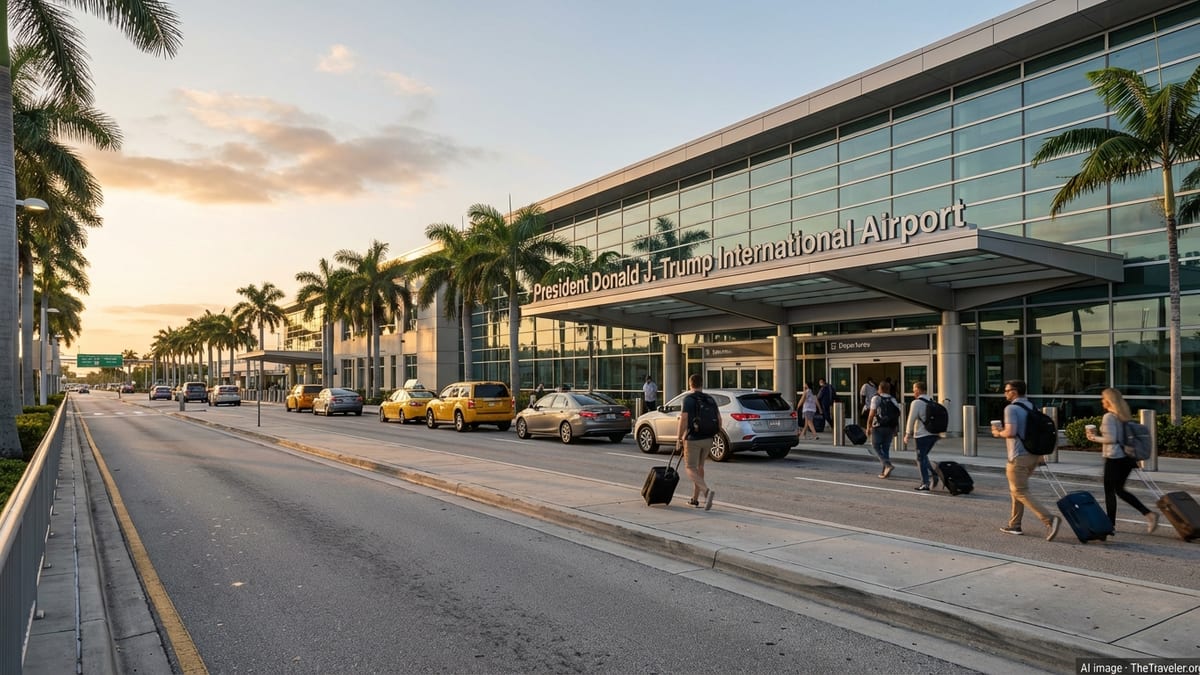
What Lawmakers Approved and What Happens Next
The Republican-controlled Florida Legislature has voted to change the name of Palm Beach International Airport to President Donald J. Trump International Airport. The state House first backed the bill by a wide margin, followed by the Senate, which voted 25 to 11 in favor of the renaming. The measure targets the West Palm Beach facility, a key hub for both leisure and business travelers heading to Palm Beach County and the broader South Florida region.
The legislation now heads to Governor Ron DeSantis, who has not yet publicly committed to signing it. If he does, the bill will shift final naming authority for major commercial airports from local governments to the state, with Palm Beach International singled out for an immediate rebrand. The other large Florida airports are mentioned only to confirm their current names, underscoring that this is a highly specific political and symbolic move centered on Palm Beach.
Even with the governor’s signature, the new name will not appear overnight on departure boards and road signs. Federal regulators, including the Federal Aviation Administration, must review and approve the name change. State analyses anticipate that, if all approvals are granted, the rebranding would roll out in stages and could become fully effective in mid-2026, giving airlines, airport managers and travel companies time to adjust systems and signage.
For travelers, that means the airport code PBI remains the essential identifier for the foreseeable future. Airline reservations, baggage tags and flight information displays rely on three-letter codes, which are unlikely to change, even if the official name above the terminal doors does.
Why Palm Beach and Why Now
Palm Beach County holds a unique place in Donald Trump’s political and personal story. After moving his primary residence from New York to Florida in 2019, Trump made his private club, Mar-a-Lago, in Palm Beach his home base. Palm Beach International Airport, located only a few miles away, has since become a regular stage for his arrivals and departures, including seasonal stays and political events that draw national media attention.
Supporters of the renaming argue that this close relationship between Trump, Palm Beach and the airport makes the honor fitting. Republican sponsors have framed the proposal as a recognition of Trump as the first Florida resident elected president and have cited his policies on immigration, trade and foreign affairs as reasons to etch his name into the state’s transportation map. In their telling, the airport would join highways, libraries and other civic landmarks named after presidents and governors across the country.
Critics counter that the timing is unusual and intensely political. Trump is both a current political figure and an active presidential contender, and naming a major piece of public infrastructure after him while he remains on the ballot breaks with the more traditional practice of honoring leaders after their service or life has ended. Opponents also note that Palm Beach County voters have not consistently backed Trump in recent presidential elections, raising questions about how well the new name reflects local sentiment.
The move also follows a broader trend in Florida of aligning high-profile public symbols with Trump’s brand, including legislative steps to facilitate a future presidential library in Miami and prior efforts to rename a local roadway in his honor. Taken together, the airport bill is seen by many as another chapter in a long-running tug of war over identity and power in a fast-changing region.
Local Backlash and Community Concerns
Local reaction in Palm Beach County has been sharply divided, with a clear split between state-level decision makers and many leaders closer to the airport itself. Democratic lawmakers and local officials have criticized the legislature for pushing through the bill without extensive community consultation, arguing that residents, airport workers and nearby businesses will live with the consequences of the rebrand long after the headlines fade.
Officials representing the West Palm Beach area have described the process as top down, saying county voices were sidelined in favor of state political priorities. They argue that naming decisions for critical infrastructure should originate locally and reflect a broad community consensus. Several have called for a formal referendum or at least structured public hearings before the state locks in such a prominent and polarizing name.
Opponents also worry about the airport becoming a flashpoint for protests and partisan messaging. Palm Beach International has historically marketed itself as a convenient, relatively low-stress alternative to the larger Miami and Fort Lauderdale airports. Critics fear that a new name tied directly to one of the nation’s most divisive political figures could complicate that image and inject ideological tension into what is, for most travelers, a purely practical gateway to beaches, golf resorts and family visits.
For tourism stakeholders, the question is less about personal politics and more about perception. Hotel owners, convention planners and destination marketers are quietly assessing whether the Trump naming will deter some visitors or, conversely, attract political tourists drawn to the idea of flying into an airport bearing his name. The short-term uncertainty has added an extra layer of complication as the county heads into key booking windows for the 2026 high season.
What the Name Change Means for Travelers
For most passengers, the most immediate impact will be cosmetic. Flight numbers, routes and airport operations will continue as normal, and the three-letter code PBI will remain unchanged. Airline websites and booking platforms are expected to update their airport descriptions and drop-down menus to reflect the new name if and when it becomes official, but those changes happen largely behind the scenes and rarely affect ticket prices or schedules.
On the ground, the changes will be much more visible. New exterior signage at terminal entrances, roadway approaches and parking facilities will have to be designed, fabricated and installed. Inside, wayfinding signs, digital display labels, announcements and printed materials will all be updated to reference President Donald J. Trump International Airport. Travelers who have grown accustomed to spotting Palm Beach International on highway guide signs and rental car brochures will gradually see that label disappear.
Navigation apps and GPS systems will also adjust. Because most digital mapping services rely on official naming data from government sources, the new name would propagate across services in the months after federal and state approvals. Travelers searching for Palm Beach International Airport in those apps should still be directed correctly, but the primary label would eventually switch to the Trump-branded name, potentially causing some initial confusion for visitors who are unaware of the change.
One area to watch is how international carriers and foreign tourism boards refer to the airport in their own languages and marketing. Some may lean on the Trump name as a recognizable global brand, while others may emphasize the Palm Beach geographic reference to maintain continuity. For now, airlines are waiting for clarity from state and federal authorities before launching any major communications campaigns around the rebrand.
The Cost of Rebranding and Who Pays
Behind the political drama lies a significant practical question: how much the renaming will cost and who will foot the bill. Early estimates from airport officials put the price tag for rebranding at roughly 5.5 million dollars. That figure includes new exterior and interior signage, updates to branded vehicles and uniforms, changes to marketing materials, website and app redesign, and extensive revisions to overhead announcements and emergency messaging systems.
State fiscal analyses have acknowledged that counties like Palm Beach could incur new costs as a result of the legislation, but they have not provided a detailed funding plan. Lawmakers backing the bill have argued that the state may allocate money to help with the transition, while also suggesting that some of the changes could be phased in over time to ease the financial burden. Local officials, however, have warned that without dedicated state funding, the airport itself could be forced to absorb much of the expense.
Because Palm Beach International is owned and operated by Palm Beach County, any unfunded mandates tied to rebranding could translate into pressure on airport operating budgets. That, in turn, raises the possibility of higher fees for airlines or parking and concessions, although no specific increases have been announced. For travelers, the concern is that incremental operational costs tied to a politically driven renaming could eventually find their way into the price of doing business at PBI.
The cost issue has become a rallying point for critics who see the name change as an unnecessary expenditure at a time when airports nationwide are juggling security upgrades, sustainability targets and capacity challenges. Supporters, for their part, argue that many airports have undergone rebrands and expansions in recent decades and that the one-time cost is a reasonable price for what they describe as a historic honor.
Branding, Trademarks and the Trump Organization
The renaming effort is intertwined with a parallel push by the Trump Organization to secure trademark rights related to airports bearing the Trump name. In the days leading up to the Florida vote, Trump’s business entities filed trademark applications seeking protection for terms such as President Donald J. Trump International Airport and related branding across a range of travel-related merchandise and services.
Representatives of the Trump Organization have said the filings are intended to protect the name from misuse rather than to generate profit. They argue that Trump’s brand is frequently targeted by unauthorized uses and that securing trademarks is a routine step for anyone whose name is used in commerce. However, the very existence of the applications has fueled speculation that future licensing or merchandising opportunities could emerge at airports or in associated retail ventures.
In response to public concern, supporters in the Florida Legislature have highlighted language in the bill that grants Palm Beach County broad, no-cost rights to use the President Donald J. Trump International Airport name for its branding and operations. That provision is meant to reassure taxpayers that the county will not owe licensing fees or royalties simply to display the airport’s official name on signs and marketing materials.
Still, questions remain about how the Trump Organization might leverage its trademarks in other contexts, such as third-party merchandise, travel gear or themed hospitality offerings near the airport. Trademark experts note that it is historically rare for a sitting or recently serving president to be so closely involved in the commercial aspects of facilities bearing his name, and they expect ongoing scrutiny of any business arrangements that intersect with public infrastructure and taxpayer funds.
Political Symbolism and Florida’s Travel Image
Beyond the gates and ticket counters, the renaming of Palm Beach International Airport carries significant symbolic weight for Florida and for American politics more broadly. Supporters see it as a statement that the state embraces Trump’s leadership and identity, cementing his status as a defining figure in Florida’s recent history. They frame the airport as a gateway to what they consider a Trump-era economic and cultural renaissance in the state, including surging in-migration, booming real estate and a higher profile on the national stage.
Opponents, however, worry that attaching Trump’s name to such a visible transportation hub sends a message of exclusion to residents and visitors who strongly oppose him. They point out that the airport serves a diverse mix of travelers, from international tourists and seasonal retirees to immigrant families and business executives, many of whom do not share the same political views. For them, the renaming risks transforming a neutral piece of infrastructure into a billboard for one side of a national divide.
The travel industry is caught somewhere in the middle, navigating a marketing landscape where political identity can influence destination choice. Some travelers may be drawn to the novelty of flying into an airport named after Trump, treating it as a curiosity or a badge of support. Others may quietly shift their itineraries toward nearby airports in Fort Lauderdale or Miami if they prefer to avoid the association altogether. Travel advisors and tour operators are watching to see whether the branding shift yields measurable changes in booking patterns once the new name appears on tickets and travel documents.
For Florida as a whole, the episode underscores how closely tourism, politics and place branding have become entwined. As the debate over President Donald J. Trump International Airport plays out, the state is effectively testing how far a destination can lean into a polarizing political identity without eroding its broader appeal as a sunny, welcoming escape for visitors from across the political spectrum.