

Few places in the United States pack as much variety into one state as Florida. Snow-white sands and emerald water in the Panhandle, Atlantic beach towns layered with history, theme park thrills in the center of the state, wild wetlands in the south and island sunsets in the Keys all link together into one remarkable road trip. This guide outlines a flexible north to south itinerary, highlighting the best stops so you can build a Florida road trip that matches your time, interests and driving style.
How to Structure a Florida Road Trip
Florida is larger than many visitors expect, stretching more than 400 miles from the Georgia line to the end of U.S. 1 in Key West. Instead of trying to see everything in a few rushed days, think of your road trip as a series of distinct regions: the Panhandle and Emerald Coast, the Northeast and A1A Atlantic shoreline, Central Florida theme park country, the Gulf Coast and islands, South Florida’s cities and Everglades, and finally the Overseas Highway to the Keys. Most travelers carve these into a one or two week journey, focusing on two or three regions rather than racing through all of them.
A practical approach is to fly into either Pensacola, Jacksonville, Orlando, Tampa or Miami and drive in one general direction, ending at a different airport if your rental allows one-way drop-off. Many road trippers like to begin in the quieter north and finish with a flourish in Miami or Key West, but you can easily reverse the order. Aim for no more than four hours of driving on any given day and build in two night stays in places you especially want to explore.
Florida’s busiest tourism periods are generally winter and early spring, when snowbirds escape colder climates and school breaks fill theme parks and beaches. Shoulder seasons in late spring and autumn often mean fewer crowds and more flexible hotel rates, though afternoon downpours and tropical weather are more common in late summer and early fall. Whatever time of year you visit, plan ahead for major holiday weekends and popular events, especially in Orlando, Miami, the Panhandle and the Keys.
Because conditions and regulations can change, especially in coastal and protected areas, always check local tourism offices or park services before you set out each morning. This is particularly important if you plan to hike, paddle or take a ferry to offshore islands, where schedules and access can be weather-dependent.
Panhandle & Emerald Coast: Pensacola to Panama City Beach
Starting in the northwest corner of the state introduces you to a softer, slower side of Florida. The Panhandle’s Gulf shoreline is often called the Emerald Coast for its clear green water and sugar-fine white sand. Around Pensacola Beach and nearby barrier islands, the beaches remain wide and relatively undeveloped compared to many other parts of the state. Early risers are rewarded with quiet boardwalks, gentle surf and a chance to watch shorebirds hunting along the tide line.
Driving east toward Destin and Okaloosa Island, the atmosphere becomes livelier with high-rise resorts, family attractions and busy harbors. This is a natural place to break your journey for a day or two if you enjoy water sports, fishing charters and classic boardwalk entertainment. Further along scenic routes near Santa Rosa Beach and Grayton Beach, coastal communities embrace a village feel with bike paths, pastel cottages and state parks protecting extensive dunes and coastal lakes. These parks usually offer walking trails, picnic areas and calm stretches of shoreline that contrast with busier public beaches.
Panama City Beach, on the eastern end of this stretch, blends the Panhandle’s relaxed nature with a more traditional resort-town energy. Wide beaches, a long fishing pier and a scattering of waterfront restaurants make it a popular stop for families and road trippers alike. If you are driving onward toward North Florida or Central Florida, this is an easy point to turn inland toward Tallahassee or continue east along the Gulf before angling south.
Throughout the Panhandle, pay close attention to posted flags and advisories. Currents can be stronger than they appear and conditions may change quickly. Local visitor centers typically provide up-to-date information on beach safety, wildlife nesting seasons and any temporary closures along the coast.
Historic Northeast Coast & A1A: Amelia Island to St. Augustine
From Florida’s northern Atlantic border, the character of the state shifts again. Amelia Island and nearby Fernandina Beach offer a blend of Victorian-era architecture, long Atlantic beaches and maritime forests. It is a convenient starting point if you are arriving from Georgia or flying into Jacksonville, and its slower pace can be a welcome introduction before you follow the coast south.
State Road A1A, which traces much of Florida’s Atlantic shoreline, is designated in parts as the A1A Scenic and Historic Coastal Byway. Sections of this route between Amelia Island, Jacksonville Beach, Anastasia Island and Flagler Beach hug the ocean closely, offering regular glimpses of dunes, surf and salt marsh. Along this byway, you will encounter small beach towns with low-rise development, public access points to uncrowded sand and occasional pullouts overlooking tidal inlets. Several segments are recognized for their combination of natural beauty and cultural history, including areas around St. Augustine.
St. Augustine, often described as the oldest continuously occupied European-established settlement in the continental United States, makes a highlight along any Florida road trip. Its compact historic district holds centuries of architecture, from stone fortifications to ornate Gilded Age hotels. Many travelers park once and explore on foot, wandering narrow streets, waterfront promenades and nearby barrier islands with beaches and wildlife preserves. A night here allows you to experience the city after day-trippers depart, when the historic core feels particularly atmospheric.
Continuing south, A1A threads past quieter stretches of coastline, passing state parks, coastal wetlands and small communities. This part of the drive emphasizes the slower pleasures of a road trip: rolling down the windows to smell the ocean, pulling over for a walk along an almost empty beach and discovering independent cafes and seafood shacks that would be easy to miss at highway speeds. It is a region where an extra unscheduled day often feels well spent.
Central Florida & Orlando: Theme Parks and Springs
From the Atlantic coast, many itineraries bend inland toward Orlando, the state’s best-known hub for theme parks and resort complexes. If your Florida road trip includes family travelers or avid fans of rides and shows, dedicating several days here allows you to experience the major attractions at a more relaxed pace. Large parks are spread across a wide area, connected by multi-lane expressways, so having a car helps even if you park it for long stretches during the day.
Orlando can be intense in both crowd levels and sensory input, so balance big-ticket days with quieter excursions. Central Florida is dotted with freshwater springs that maintain relatively constant, cool temperatures year-round. Many of these spring systems feed clear rivers ideal for paddling, snorkeling and wildlife watching. Designated state parks around some of the best-known springs typically offer boardwalks, rental concessions and marked swimming zones, providing a refreshing counterpoint to the bustle of theme park boulevards.
If you are driving a longer north to south route, Orlando also functions as a natural crossroads. Roads fan out toward the Gulf Coast cities of Tampa Bay and Sarasota, the Atlantic beaches of the Space Coast and the Lake Okeechobee region in the interior. Consider spending at least one full day using Orlando as a base for a day trip, whether that means visiting a nearby spring, heading east to watch waves roll in near the Kennedy Space Center area or driving west to glimpse the sunset over the Gulf of Mexico.
As you plot this middle section of your journey, keep in mind that distances within Central Florida can look shorter on the map than they feel in traffic. Allow generous time to navigate toll roads and congested corridors, particularly during peak commuting hours or major events. Many visitors find it useful to plan non-driving evenings in walkable districts where they can leave the car parked once they return from daytime outings.
Gulf Coast Highlights: Tampa Bay to Naples and the Islands
Florida’s Gulf Coast has a softer, more laid-back feel than many of its Atlantic counterparts. Starting in the Tampa Bay region, you encounter a mix of urban attractions, cultural institutions, historic neighborhoods and nearby barrier islands. The waterfront districts of Tampa and St. Petersburg provide access to museums, sports venues and vibrant food scenes, while short drives over causeways deliver you to beaches with powdery sand and calm, shallow waters. Road trippers often allocate two or three days here, mixing city time with island sunsets.
Continuing south toward Sarasota, Fort Myers and Naples, the coastline unfolds as a series of islands, mangrove estuaries and stretches of protected shoreline. Each community along this route has its own personality. Some emphasize arts and performance, with theaters and galleries clustered near marinas. Others focus on environmental tourism, highlighting birdwatching, paddling routes and guided trips into coastal preserves. Barrier islands and peninsulas shield much of this shoreline, meaning that water conditions are often gentle and well suited to paddlers and families.
Many travelers use this leg of the road trip to slow their pace deliberately. Early morning beach walks, low-key seafood lunches and unhurried drives along waterfront boulevards can provide a welcome break between the intensity of Orlando and the vivid energy of South Florida further south. If you plan to visit islands that require bridges or ferries, check access conditions in advance. Weather, tides and ongoing restoration efforts in some coastal areas can temporarily limit parking or beach access, and advance information helps you avoid backtracking.
As you near Naples and the gateway to Southwest Florida’s extensive wetlands, the landscape shifts again. Here, canals and coastal developments give way to vast stretches of sawgrass, cypress and mangrove forest that signal your approach to one of the state’s most important natural regions: the greater Everglades ecosystem.
Everglades & South Florida: Wetlands, Wildlife and City Energy
Southern Florida’s inland wetlands and coastal estuaries are integral to the state’s identity. The greater Everglades region includes national and state parks, wildlife refuges and large areas of protected marsh, all of which can be explored to varying degrees by car, on foot or by boat. Scenic driving routes from the Gulf Coast toward Miami cut through open grasslands, tree islands and canals where alligators, wading birds and other wildlife are often visible from roadside pullouts and boardwalks. Designated visitor centers typically offer short trails, exhibits and ranger-led talks that help put this extraordinary landscape into context.
When exploring the Everglades and surrounding wetlands, preparation matters. Bring sun protection, insect repellent, plenty of water and closed-toe shoes. Stay on marked paths to protect both yourself and fragile ecosystems. Guided tours, whether by tram, kayak or slow-moving boat, can provide safer and more informative access to remote areas than attempting to venture deep into the backcountry on your own. Water levels and wildlife patterns change seasonally, so what you experience in winter may differ dramatically from a summer visit.
Emerging from the Everglades toward the Atlantic, you arrive in the contrasting world of metropolitan South Florida. Greater Miami blends beach culture, Latin American influences, contemporary art and high-energy nightlife. Oceanfront districts feature long strands of sand and art deco or modernist architecture, while inland neighborhoods showcase murals, galleries and diverse dining scenes. A car allows you to move between districts that are not always easily connected by public transit, though you may choose to rely on ride services or walking once you reach dense urban cores.
For many road trippers, Miami marks either the start or end of their journey. If you are continuing to the Keys, consider spending at least one night in the city to adjust your pace and sample its distinct blend of coastal and urban experiences. Sunrise along the Atlantic and sunset over Biscayne Bay on the same day offer a preview of the water-focused landscapes waiting further south.
The Overseas Highway to Key West: Classic End to a Florida Road Trip
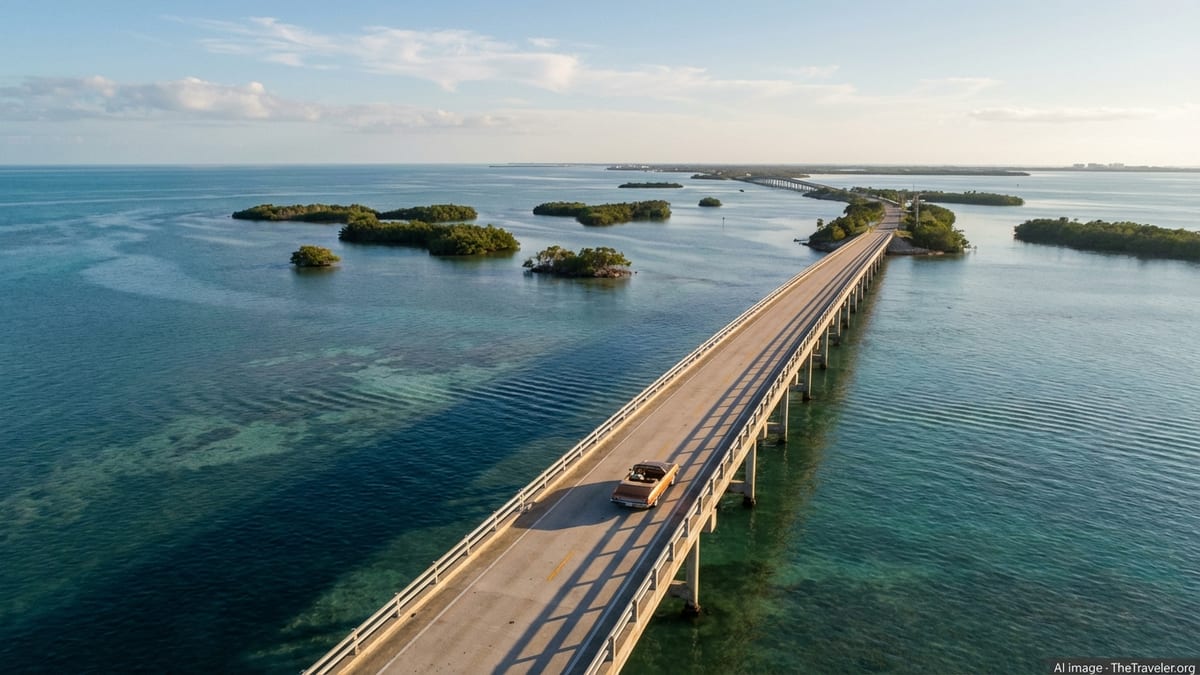
Few drives capture the imagination like the Overseas Highway from the mainland to Key West. Built along the route of a former railroad and now refined into a modern roadway, this stretch of U.S. 1 links a chain of islands with a series of long bridges over blue and turquoise water. It runs for more than 100 miles between the mainland and Key West, with mile markers acting as reference points for communities, state parks and viewpoints along the way. Travelers often describe this drive as one of the most scenic in the country, especially on clear days when the horizon seems to stretch in every direction.
As you leave the mainland, the first major stop is typically in the Upper Keys, where mangrove forests, diving sites and waterfront restaurants introduce you to the region’s laid-back rhythm. Continuing through the Middle Keys, you encounter compact towns clustered around marinas, as well as state parks that protect sandy beaches, coastal hammocks and coral reefs just offshore. These parks provide opportunities to snorkel, paddle or simply swim in calm, shallow water. Services thin out slightly as you move further down the island chain, so it is wise to start with a full tank of gas and basic supplies before crossing onto the Keys.
By the time you reach the Lower Keys and Key West, the highway has delivered a steady progression of sea views, fishing boats, bridges and roadside curiosities. Key West itself feels like both the end of the road and a destination in its own right. Compact and walkable, it combines historic wooden houses, lively streets, a working harbor and famous sunset viewpoints. Many travelers park their car for the duration of their stay, exploring on foot or bicycle and saving longer drives for day trips to nearby islands or boat excursions.
If your schedule allows, consider adding a boat or seaplane trip from Key West to one of the remote island parks further west. Access is typically limited and must be booked well in advance, but for some visitors this becomes a highlight of the entire Florida road trip. Whether or not you push on beyond Key West, standing at the southern terminus of U.S. 1 makes for a fitting finale before you point your car back north or head to the airport for your journey home.
Planning Tips, Driving Times and Seasonal Considerations
A successful Florida road trip is less about racing between famous names and more about pacing. The distance from Pensacola in the Panhandle to Key West at the southern tip is roughly comparable to driving from New York City to the Midwest, so even though you remain within one state, you are crossing multiple climate zones and cultural regions. Plan your route with realistic driving segments, aiming for three to five hours behind the wheel on any given day and even less on the Overseas Highway, where slow-moving traffic and irresistible views both encourage a gentler pace.
Accommodation options range from large resorts in major cities to independent motels along highways and small inns in historic districts or beach towns. In popular destinations, especially coastal areas and Orlando, booking ahead is prudent during peak seasons such as late December through March and major school holidays. Some smaller communities may have limited lodging, particularly in conservation-focused areas where development has been kept in check. In those cases, use nearby larger towns as bases and day trip outward.
Weather is one of the most important factors to consider. Winter and early spring typically offer milder temperatures and lower humidity, particularly pleasant for walking historic streets or exploring wetlands. Late spring through early fall brings higher heat and the potential for intense afternoon thunderstorms. The Atlantic hurricane season runs from early June through November, with late summer and early autumn historically the most active period. If you are traveling during these months, monitor forecasts closely, build flexibility into your plans and be prepared to adjust your route if official guidance suggests doing so.
On a practical level, keep your vehicle stocked with water, snacks, a paper map as backup and any medications or specialized gear you need for outdoor activities. Mobile reception is widespread along major routes but can be patchy in more remote areas. Rest areas, state park picnic sites and waterfront overlooks offer chances to stretch, refocus and avoid fatigue, which is particularly important on long, straight stretches of highway in central and southern Florida.
The Takeaway
A Florida road trip is less a single route than a tapestry of possible journeys. You might stitch together a coastal circuit that links the Panhandle, Northeast beaches and A1A, dip inland for a few days of theme parks and springs, then follow the Gulf Coast and Everglades to the Keys. Another traveler might start with Miami’s city energy, meander through wetlands and islands, then head north to historic towns and quiet dunes. Both, and many variations between them, reveal a state richer and more varied than its most famous postcards suggest.
By approaching the drive region by region, allowing time in places that speak to you and respecting the power of Florida’s sun, water and wildlife, you build a trip that feels expansive rather than exhausting. The views from bridges over turquoise water and the glow of a Panhandle sunset will likely linger in your memory long after you turn in the rental keys. With thoughtful planning, flexible timing and an openness to unscheduled stops, a Florida road trip can become a journey you are already imagining how to repeat even before you reach the end of the road.
FAQ
Q1. How many days do I need for a Florida road trip from the Panhandle to Key West?
Most travelers find that 10 to 14 days allows a comfortable pace from the Panhandle to Key West, with time for a few two-night stays along the way. With a week, you can still craft a rewarding itinerary by focusing on two or three regions rather than trying to traverse the entire state.
Q2. Is it better to drive north to south or south to north in Florida?
There is no single best direction; it depends on flights, rental car options and personal preference. Some people like starting in quieter northern areas and ending with the drama of Miami and the Keys, while others prefer beginning in the south and gradually transitioning to calmer coastal towns and historic districts as they head north.
Q3. When is the best time of year to do a Florida road trip?
Late fall through spring is generally the most comfortable period, with milder temperatures and lower humidity, especially for outdoor activities. Winter and early spring are also the busiest, so shoulder seasons like late April, May, October and early November can offer a good balance of pleasant weather and lighter crowds.
Q4. Do I need a four-wheel-drive vehicle for a Florida road trip?
For most itineraries you do not need four-wheel drive. The primary routes, including the Panhandle highways, A1A, interstates, Gulf Coast roads and the Overseas Highway, are paved and suitable for regular cars. If you plan to explore unpaved forest roads or remote tracks, check local guidance to see if higher clearance or specialized vehicles are recommended.
Q5. How busy is the Overseas Highway to Key West?
The Overseas Highway can be quite busy, particularly on weekends, holidays and during winter high season. Although the distance is just over 100 miles from the mainland to Key West, traffic, road work and frequent photo or sightseeing stops often stretch the journey to four hours or more. Starting early, avoiding peak departure times and allowing extra time in your schedule help keep this iconic drive enjoyable.
Q6. Can I visit the Everglades on a self-drive road trip?
Yes, several parts of the greater Everglades region are set up for self-drive visitors, with established scenic roads, visitor centers and short trails. Many travelers combine self-guided boardwalk walks with guided activities such as tram, boat or kayak tours, which can safely take you deeper into the wetlands while explaining the ecosystem and its wildlife.
Q7. How expensive is accommodation on a Florida road trip?
Costs vary widely by region and season. Cities, major beach destinations, Orlando and the Keys usually command higher rates, especially in peak months. Smaller inland towns and some stretches of the Gulf or Atlantic coast often offer better value. Booking ahead for popular periods and mixing a few splurge nights with more modest stays can keep your overall budget in check.
Q8. Is it safe to swim at Florida’s beaches during a road trip?
Swimming is a highlight of many Florida road trips, but conditions vary by location and day. Always heed local flags and posted advisories, which indicate rip current risks, high surf or the presence of marine life such as jellyfish. When in doubt, ask lifeguards or local officials about current conditions and choose beaches with lifeguard coverage when possible.
Q9. Do I need to reserve attractions and tours in advance?
For popular theme parks, major museums and limited-capacity tours, advance reservations are strongly recommended, especially during school breaks and weekends. Boat trips, snorkeling excursions and special-access nature tours in the Keys, Everglades and some coastal areas often sell out ahead of time. Flex days without fixed bookings are still valuable for spontaneous discoveries along the road.
Q10. Can I do a Florida road trip with children?
A Florida road trip can work very well with children if you plan shorter driving days and frequent breaks. Combining family-friendly stops such as springs, gentle beaches, wildlife centers and selected theme parks helps keep younger travelers engaged. Booking accommodations with space to unwind at the end of the day and packing snacks, games and sun protection will make the journey more comfortable for everyone.