

More news on this day
A Florida law enforcement sergeant drowned while snorkeling off Grand Turk during a cruise stop in the Turks and Caicos Islands, according to multiple news and local media reports, drawing new attention to the risks associated with popular Caribbean shore excursions.
Get the latest news straight to your inbox!
Incident During Cruise Stop at Grand Turk
Reports indicate the sergeant was visiting Grand Turk as a passenger on a cruise ship when the drowning occurred during a recreational snorkeling outing. The visit formed part of a scheduled port call, a common feature of Caribbean cruise itineraries that offer passengers beach and water-sports excursions close to the cruise pier.
Publicly available information suggests the sergeant encountered difficulty while in the water and was later recovered unresponsive. Attempts at resuscitation were reported, but the individual was ultimately pronounced dead. Details on the precise sequence of events, including how long the sergeant was in distress before being noticed, have not yet been fully clarified in published accounts.
The death has prompted expressions of grief within Florida law enforcement circles and among those familiar with the tight-knit cruising and snorkeling communities that regularly transit Grand Turk. The sergeant’s name and agency have been reported in local and regional coverage, though some outlets are withholding certain personal details pending wider family notification.
A Popular Cruise Destination With Deep Water Just Offshore
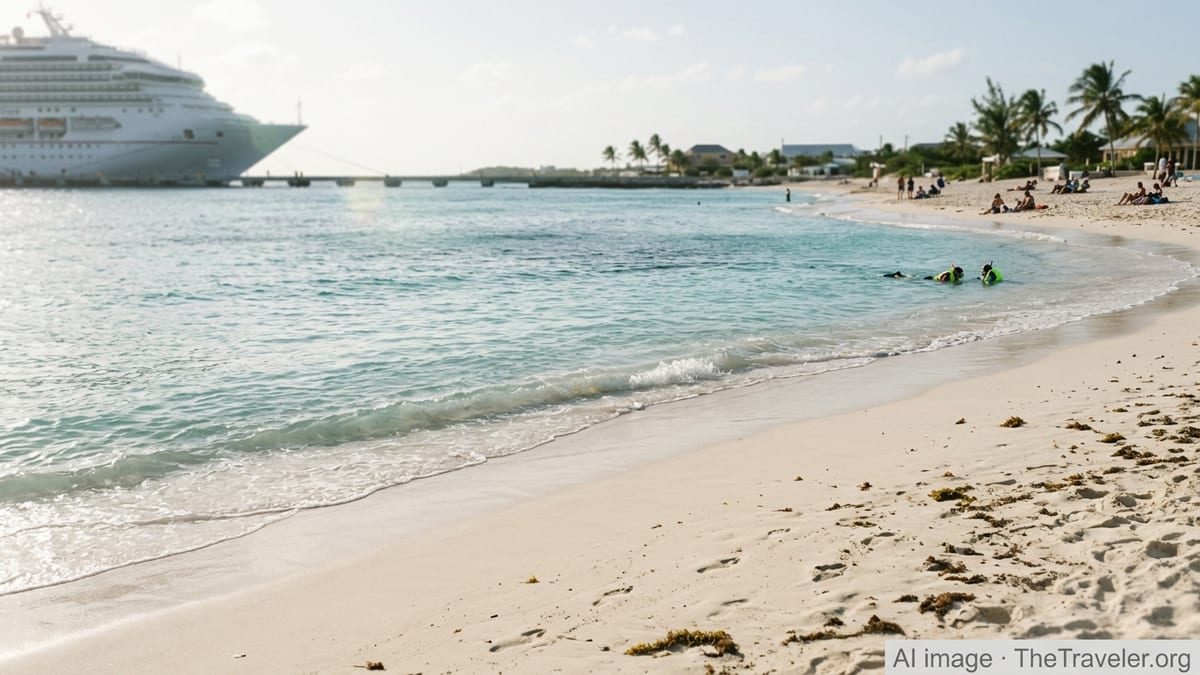
Grand Turk is a well-known stop on many Caribbean cruise routes, in part because clear turquoise water and extensive coral formations lie very close to shore. The island’s main cruise center sits beside a broad public beach where passengers often swim, snorkel or join organized boat trips to nearby reefs.
Travel industry descriptions of the destination emphasize how quickly the seabed drops away from the shoreline into deeper water, a characteristic that can enhance visibility and marine life but also increase risk for less experienced swimmers. Even in calm conditions, subtle currents, variable depths and the distraction of colorful reef scenery can challenge visitors who may not be accustomed to ocean environments.
Snorkeling excursions in Grand Turk typically range from guided boat tours over offshore reefs to unguided swimming from the beach with rented or personal equipment. Safety practices, such as the availability of flotation vests, in-water guides and spotters on boats or from shore, can vary depending on the operator and type of activity.
Water-Safety Questions Around Shore Excursions
The death of the Florida sergeant adds to a series of widely reported incidents in which cruise guests or resort visitors have drowned or required emergency care while snorkeling or swimming on Caribbean holidays. Travel-safety analyses note that snorkeling is often marketed as a low-intensity, family-friendly activity, yet it combines physical exertion, specialized equipment and open-water conditions that may be unfamiliar to infrequent swimmers.
Published commentary from maritime attorneys, cruise analysts and safety advocates has highlighted recurring themes in similar cases, including underlying health issues, limited screening of participants, inconsistent use of flotation devices and variable supervision once guests enter the water. In many destinations, excursion providers operate as separate local businesses, even when tours are sold through well-known cruise brands, which can complicate oversight and liability questions when accidents occur.
Grand Turk’s strong reputation as a snorkeling and diving destination means many operators are experienced with handling groups in the water. Nonetheless, the latest incident underscores that even confident swimmers, including public-safety professionals accustomed to challenging conditions in their home communities, may face unfamiliar risks in offshore environments with changing weather, visibility and currents.
Impact on Law Enforcement and Travel Communities
Within Florida, reports of the sergeant’s death have resonated strongly among law enforcement colleagues, for whom off-duty travel is often a chance to decompress from demanding assignments. The loss of an active-duty supervisor in a leisure setting has been described in published coverage as especially painful, given the expectation that such trips provide rest and recovery rather than new trauma.
In the broader travel community, the case has sparked renewed discussion on cruise forums and social channels about how best to prepare for water activities at ports of call. Many frequent cruisers emphasize the importance of assessing personal swimming ability honestly, staying close to designated swim zones, and understanding that medical facilities on small islands or aboard ships may have limited capacity compared with large urban hospitals.
Some travelers responding to recent incidents have reported choosing operators that advertise small group sizes, visible safety gear and clear pre-snorkel briefings, or opting to remain on the main beach where lifeguards or pier staff may be present. Others have urged cruise passengers with known cardiac or respiratory conditions to consult medical professionals in advance about the suitability of snorkeling and other exertional activities.
Renewed Focus on Risk Awareness for Caribbean Holidays
While Caribbean destinations such as Grand Turk rely heavily on cruise tourism and market themselves as laid-back, family-friendly environments, the death of the Florida sergeant is a reminder that ocean-based recreation carries inherent risks. Publicly available travel-safety guidance encourages visitors to treat snorkeling and swimming in open water as activities requiring planning, caution and an awareness of personal limits.
Industry observers note that cruise lines and local excursion companies may respond to high-profile cases by reviewing safety briefings, emergency-response protocols and equipment requirements, particularly for guests who may be older, have preexisting health conditions or lack strong swimming skills. Such reviews can include examining how quickly distress is recognized, how communication is handled between guides and ship staff, and how emergency transport is arranged on smaller islands.
For prospective travelers, the incident serves as a prompt to research excursion operators, understand the nature of local water conditions and ensure that travel insurance includes coverage for medical evacuation and emergency care abroad. As the investigation into the sergeant’s drowning continues and more information becomes public, it is likely to inform ongoing discussions about how cruise passengers and destination operators can reduce the chances of similar tragedies in the future.