

More news on this day
Thousands of Florida travelers are facing sudden cancellations, overnight airport stays and missed vacations this week as Spirit Airlines’ latest wave of flight disruptions ripples through some of the state’s busiest airports.
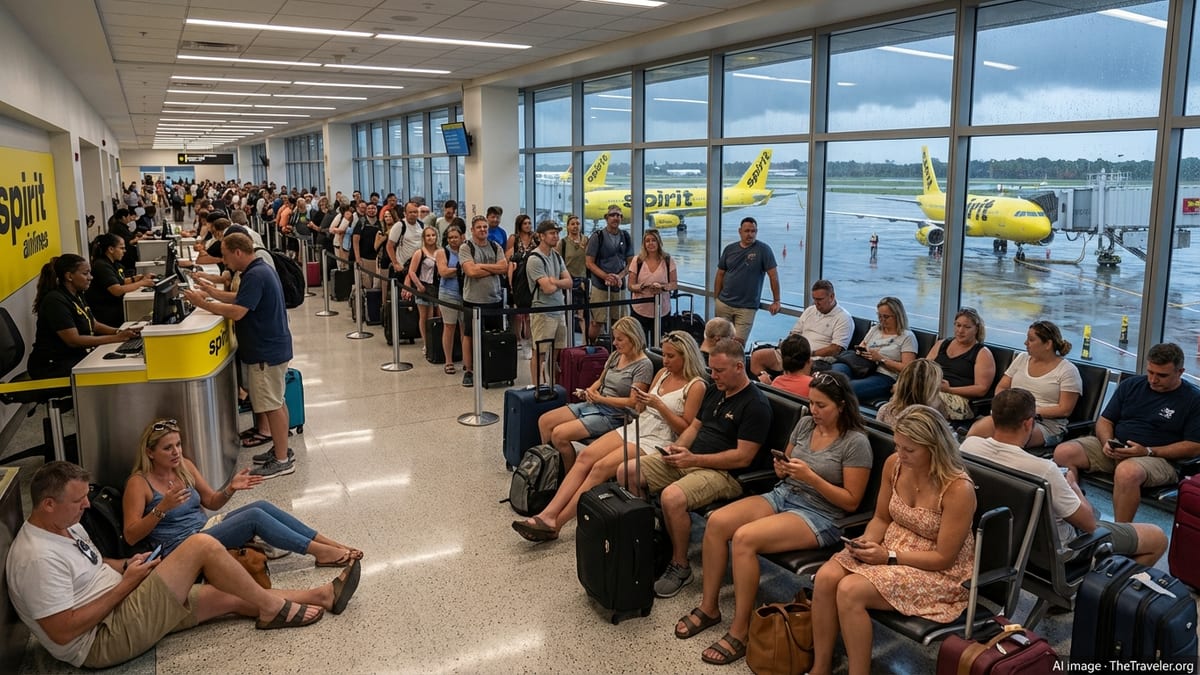
South Florida Hubs Bear the Brunt of Cancellations
Fort Lauderdale–Hollywood International Airport, long the backbone of Spirit Airlines’ network, has emerged as ground zero for the disruption. Since Friday, February 13, Spirit has canceled more than 250 flights nationwide, with Fort Lauderdale recording 89 cancellations over the Presidents Day holiday weekend alone and additional flights scrubbed in the days that followed. Gate areas that would normally cycle through a steady parade of yellow jets instead filled with confused passengers, crowded phone banks and snaking rebooking lines.
Orlando International Airport and Palm Beach International Airport have also been hit hard, particularly on routes linking Florida with Atlantic City, Newark and other East Coast leisure markets. Travelers reported abrupt text alerts and app notifications that their flights had been canceled just hours before departure, with limited options offered for same-day rebooking. In many cases, the only remaining seats were several days out, leaving people in airport limbo or scrambling to buy last-minute tickets on other airlines at far higher fares.
At Palm Beach International, multiple Spirit departures to the mid-Atlantic were scrubbed in a single week, according to disruption tracking services and airport officials. For airports where Spirit is not the dominant carrier, other airlines were sometimes able to absorb a portion of the displaced passengers. In Fort Lauderdale, where the airline controls a significant share of seats, the sudden loss of capacity left far more travelers with no immediate alternatives.
Delays compounded the frustration. Even flights that ultimately operated often left hours late as the carrier shuffled limited crews and aircraft. For many customers, the distinction between a late departure and a last‑minute cancellation made little difference; both meant upended plans, added expense and lingering uncertainty about when they would actually reach their destinations.
Staffing Shortages and Sick Calls Expose a Fragile Operation
Spirit has attributed the latest wave of cancellations primarily to a lack of available crews, the culmination of months of staffing turbulence. After a series of furloughs in late 2025 that sidelined roughly 1,800 flight attendants nationwide, the company began recalling about 500 of those workers in mid‑February. Yet industry analysts say the recall came too late to stabilize schedules over a busy holiday weekend, especially with many recalled staff declining to return or remaining in training pipelines.
Compounding the problem, Spirit has been grappling with elevated levels of sick calls among both pilots and cabin crew. Internal reporting and outside analyses describe sick‑leave rates during peak travel periods that far exceed historical norms, on some days spiking to multiples of prior‑year levels. Those absences hollowed out already thin reserve pools, leaving dispatchers with no margin when weather or air‑traffic delays knocked aircraft out of position.
Executives and union leaders alike acknowledge that morale has suffered during Spirit’s protracted financial and operational turmoil. Repeated bankruptcy filings, aggressive cost‑cutting and uncertainty over the carrier’s long‑term future have weighed on employees who must routinely work at or near maximum utilization. For crews based in Florida, where Spirit has concentrated furloughs and schedule changes, that strain has been especially acute.
The result is an operation that has become highly vulnerable to any unexpected shock, from a minor storm system to a cluster of last‑minute sick calls. While all airlines face personnel shortages from time to time, Spirit’s low‑cost model leaves less redundancy in staffing and scheduling than many of its competitors, magnifying the impact on passengers when things go wrong.
Bankruptcy Turbulence and a Shrinking Fleet
The latest disruptions are unfolding against the backdrop of Spirit’s ongoing Chapter 11 restructuring, its second bankruptcy in under two years. The Dania Beach‑based carrier filed again in August 2025, just months after emerging from a prior court‑supervised overhaul. Since then, the company has been selling assets, trimming routes and renegotiating contracts in a bid to conserve cash and convince lenders it has a viable path forward.
One of the most visible changes for travelers is a smaller fleet. Spirit is in the process of selling about 20 aircraft, a move that reduces near‑term costs but also eliminates operational slack. Fewer planes mean fewer backup options when a jet goes out of service for maintenance, and less flexibility to reposition aircraft when crew shortages or weather disruptions ripple through the schedule. For Florida, home to several of Spirit’s largest crew bases and focus cities, that contraction is translating directly into reduced frequencies and more fragile daily operations.
The financial squeeze has also intersected with ongoing technical challenges. Spirit’s fleet is heavily weighted toward Airbus A320‑family aircraft powered by Pratt & Whitney geared turbofan engines, some of which have required accelerated inspections and, at times, extended groundings. While Spirit has reached compensation agreements to offset the revenue hit from those idled jets, the practical effect for passengers is fewer available seats and tighter schedules, especially at peak travel times.
Industry experts caution that the combination of bankruptcy restructuring, a shrinking fleet and persistent staffing issues leaves Spirit with limited room to maneuver. Any miscalculation in crew planning or cash flow can quickly cascade into widespread cancellations. For travelers, that makes the airline’s schedule less of a firm promise and more of a tentative plan, especially on heavily utilized Florida routes where aircraft and crews are scheduled nearly to their limits.
Human Toll: Missed Vacations, Extra Costs and Frayed Nerves
Behind the statistics are thousands of individual stories of disrupted trips. Families headed from the Northeast to Orlando theme parks reported children sleeping in terminal chairs after late‑night cancellations, while retirees trying to return from South Florida to New Jersey described standing in lines for hours only to be told the next available Spirit flight was days away. Some passengers turned to social media to vent after spending more on replacement tickets than they had on their entire original vacation package.
Travelers interviewed at Fort Lauderdale and Orlando airports described a patchwork of solutions offered at counters and via customer‑service channels. Some received rebookings on later Spirit flights and hotel vouchers, particularly when overnight stays were unavoidable. Others said they were offered refunds but no assistance with lodging or onward travel, forcing them to dip into savings or credit cards to salvage their plans. For visitors on tight budgets, especially those lured by Spirit’s ultra‑low base fares, those unexpected expenses were particularly painful.
Confusion over rights and remedies added to the frustration. While U.S. regulations require refunds when airlines cancel flights, compensation standards for meals, hotels and alternative transportation are less clear and vary by carrier policy. In the crush of a busy holiday weekend, passengers said they struggled to get straight answers, with call centers overwhelmed and airport staff stretched thin. For many, the experience reinforced a perception that ultra‑low‑cost travel can come with high hidden risks.
The emotional strain was evident in terminal concourses, where exhausted parents juggled restless children and solo travelers anxiously refreshed mobile apps for updates. Even as operations began to slowly recover, lingering uncertainty about whether newly booked flights would actually depart on time left many customers wary of making firm plans at either end of their journeys.
Ripple Effects Across Florida’s Tourism Economy
Florida’s tourism sector is particularly exposed to disruptions at an airline like Spirit, which built its business model around ferrying cost‑conscious travelers to the state’s beaches, cruise ports and theme parks. At Orlando International, where Spirit is one of the largest carriers by passenger volume, cancellations over a holiday period reverberated across hotels, rental‑car counters and attractions that depend on predictable arrival flows.
Central Florida hospitality businesses reported a mix of no‑shows and last‑minute cancellations tied to air travel problems. Some vacationers arrived days later than planned, compressing their stays or skipping certain activities entirely. For small operators, from independent tour guides to shuttle services, even a modest drop in volume over a holiday week can dent revenue. Larger theme parks and resort chains are better able to absorb short‑term fluctuations, but they, too, must adjust staffing levels and operational plans when a key feeder airline stumbles.
South Florida has felt similar ripple effects. Cruise passengers flying into Fort Lauderdale and Miami on Spirit faced tight connections to sailing times, and many scrambled to rebook on other carriers or arrange ground transportation from more distant airports. While some cruise lines worked with guests to find workarounds, others maintained standard boarding rules, leaving late arrivals with expensive decisions about whether to forfeit trips altogether.
Local officials and tourism marketers worry that repeated episodes of high‑profile disruption could, over time, erode confidence among budget travelers who rely on low fares to make Florida vacations possible. If those visitors begin to view itineraries involving Spirit as inherently risky, they may scale back trips or shift to competing destinations served more reliably by other airlines.
What Stranded Passengers Can Do Now
For those still caught in the current wave of cancellations, consumer advocates urge a methodical approach. The first priority is to secure written confirmation that a flight has been canceled, whether through the airline’s app, a text message or a printed notice at the airport. That documentation can help travelers obtain prompt refunds for unused segments and support later claims for additional expenses such as hotels and meals.
Passengers are entitled to a refund when an airline cancels a flight and the customer chooses not to travel, even on nonrefundable tickets. In practice, though, getting cash back instead of future travel credits can require persistence, especially during systemwide disruptions that inundate call centers. Experts recommend using multiple channels at once, including mobile apps and direct outreach at the airport desk, while carefully documenting all conversations and offers.
Those who must reach their destinations on a fixed timeline may need to purchase replacement tickets on other airlines, then pursue reimbursement or partial recovery from Spirit later. Travel insurance policies, including those bundled with some credit cards, can help offset out‑of‑pocket costs, depending on the terms and the cause of the disruption. However, policyholders should review coverage details closely, as not all plans treat airline staffing shortages the same way they treat weather or mechanical issues.
In the longer term, consumer groups say travelers can protect themselves by building more time buffers into connections, particularly when sailing on cruises or attending non‑refundable events, and by weighing an airline’s recent reliability record alongside price when choosing flights. For many Florida‑bound passengers, that calculus may look different after this latest episode.
Industry Scrutiny and Questions About Spirit’s Future
The February meltdown is only the latest in a string of operational stumbles for Spirit that have drawn scrutiny from regulators, airport authorities and industry analysts. While there is no indication that safety has been compromised, the scale and frequency of disruptions have prompted questions about whether the airline’s current staffing levels and schedule plans are realistic given its financial constraints.
Federal regulators have in recent years increased their focus on passenger rights and airline reliability, encouraging carriers to publish clear commitments on how they will treat customers during cancellations and significant delays. Spirit, like its peers, has faced pressure to spell out when it will provide meal vouchers, hotel rooms or alternative transportation. High‑profile disruptions in major leisure markets such as Florida could intensify that oversight, especially if complaints continue to mount.
For Spirit’s management, stabilizing operations is central to convincing judges, creditors and customers that the airline can emerge from bankruptcy as a viable carrier. That will likely require a delicate balance: adding enough employees and schedule flexibility to improve reliability while still delivering the low fares that are its primary competitive advantage. Any misstep risks either alienating price‑sensitive travelers or undermining the financial discipline demanded by lenders.
In the meantime, Florida travelers remain on the front lines of the airline’s growing pains. As spring and summer travel seasons approach, the state’s airports, tourism businesses and millions of visitors will be watching closely to see whether Spirit can restore confidence or whether the recent chaos is a sign of more turbulence ahead.