

Two coasts, two cultures, one big travel dilemma. When it comes to classic American getaways, Florida and California often top the list, promising sun, sand, and long, open roads. Yet the experiences they offer could not feel more different. One leans tropical and laid back, the other rugged and cinematic. Deciding between them is less about which state is objectively better and more about which style of beach, city, and road trip best matches the way you like to travel.
Big Picture: East Coast Chill vs West Coast Drama
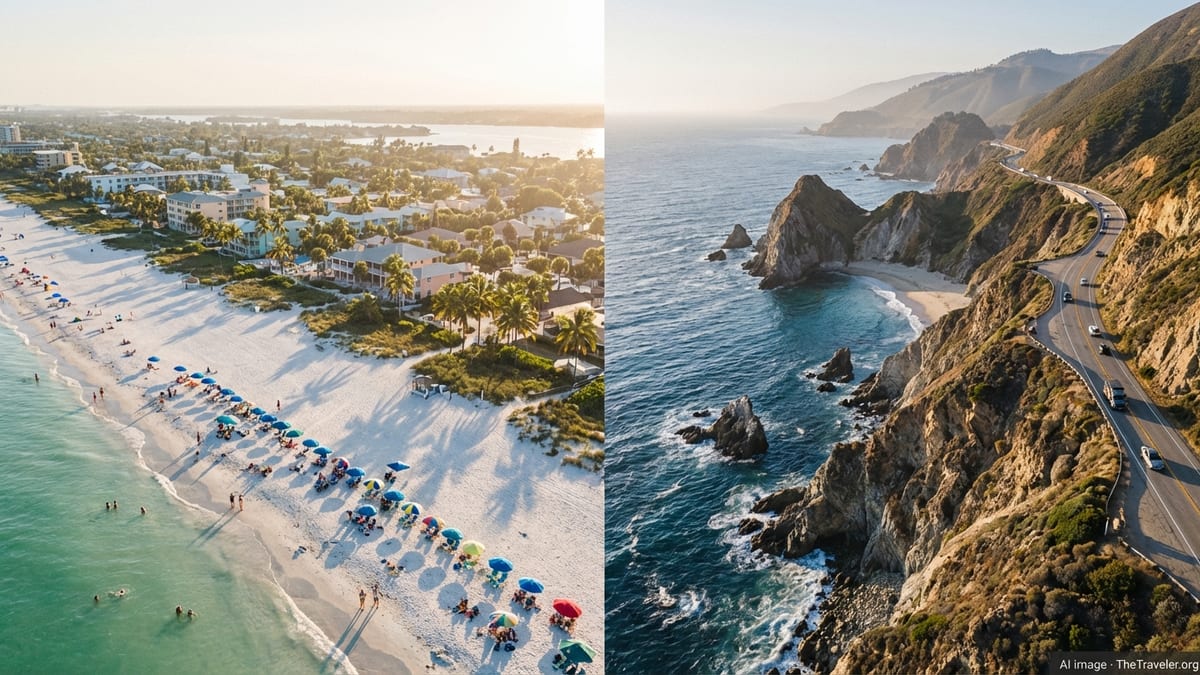
Set side by side, Florida and California almost feel like different countries. Florida sits closer to the Caribbean in both climate and vibe, with warm, generally calm waters and beaches that can feel like a soft, white-sand extension of the Gulf of Mexico. California lines the edge of the Pacific Ocean, where cooler water, crashing surf, and steep coastal cliffs create that dramatic, postcard-perfect shoreline you see in films and car commercials.
Weather is one of the clearest dividing lines. Florida’s subtropical and tropical climate brings hot, humid summers, very mild winters, and a pronounced hurricane season that usually stretches from June through November. California, by contrast, tends to have drier, Mediterranean-style weather along much of the coast, with cooler evenings and a longer span of comfortable, shoulder-season months ideal for road trips. Travelers who find humidity draining often gravitate west, while those seeking reliably warm swimming conditions outside of peak summer may prefer Florida’s Gulf Coast.
Culture also splits along the coasts. Florida mixes Southern hospitality, Latin American influences, and resort-town ease. Think pastel Art Deco in Miami Beach, retro motels in the Panhandle, and family-friendly boardwalks along the Gulf. California’s cities feel more overtly urban and layered, from the tech-fueled energy of the Bay Area to the entertainment buzz of Los Angeles and the creative, surf-centric communities scattered along the coast. Both states offer excellent food and nightlife, but the aesthetic and pace are distinct.
When you zoom out, the choice comes down to mood. Florida is about warm water, long sandy strands, and days that blur together under a big blue sky. California is about changing scenery, microclimates, and the thrill of seeing mountains, ocean, and cityscapes in a single day. Understanding that difference is the key to choosing the coast that fits the trip you have in mind.
Beaches: Sugar-Soft Gulf Sands vs Rugged Pacific Shores
If beaches are your main criterion, the Florida versus California debate gets sharper. On recent global lists of standout beaches, Florida’s Siesta Beach near Sarasota has repeatedly appeared as one of the finest in the world, praised for its powdery white quartz sand that stays cool even in intense heat and its shallow, turquoise water that feels almost Caribbean. In 2025 it was the only American beach to make one high-profile ranking of the world’s 50 best, underlining how often Florida’s shores impress international travelers.
California’s beaches tilt in a different direction. In 2026, La Jolla Cove in San Diego was named the top beach in the United States by a major traveler-voted ranking, edging out popular Florida and Hawaii contenders. That recognition reflects what California does best: scenic drama and varied coastal experiences. La Jolla offers sheltered coves framed by rugged cliffs and abundant marine life, a contrast to the long, level sweeps of sand typical of many Florida spots. Up and down the coast, California serves up surf breaks in Malibu, purple-tinged sands in Big Sur, and wide, golden beaches backed by mountains in Santa Barbara and Pismo Beach.
For classic, family-friendly beach days with warm water, gentle waves, and sandcastle-ready shores, Florida usually wins. Destinations such as Clearwater Beach, South Beach, and Panama City Beach are famous for their broad sandy expanses and relatively warm, swimmable conditions for much of the year. Sunset strolls on the Gulf Coast in places like St. Pete Beach or Destin can feel laid back and tropical, with water temperatures that encourage lingering in the shallows well into the evening in warmer months.
For surfing, coastal hiking, and photogenic landscapes, California takes the lead. Beaches like Venice and Huntington have become icons for surf culture and people-watching, while spots along the Big Sur region tempt visitors off Highway 1 with windswept coves, rock arches, and headland trails. Water temperatures are cooler, especially north of Los Angeles, so wetsuits are standard for surfers and many swimmers. Yet for travelers drawn to scenery as much as sunbathing, California’s rugged shoreline can feel unforgettable.
City Vibes: Miami and Orlando vs Los Angeles and San Francisco
Florida’s coastal cities lean heavily into leisure. Miami and Miami Beach are the headliners, pairing Mediterranean Revival and Art Deco architecture with a nightlife scene that regularly draws international DJs and artists. Collins Avenue, which tracks the Atlantic in Miami Beach, doubles as both a traffic artery and a visual showcase of hotels, restaurants, and oceanfront promenades. The energy is unapologetically glamorous, but the city also offers quieter, emerging neighborhoods inland with galleries, food halls, and street art.
Farther north, cities such as Tampa, St. Petersburg, Jacksonville, and Fort Lauderdale offer a mix of waterfront promenades, growing culinary scenes, and easy access to nearby beaches. Orlando, though inland, remains one of the main reasons people fly to Florida, with its concentration of theme parks and family attractions that can easily anchor a week-long trip. For many visitors, a Florida city break is less about museums and more about pool decks, beach clubs, and short drives to barrier islands and nature reserves.
California’s cities feel more densely layered. Los Angeles sprawls along basins and hillsides, with beach communities like Santa Monica, Venice, and Manhattan Beach functioning almost as separate, self-contained worlds. The city appeals to travelers interested in food, film, music, design, and fashion, as much as sunshine. San Francisco, perched on its hills around the bay, pairs neighborhoods rich in immigrant history with tech-fueled change and a cooler, often foggy coastal climate. San Diego brings a more relaxed pace, with harbor views, historic districts, and a long line of beach communities stretching north and south.
For urban travelers who want strong public transit, walkable historic neighborhoods, and cool-weather escapes from the heat, California’s cities often have more to offer. Museums, concert halls, and galleries are easier to build a whole itinerary around. Florida’s cities, by contrast, usually appeal most when you want sunshine and resort living first, with culture and cuisine woven in as supporting players rather than the main draw.
Road Trips: A1A and the Keys vs the Pacific Coast Highway
Road trippers deciding between Florida and California face a pleasurable kind of challenge: you cannot really go wrong. Yet the experience of driving in each state feels quite distinct. In California, the Pacific Coast Highway, often labeled Highway 1 along key stretches, is widely considered one of the most beautiful drives in North America. A 90-mile run through Big Sur that had been periodically closed by landslides reopened fully in January 2026, restoring continuity for travelers driving between Carmel and Cambria and bringing back one of the most coveted scenic sections of the route.
This Pacific-side drive strings together seaside towns, vineyards, and beaches. Heading south from San Francisco, you can pause in Santa Cruz for its historic boardwalk and long town beach, then continue past Aptos and Seacliff State Beach, where a historic concrete ship lies just offshore. Later, Big Sur’s cliffs rise directly from the ocean, with viewpoints around Ragged Point and other headlands revealing sea stacks, black-sand coves, and coastal trails. Farther south, Pismo Beach, Santa Barbara, Malibu, and Santa Monica all tempt you off the highway with surf spots, waterfront piers, and beachside diners.
Florida’s signature drives are lower in elevation but generous with water views. State Road A1A, particularly as it threads along barrier islands and through Miami Beach, keeps you close to the Atlantic, with glimpses of dunes on one side and canals or intracoastal waterways on the other. In Miami Beach, A1A and Collins Avenue essentially form a beachfront showcase of hotels and palm-lined promenades. Farther north, A1A passes classic resort towns, state parks, and historic cities like St. Augustine, the oldest continuously inhabited European-established settlement in the continental United States, where oceanfront fortifications and long beaches sit side by side.
The Overseas Highway, which runs from the mainland near Miami all the way to Key West, may be Florida’s most distinctive drive. Much of the route runs atop causeways and bridges that link the coral and limestone islands of the Keys, offering open-water views on both sides. Pull-offs, fishing bridges, state parks, and marinas give plenty of reasons to stop. The vibe is easygoing and nautical, with tiki bars, pastel cottages, and dive shops replacing the dramatic cliffs and switchbacks found on California’s Pacific Coast Highway.
Weather, Seasons, and Natural Risks
Weather and risk are pragmatic factors that often tip the decision between Florida and California. Florida’s peak winter season, from roughly December through March, offers balmy conditions that lure travelers escaping colder parts of North America. Daytime temperatures are comfortable, humidity is lower than in summer, and both the Gulf and Atlantic coasts can feel pleasantly warm compared with much of the continent. The trade-off is cost and crowds: winter is high season, especially in South Florida and the Keys.
From late spring through early autumn, Florida becomes hotter and more humid, with higher chances of thunderstorms and tropical systems. The Atlantic hurricane season officially runs from June 1 to November 30. Not every year brings damaging storms, and not every storm affects major visitor destinations, but travelers planning summer or fall trips should be prepared for the possibility of disruptions, flexible cancellation policies, and last-minute route changes.
California, in contrast, typically experiences very little hurricane risk along its main coastal stretches. The state’s main natural challenges instead come from drought, wildfires in inland and mountainous regions, and the occasional mudslide or landslide affecting key roads, particularly along steep coastal sections. The closures and eventual full reopening in 2026 of the Big Sur segment of Highway 1 underscore how quickly storm damage can reshape a famous route, at least temporarily.
Seasonally, the California coast can be comfortably visited much of the year, though water temperatures remain relatively cool even in summer, especially north of Los Angeles. Morning coastal fog is common in places like San Francisco and can surprise beach seekers expecting cloudless skies. On the positive side, shoulder seasons in spring and fall often offer ideal conditions for road trips, with fewer crowds and pleasant daytime temperatures that make hiking and city exploration more appealing than Florida’s late-summer heat.
Costs, Crowds, and Practicalities
Travel budgets and logistics vary widely, but some general trends can help you decide between Florida and California. In many coastal areas, California tends to be more expensive day to day, particularly in and around San Francisco, coastal Los Angeles, Santa Barbara, and well-known parts of San Diego County. Hotel rates, dining, and even fuel costs are often higher than in much of Florida, especially during peak visitor periods or holiday weekends.
Florida, while it certainly has luxury resorts and high-end enclaves, offers a broad range of mid-range and budget-friendly accommodations in smaller beach towns and along the Gulf Coast. Large inventories of vacation rentals and classic roadside motels can keep nightly costs down for families or long-stay visitors. Many attractions, such as state parks and public beaches, charge modest fees or are free to access, though theme parks in the Orlando area can quickly raise the total trip cost.
Crowd patterns differ as well. In Florida, winter can feel like a festival of snowbirds and holidaymakers on popular beaches and in major cities, while summer saturates theme parks and Panhandle shores with families on school break. In California, summer is peak season for many coastal towns and national parks. Yet some urban areas and stretches of Highway 1 remain attractive throughout much of the year, allowing more flexibility to travel in shoulder seasons without sacrificing too much in terms of weather.
Driving conditions are another factor. California’s coastal highways can be narrow and winding, especially through Big Sur and similar regions, demanding more concentration and rewarding confident drivers. Florida’s main beach routes, including much of A1A and the Overseas Highway, are generally straighter and flatter, with slower speed limits and frequent small-town traffic. Renters who feel anxious about steep drop-offs and sharp turns may find Florida’s roads less intimidating.
Who Should Choose Florida vs Who Should Choose California
Thinking in terms of traveler profiles can clarify which state fits you better. First-time international visitors to the United States who imagine long, palm-backed beaches, bathtub-warm water, and a resort-style stay may find Florida’s Gulf Coast or South Florida the most intuitive match. Families with young children often appreciate gentle waves, shallow swimming areas, and the option to blend beach days with a few theme park outings, making a Florida itinerary easy to design.
Florida also shines for those seeking winter sun without crossing an ocean. Between December and March, its combination of mild air, warm water in the southern regions, and relatively short flight times from many North American and European hubs is hard to beat. Retirees and long-stay visitors frequently choose Florida for precisely this mix of weather and ease, settling into rental condos or extended-stay accommodations for weeks at a time.
California tends to resonate more with travelers who prioritize variety and scenery over guaranteed warm-water swims. If you like the idea of beginning the day watching surfers in Santa Cruz, driving past redwood forests in Big Sur, tasting wine near Paso Robles, and ending up at a beachfront inn in Santa Barbara, California’s coast delivers that sense of narrative and change. Active travelers who enjoy hiking, surfing, and photography often find its rugged shoreline more compelling than Florida’s gently sloping sands.
Urban enthusiasts may also lean toward California, where it is easy to stitch together a trip that includes San Francisco’s neighborhoods, Los Angeles’s cultural institutions and food scene, and San Diego’s laid back coastal districts, with short flights or scenic drives linking them. Those curious about technology, entertainment, and modern American culture frequently gravitate west, treating the beaches as only one component of a broader, more varied journey.
The Takeaway
Choosing between Florida and California is less about naming a winner and more about understanding your own travel priorities. If your ideal escape involves floating in warm water, walking for miles on pale sand, and capping off the day at a beach bar to the sound of gentle surf, Florida’s coasts, particularly on the Gulf side, are likely to suit you. Its winter-friendly climate, abundance of family-oriented attractions, and relatively accessible pricing in many areas make it a natural pick for straightforward, low-stress vacations.
If, however, you dream of twisting coastal roads, cool ocean breezes, and beaches framed by cliffs and headlands, California may be your better match. The reinstated continuity of the Pacific Coast Highway through Big Sur once again allows for long, uninterrupted drives along one of the most storied shorelines in the world. Combined with cities that offer dense layers of culture, food, and nightlife, California rewards travelers who enjoy contrast and discovery as much as relaxation.
In the end, both states deliver something distinctly American and deeply memorable. The calm, warm shallows of a Florida beach at sunset and the roar of California waves against a Big Sur cliff are different answers to the same desire to reach the edge of the continent and feel small in the best possible way. Your choice between them is really a choice between two visions of the coastal dream, each valid, each compelling, and both worth experiencing at least once.
FAQ
Q1. Which state has better beaches overall, Florida or California?
Both excel, but in different ways. Florida generally offers warmer, calmer water and softer sands, while California stands out for scenic drama, surf culture, and coastal variety.
Q2. Is the water warmer in Florida or California?
Florida’s coastal waters are usually significantly warmer, especially along the Gulf Coast and in South Florida, making swimming more comfortable outside peak summer.
Q3. Which coast is better for a classic scenic road trip?
California’s Pacific Coast Highway provides steeper cliffs, changing elevations, and dramatic viewpoints, while Florida’s A1A and Overseas Highway offer flatter, more relaxed drives close to the water.
Q4. When is the best time to visit Florida’s beaches?
For many travelers, December through March offers the most comfortable blend of warm temperatures, lower humidity, and pleasant sea conditions, though it is also peak season.
Q5. When is the best time to drive California’s Pacific Coast Highway?
Late spring and early fall often provide mild temperatures, fewer crowds, and good driving conditions, though travelers should always check for any temporary road closures.
Q6. Which is better for families with young children?
Florida often edges ahead thanks to warm, gentle waters, shallow beaches, and proximity to theme parks, though California’s beach towns and parks can also work well for active families.
Q7. Are Florida or California beaches more budget friendly?
Costs vary widely, but many Florida beach towns offer a broad range of reasonably priced motels, rentals, and dining options, while some California coastal cities tend to be more expensive.
Q8. Which state is better for surfing, Florida or California?
California is generally the stronger surf destination, with more consistent Pacific swells and a wider range of well-known breaks, especially from San Diego through Los Angeles and beyond.
Q9. How do hurricane and wildfire risks compare for visitors?
Florida faces a defined hurricane season that can affect travel plans, while California’s main risks include wildfires and occasional landslides, especially in drier years or after heavy storms.
Q10. If I want both city culture and beach time in one trip, which should I choose?
Either can work, but California offers more large cities with rich cultural scenes directly linked to notable beaches, while Florida emphasizes resort-style urban areas tied closely to the shore.