

More news on this day
Saudi low cost carrier Flyadeal is strengthening Madinah’s role as a national gateway by adding new year round routes to Jazan, Qassim, and Arar, a move that both widens domestic travel choices and underpins Saudi Arabia’s fast evolving tourism strategy.
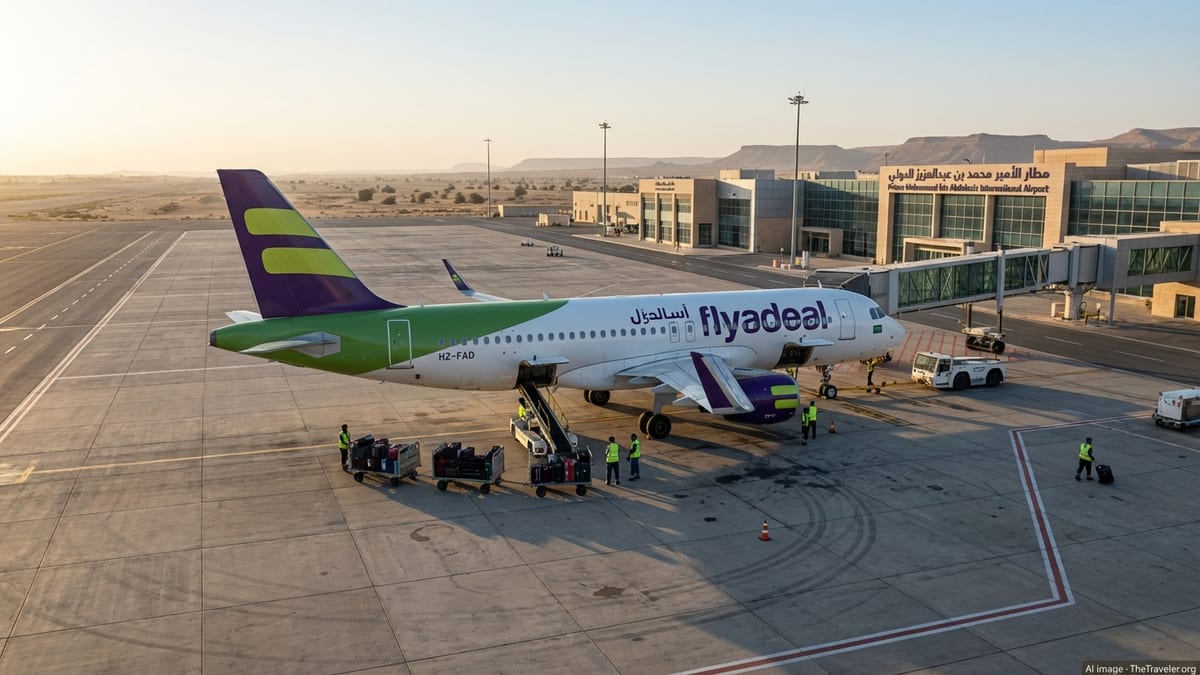
Madinah’s Network Grows to 10 Destinations
From 1 March 2026, Flyadeal will operate nonstop services from Prince Mohammad bin Abdulaziz International Airport in Madinah to Jazan, Qassim, and Arar. The launch lifts the number of direct destinations served from the carrier’s newest base to 10, including existing links to Abha, Al Hofuf, Dammam, Riyadh, Tabuk, Cairo, and Istanbul. The additions reinforce Madinah’s shift from a primarily pilgrimage-focused airport to a full-fledged domestic hub.
The new flights push weekly departures operated by Flyadeal from Madinah to around 94, following a capacity increase of roughly 40 percent since the airline permanently based Airbus A320 aircraft at the airport at the start of the year. The growth cements Madinah as Flyadeal’s fourth operational base in the kingdom, alongside Riyadh, Jeddah, and Dammam, and underscores the importance of the Holy City in the country’s wider aviation and tourism plans.
Executives say the extended network is designed to serve two-way demand: residents and businesses in and around Madinah who now gain more direct access to regional centers, and travelers from across Saudi Arabia who can more easily incorporate a visit to the Prophet’s City into their leisure or religious itineraries. The schedule is built to complement the carrier’s year round Umrah and seasonal Hajj operations, ensuring smoother connections for pilgrims arriving from overseas.
Jazan, Qassim, and Arar Step Into the Tourism Spotlight
Each of the three new destinations brings a different slice of Saudi Arabia into easier reach of both domestic and international visitors using Madinah as a springboard. Jazan, on the Red Sea coast in the far southwest, is known for its rugged mountains, volcanic islets and access to the Farasan Islands Marine Sanctuary, one of the country’s emerging eco and diving destinations. More frequent, competitively priced flights from Madinah are expected to support adventure tourism and short leisure breaks to a region that has, until now, been relatively time consuming to reach.
Qassim, in the country’s heartland, is the agricultural engine behind some of Saudi Arabia’s most famous date farms and hosts the popular Buraidah Date Festival. Direct services from Madinah connect pilgrims and leisure travelers to a more traditional, heritage focused side of the kingdom, in line with national efforts to disperse tourism beyond the main coastal and holy city hubs. The route also improves links for students and professionals moving between Qassim’s universities, industrial activities and Madinah’s growing service economy.
Arar, capital of the Northern Borders Province, has long been a strategic administrative and logistics center near the frontier with Iraq. For tourism planners, the new Madinah Arar flights are a chance to spotlight desert landscapes, cross border trade corridors and new hospitality projects that are gradually coming onstream in the north. For residents, the connection offers a faster link to Madinah’s religious sites, medical facilities and employment market, reducing the need for time consuming multi leg journeys via other Saudi hubs.
Supporting Vision 2030 and the Push for Domestic Exploration
Flyadeal’s Madinah expansion is closely aligned with Saudi Vision 2030, which calls for dramatically higher passenger numbers, more diversified tourism offerings and stronger domestic connectivity. By adding medium sized cities such as Jazan, Qassim and Arar to a growing web of point to point services, the airline helps shift travel patterns away from a purely hub and spoke model and encourages Saudis and expatriates to explore lesser known parts of the country.
Tourism officials see domestic low cost carriers as critical enablers of this strategy. Affordable, high frequency flights lower the barrier to weekend trips, family visits and intra-Saudi business travel, driving occupancy in regional hotels and resorts and making new attractions economically viable. For Madinah in particular, more year round traffic helps smooth out peak seasons linked to Ramadan and Hajj, giving airlines, hotels and ground operators a more stable base of demand.
The routes also strengthen the kingdom’s goal of turning religious travel into longer, multi stop journeys. Pilgrims arriving in Madinah or Jeddah can now, with a single low cost ticket, add side trips to the Red Sea, the central heartland or the far north. This “pilgrimage plus discovery” model is central to efforts to raise visitor spending and extend average length of stay, two key benchmarks tracked by policymakers as they push toward ambitious tourism targets for 2030.
Economic Ripple Effects for Regions and Residents
Beyond headline passenger numbers, the new services are expected to deliver tangible economic benefits in the regions linked to Madinah. Additional frequencies typically spur investment in airports, ground handling, catering and maintenance services, creating local jobs and expanding the aviation talent pool outside the main metropolitan centers. Inbound visitors in turn generate demand for hotels, furnished apartments, restaurants, tour guides and transport providers.
In Jazan, easier access from Madinah could accelerate plans to develop the Farasan Islands and surrounding coastal zone as a sustainable marine tourism destination, with opportunities for diving operators, eco lodges and cultural experiences tied to the region’s seafaring history. In Qassim, authorities and private investors are likely to leverage the new flights to promote agricultural tourism, food festivals and heritage markets, drawing more domestic travelers during cooler seasons.
For Arar and the Northern Borders Province, better air connectivity supports ongoing efforts to diversify the local economy beyond government services and traditional trade. The Madinah link can make the city more attractive for logistics firms, cross border business and future tourism ventures, while residents gain more convenient access to religious tourism, specialized healthcare and higher education in Madinah.
What Travelers Can Expect From the New Services
Flyadeal will operate the new routes using its single class Airbus A320 and A320neo fleet, configured with high density economy seating and a focus on quick turnarounds. For passengers, that translates into a no frills but modern onboard experience, with a strong emphasis on punctuality and value driven fares. The airline’s strategy is to offer schedules that work for both short leisure trips and same day business travel, with timings designed to connect conveniently with its wider domestic and regional network.
Travelers using Madinah as a starting point will find it increasingly easy to combine the city’s religious and historical sites with secondary destinations on a single itinerary. With direct flights now linking Madinah to ten cities, including Jazan, Qassim and Arar, itineraries that once required long road journeys or connections via other hubs can be completed in a few hours. For international visitors arriving for Umrah or Hajj, this expanded map of domestic options opens the door to more immersive journeys across Saudi Arabia’s varied landscapes and cultures.
As Saudi Arabia races to grow its aviation capacity and welcome tens of millions more visitors each year, moves like Flyadeal’s latest Madinah routes underline how low cost carriers are quietly redrawing the country’s internal flight map. For Madinah, and for Jazan, Qassim and Arar, the payoff is better connectivity, new economic opportunities and a higher profile on the kingdom’s rapidly changing tourism stage.