

More news on this day
Kazakhstan’s low-cost carrier FlyArystan has opened international ticket sales for its 2026 Almaty–Samarkand route, reinforcing a growing web of direct air links between Kazakhstan and Uzbekistan and promising more affordable options for business and leisure travelers across Central Asia.
Get the latest news straight to your inbox!
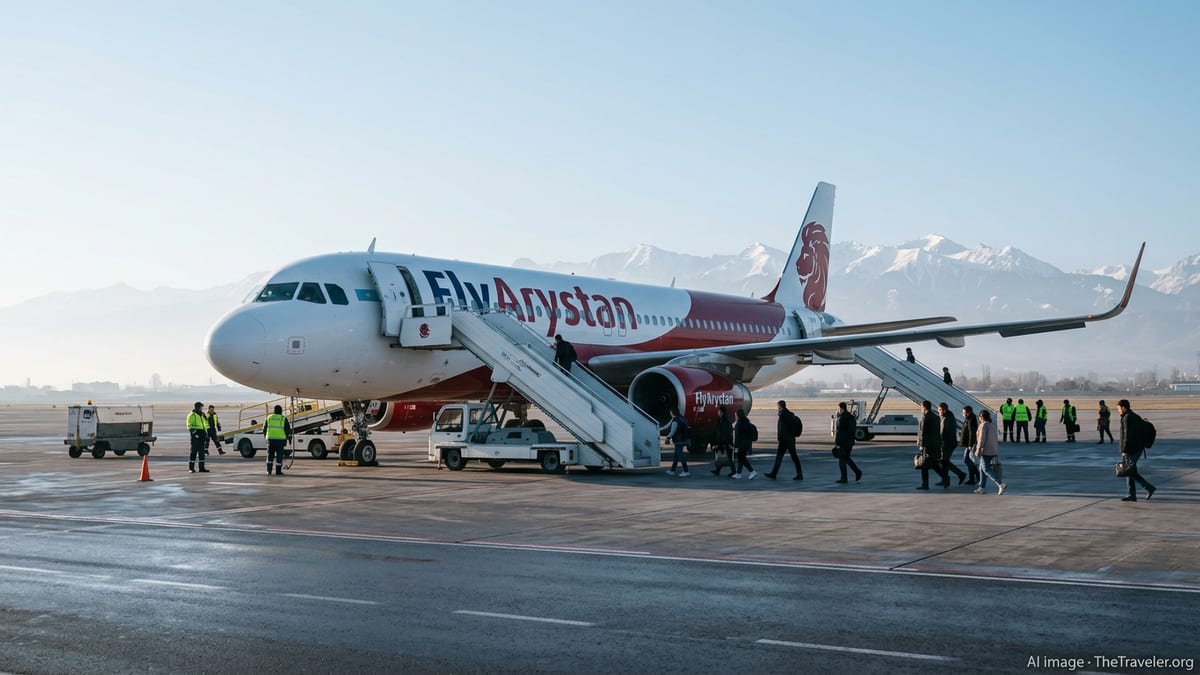
Seasonal 2026 Schedule Connects Almaty and Samarkand
According to the airline’s latest schedule update, FlyArystan will operate the Almaty–Samarkand–Almaty service as a seasonal international route in both the spring and autumn of 2026. Flights are planned to run twice weekly on Tuesdays and Saturdays, giving passengers consistent options for short breaks and longer itineraries across the year.
For the spring period, operations are scheduled from March 21 to May 30, aligning with the peak of Central Asia’s popular cultural and city-break season, when temperatures are milder and historic cities like Samarkand attract increased tourist flows. The autumn schedule is set from September 1 to October 24, targeting another high-demand window for heritage tourism and regional business travel.
Daytime departure times are being marketed as a key part of the product, with FlyArystan emphasizing convenient arrival windows that allow travelers to check into hotels, attend meetings or begin sightseeing on the same day. The carrier says the timing should appeal both to price-sensitive leisure passengers and to small and medium-sized enterprises that rely on efficient, no-frills connections.
Tickets for the route are now available through FlyArystan’s mobile app, official booking channels and partner agencies, with the airline positioning the service as one of the most competitive low-cost options on the Almaty–Samarkand corridor.
Boost for Cross-Border Travel in Central Asia
The resumption and advance sale of Almaty–Samarkand flights for 2026 comes as Kazakhstan and Uzbekistan continue to deepen transport and trade ties, supported by visa-free regimes for many nationalities and coordinated tourism promotion. The corridor links Kazakhstan’s largest city and financial hub with one of Uzbekistan’s most iconic Silk Road destinations, forming a natural axis for both regional travelers and long-haul visitors transiting through Central Asia.
Tour operators in both countries are expected to use the confirmed 2026 schedule to build multi-country itineraries that combine Almaty’s mountain-framed urban landscapes with Samarkand’s UNESCO-listed Registan square, mosques and madrasas. The twice-weekly pattern allows travelers to integrate the flight into longer overland circuits that include Tashkent, Bukhara or Issyk-Kul.
The route also offers additional flexibility for residents of Kazakhstan and Uzbekistan who frequently cross the border for family visits, education and medical trips. By providing an alternative to overnight trains and long-distance road journeys, the low-cost service is likely to attract passengers who previously saw point-to-point air travel as too expensive for short stays.
Regional aviation analysts note that the growth of affordable cross-border routes such as Almaty–Samarkand is gradually reshaping mobility patterns in Central Asia, enabling more frequent, shorter trips and encouraging weekend tourism between neighboring states.
FlyArystan’s Expanding International Network
FlyArystan, which operates as the low-cost arm of the Air Astana Group under its own air operator certificate, has been steadily building out its international presence from Kazakhstan’s main hubs. In parallel with the Almaty–Samarkand announcement for 2026, the carrier has outlined plans to reinforce seasonal connections from Almaty to Issyk-Kul and to open or expand services to destinations such as Gazipasa on Türkiye’s Mediterranean coast.
The airline’s leadership has repeatedly highlighted Central Asia and neighboring markets as core growth areas, with a strategy focused on point-to-point links that bypass traditional transfer hubs. The Almaty–Samarkand route fits squarely within that approach, creating a short, direct air bridge between two major cities without requiring travelers to route via larger hubs further afield.
By maintaining a low-cost model built around high-density Airbus A320 operations, FlyArystan aims to keep fares on routes like Almaty–Samarkand accessible to first-time flyers and budget-conscious families. Advance publication of seasonal schedules, including the 2026 spring and autumn windows, is designed to stimulate early bookings and support consistent load factors across the year.
Industry observers say the airline’s network moves also respond to a wider regional trend, as carriers in Kazakhstan and Uzbekistan compete to capture growing demand from intra-Central Asian tourism and from international visitors seeking multi-country itineraries across the region.
New Options for Tourists, Students and Business Travelers
The Almaty–Samarkand flight in 2026 is expected to benefit several key traveler segments. For international tourists entering Central Asia via Almaty, the route offers a straightforward onward leg to one of Uzbekistan’s most visited cultural centers, reducing the need for complex train bookings or overnight road transfers. Travel agencies can now package guaranteed flight times into fixed-date group tours for the spring and autumn seasons.
Students and professionals who split their time between Kazakhstan and Uzbekistan are also likely to take advantage of the route. Universities, research institutions and cross-border businesses have been steadily increasing cooperation, and a predictable, twice-weekly low-cost link gives them more flexibility to schedule conferences, exams, site visits and short-term assignments.
For Samarkand, additional international capacity from Almaty adds to the city’s efforts to attract higher-spending visitors and extend average length of stay. Direct flights from a major regional hub can encourage travelers to allocate more time to exploring the surrounding region, from neighboring cities in Uzbekistan to mountain destinations accessible via Almaty.
At the same time, residents of Samarkand gain easier access to Almaty’s growing network of onward flights, enabling one-stop journeys to other Kazakh cities and to destinations further afield served by Air Astana Group and partner airlines.
Strengthening Regional Connectivity Ahead of 2026
The announcement of 2026 ticket sales for Almaty–Samarkand comes amid a broader wave of route launches and capacity increases across Kazakhstan’s aviation market. National and private carriers have outlined new services linking Kazakh cities with destinations in China, the Middle East and Europe, while also reopening or expanding ties with Uzbekistan’s main airports.
Within this context, FlyArystan’s focus on early, clearly defined seasonal schedules is seen as a way to capture pent-up demand and provide certainty to travelers planning ahead for 2026. By committing to specific operating periods on the Almaty–Samarkand route, the airline gives the tourism sector in both countries a stable platform for marketing and product development.
Transport policymakers in the region have repeatedly framed improved air connectivity as critical to unlocking Central Asia’s tourism potential and integrating supply chains. Each additional direct route, particularly one operated by a low-cost carrier, is viewed as a practical step toward that goal, lowering barriers for cross-border movement and encouraging more diversified travel patterns.
As airlines finalize their 2026 timetables, the Almaty–Samarkand link positions Kazakhstan and Uzbekistan to capture a greater share of regional and international tourism flows, while offering local travelers a faster, more affordable way to cross one of Central Asia’s most important borders.