

More news on this day
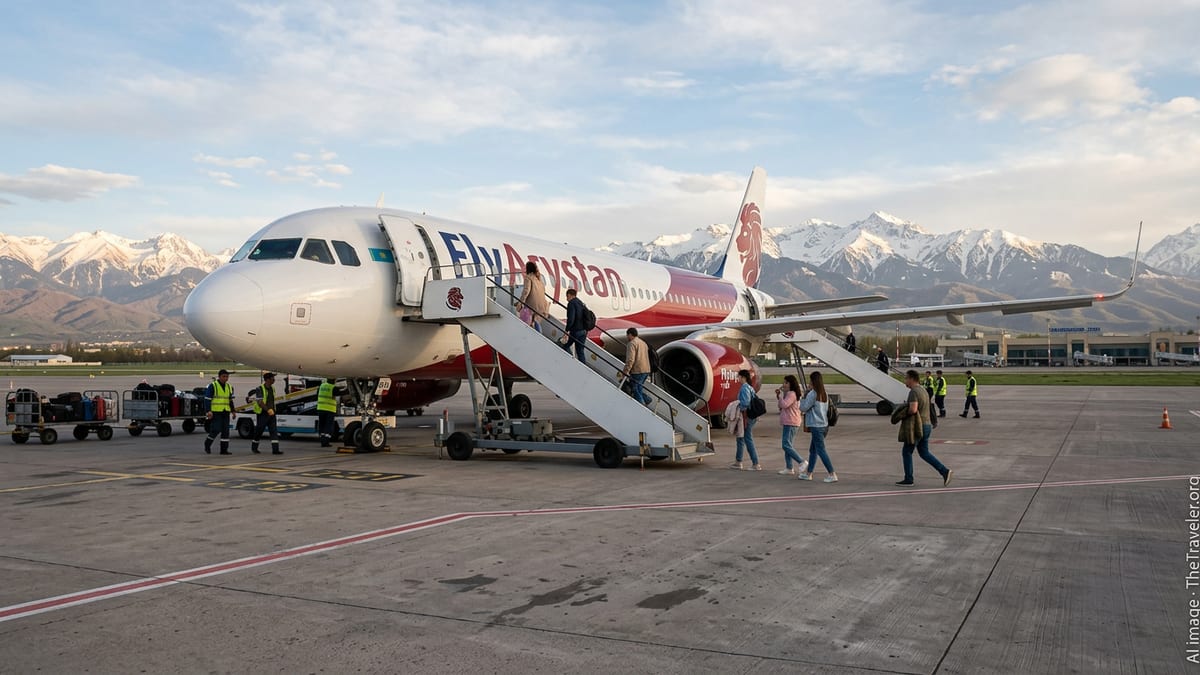
Kazakhstan’s low cost carrier FlyArystan has launched a special promotion on its newly resumed Almaty–Samarkand route for the 2026 spring and autumn seasons, trimming fares and positioning the corridor as one of Central Asia’s most affordable links between major Silk Road cities.
Get the latest news straight to your inbox!
Seasonal Route Returns With Discounted Fares
Publicly available information on FlyArystan’s booking channels indicates that direct seasonal flights between Almaty and Samarkand will operate from March 17 to May 30 and from September 1 to October 24, 2026, with twice weekly departures on Tuesdays and Saturdays. The carrier, a low cost subsidiary of Kazakhstan’s Air Astana Group, is marketing the schedule around short break trips and culturally focused long weekends between the two historic cities.
The airline has coupled the seasonal resumption with a targeted promotion on international routes that includes the Almaty–Samarkand sector, offering reduced one way fares and advance purchase deals. While exact prices vary by travel date and demand, promotional tiers are prominently flagged in the booking interface, signalling an effort to stimulate early bookings ahead of the peak spring tourism period in both Kazakhstan and Uzbekistan.
According to recent route announcements and coverage from regional aviation news outlets, the Almaty–Samarkand link forms part of a broader 2026 expansion that also brings back flights from Almaty to Issyk Kul in Kyrgyzstan and adds new seasonal leisure services from Astana to Batumi on Georgia’s Black Sea coast. The alignment of these launches underlines the airline’s strategy of using competitive pricing to unlock cross border holiday flows across Central Asia and the Caucasus.
Lower Fares Open Up Silk Road City Pair
By focusing promotional discounts on a relatively short 1.5 hour flight that connects two of the region’s best known cultural destinations, FlyArystan is sharpening the appeal of multi country itineraries built around the historic Silk Road. Travel trade commentary in Central Asia notes that more budget conscious visitors are starting to pair city stays in Almaty with excursions to Uzbekistan’s UNESCO listed architectural centers, using low cost flights as time saving alternatives to long overland journeys.
Almaty, often described in tourism materials as Kazakhstan’s cultural and commercial hub, offers a mix of Soviet era streetscapes, contemporary café districts and ready access to the Tian Shan mountains. Samarkand, long a magnet for cultural tourism in Uzbekistan, attracts visitors with its tiled madrasas, historic squares and markets. Cheaper and more frequent flights between the two allow travelers to combine mountain and desert architectures, modern lifestyle venues and ancient monuments in a single weeklong trip.
For residents of both countries, the promotional fares are also expected to enable more family visits, educational exchanges and short business trips. Regional analysts point out that the growth of low cost options within Central Asia has historically lagged behind developments in Europe and Southeast Asia, so each new discounted corridor can have an outsized impact on mobility for students, small business owners and diaspora communities.
Supporting Regional Tourism Growth in Kazakhstan and Uzbekistan
Tourism agencies in both Kazakhstan and Uzbekistan have in recent years highlighted air connectivity as a key lever for raising visitor numbers and lengthening stays. Data from national statistics committees show that international arrivals recovered strongly through 2024 and 2025, with policymakers placing particular emphasis on multi destination routes that keep travelers in the broader region for longer periods rather than focusing on single city city breaks.
In this context, FlyArystan’s move to pair an expanded Central Asian network with promotional pricing on the Almaty–Samarkand corridor aligns with broader government ambitions to market the region as a seamless Silk Road tourism zone. Industry observers note that low cost carriers play an important role in turning aspirational cross border itineraries into realistic options for mid market travelers, complementing the long haul services provided by full service airlines such as Air Astana and Uzbekistan’s flag carrier.
Tour operators in both countries have begun packaging the revived route into combined offerings that might include city tours in Almaty, day trips to nearby mountain resorts, rail travel to other Kazakh cities and onward flights to Samarkand and Bukhara. The presence of discounted seats in the market encourages experimentation with new routes and products, particularly shoulder season cultural tours that depend on price sensitive travelers.
Observers also suggest that easing cross border air travel within Central Asia can help diversify tourism away from narrow, capital focused models. By linking Samarkand with Almaty rather than exclusively routing visitors through Tashkent or Astana, the promotion reinforces secondary cities as independent entry points into the region’s tourism geography.
Competitive Low Cost Market Intensifies
The Almaty–Samarkand promotion comes as Central Asia’s aviation landscape becomes more competitive, with new and existing carriers in Kazakhstan and Uzbekistan expanding their fleets and route maps. Air Astana Group disclosures describe FlyArystan as a key growth engine on point to point routes, particularly to neighboring countries, where demand is rising among price sensitive travelers.
Regional media tracking airline developments report that Uzbekistan is nurturing its own mix of national and private carriers, while foreign low cost airlines continue to test routes into the country’s major and secondary cities. Within this environment, promotional campaigns such as FlyArystan’s are seen as tools to defend market share on key leisure and visiting friends and relatives corridors and to attract first time flyers who might otherwise rely on long distance buses and trains.
Analysts add that low cost promotions also encourage airports in cities like Samarkand to invest in customer facing improvements and route development incentives, as regular, price driven passenger flows can justify terminal upgrades, new ground services and coordinated marketing campaigns with local tourism boards. For Almaty, each additional international low cost connection strengthens its role as a regional hub where travelers can connect to domestic Kazakh destinations or onward flights further afield.
Stronger Cross Border Links Along the Silk Road
Beyond immediate fare savings, the Almaty–Samarkand promotion reflects a broader trend toward tightening economic and cultural links between Kazakhstan and Uzbekistan. Trade data and policy statements in recent years have underscored both governments’ interest in deeper cooperation in sectors ranging from logistics and energy to culture and education, with tourism frequently cited as a visible way to signal that cooperation.
Air travel plays a central role in that narrative, allowing travelers to move quickly between what were once far flung Silk Road waypoints. Affordable flights shorten perceived distances between populations, foster repeat visitation and support small enterprises in hospitality, food, handicrafts and guiding services that cluster around airports and historic districts.
As FlyArystan ramps up marketing of its Almaty–Samarkand services with a time limited promotion, industry watchers will be looking at load factors in the spring and autumn seasons as early indicators of how robust demand is for this particular cross border corridor. Strong performance could encourage the low cost carrier to extend the operating season, add frequencies or experiment with similar promotional campaigns on other international routes linking Kazakhstan with its Central Asian neighbors.