

More news on this day
Kazakh low-cost carrier FlyArystan has increased its standard free hand baggage allowance to seven kilograms effective 1 March 2026, a move aimed at improving passenger comfort and flexibility while preserving the airline’s low-cost model.
Get the latest news straight to your inbox!
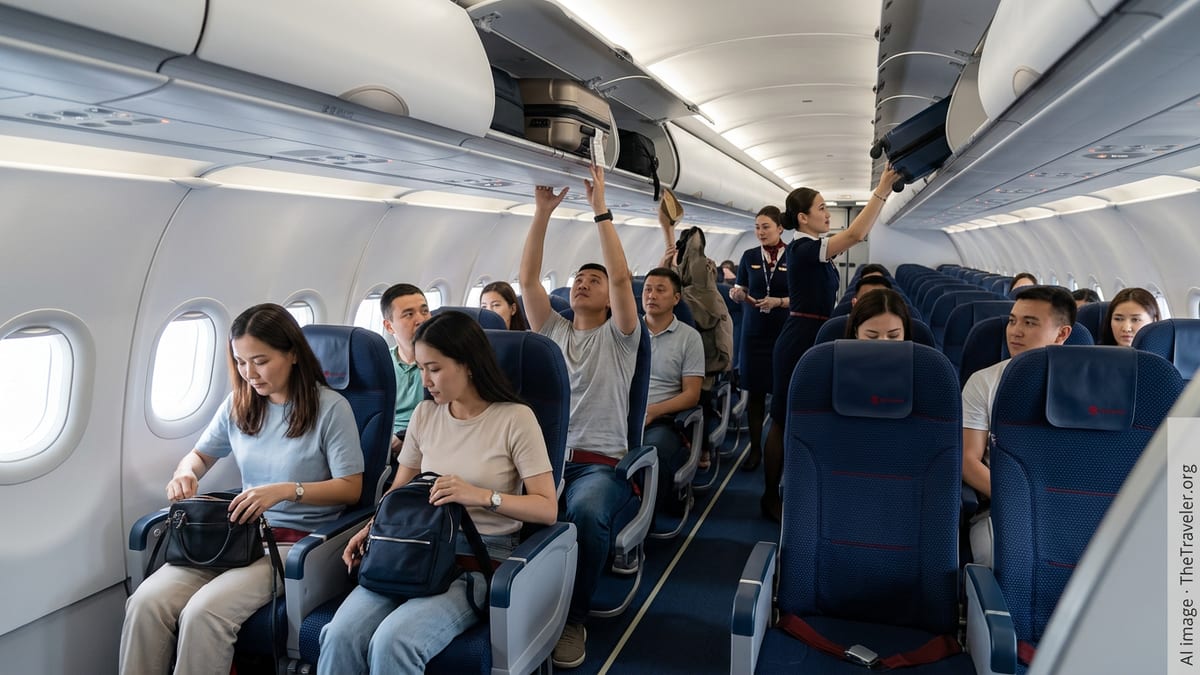
New Allowance Aligns With Regional Low-Cost Competition
The decision to lift the standard hand baggage allowance to seven kilograms positions FlyArystan more closely with leading low-cost carriers across Europe and Asia, many of which have converged around a 7kg benchmark for free cabin bags. For value-focused leisure and visiting-friends-and-relatives travelers, this additional capacity can mean the difference between paying for checked luggage or comfortably packing a short trip into a single cabin bag.
While FlyArystan has previously offered hand baggage options tailored to its ultra-low-cost structure, the new baseline allowance is now framed as part of its core product, rather than an add-on. Airline analysts say this reflects a broader industry trend in which regulators and consumer groups are pressing carriers to standardize minimum free cabin baggage rights, even for budget tickets.
The updated policy also supports FlyArystan’s ambition to compete more aggressively on cross-border routes from Kazakhstan, where passengers increasingly compare cabin baggage rules alongside ticket prices when choosing between carriers. The higher allowance is expected to be particularly attractive on popular regional routes linking Almaty, Astana and secondary Kazakh cities with neighboring markets in Central Asia, the Caucasus and the Middle East.
For FlyArystan, the change comes at a time of rapid expansion in fleet and network, backed by parent company Air Astana. As aircraft deliveries and new routes come online through 2026, aligning baggage rules with passenger expectations is seen as one way to strengthen brand loyalty in a crowded low-fare marketplace.
What the Seven Kilograms Mean for Passengers
Under the new rules, every FlyArystan passenger with a standard ticket is entitled to bring one piece of hand baggage weighing up to seven kilograms into the cabin, free of charge. The airline continues to require that bags meet its published size limits so they can be safely stowed in overhead bins or under the seat in front, a key consideration on high-load-factor flights.
In practice, seven kilograms is sufficient for many travelers to pack a compact roller case or soft-sided backpack with clothing for a long weekend, a pair of shoes, basic toiletries and small electronics. For business travelers, the extra allowance may accommodate a laptop, chargers and work documents without tipping into overweight territory at the gate.
FlyArystan is expected to maintain strict checks at both check-in and boarding to ensure that cabin bags comply with weight and size limits, helping to preserve quick turnarounds at airports. Ground staff are likely to continue encouraging passengers with heavier items to purchase checked baggage in advance, where fees remain an important revenue stream for the low-cost carrier.
Passengers are being advised to weigh their bags at home before departure and to pack heavier items such as books, chargers and cosmetics carefully. As with other low-cost airlines, overstepping the hand baggage rules at the gate can result in additional charges and forced gate-checking, undermining the cost savings and convenience that many travelers seek.
Balancing Comfort With the Low-Cost Business Model
Although increasing the free hand baggage allowance adds value for customers, FlyArystan is moving cautiously to protect its low fare proposition. The carrier continues to unbundle its product, charging separately for services such as checked luggage, seat selection and certain onboard refreshments, a model that keeps advertised ticket prices low while generating ancillary revenue.
A slightly more generous cabin allowance allows FlyArystan to enhance perceived comfort without significantly eroding aircraft performance or turnaround efficiency. Seven kilograms remains a manageable weight for overhead bins and helps reduce the risk of congestion in the aisle during boarding and disembarkation, two pressure points for short-haul low-cost operations.
Industry observers note that cost discipline will remain critical as FlyArystan navigates fuel price volatility, currency fluctuations and infrastructure constraints in some of the regional airports it serves. By focusing enhancements on relatively low-cost elements such as cabin baggage, the airline can position itself as passenger-friendly while still adhering to a lean operating model.
The timing of the policy shift, aligned with leadership changes at FlyArystan and ongoing fleet investments within the Air Astana Group, suggests a broader strategy to refine the brand’s value proposition. Passenger experience improvements are likely to be weighed carefully against unit cost targets on a route-by-route basis.
Regional and Regulatory Context Around Cabin Baggage
FlyArystan’s move comes against a backdrop of ongoing debate in Europe and beyond over what constitutes a fair minimum standard for free cabin baggage on commercial flights. Lawmakers and consumer advocacy bodies have argued that a reasonable hand baggage allowance should be treated as an integral part of air transport rather than an optional extra, particularly on short-haul routes where travelers often rely solely on carry-on luggage.
Regulatory proposals and court decisions in various jurisdictions have converged on the idea that hand luggage within modest size and weight limits, often around seven kilograms, should not incur additional charges. While Kazakhstan is not bound by European Union rules, its airlines compete intensively with EU and Gulf carriers for regional traffic flows, making alignment with emerging norms a strategic consideration.
In Central Asia, where air connectivity is expanding rapidly and low-cost models are still relatively new, baggage policies are a visible and sometimes contentious aspect of how passengers perceive fairness and value. Moves to clarify and, in some cases, enhance free allowances are seen as a way to build trust among first-time and infrequent flyers.
For FlyArystan, adopting a seven kilogram benchmark keeps the airline in step with evolving expectations among travelers who may connect onward on foreign carriers or compare policies online before booking. It also reduces confusion for passengers accustomed to 7kg hand baggage limits in neighboring markets, especially as cross-border leisure and labor travel continues to grow.
What Travelers Should Do Before 1 March and Beyond
Although the higher allowance formally took effect on 1 March 2026, FlyArystan is encouraging passengers to review the latest baggage information at the time of booking and again before departure, as specific fare types and routes may still carry tailored conditions. Tickets purchased before the effective date are generally being honored under the more generous limit, but travelers are urged to keep documentation of their booking details.
Travel agents in Kazakhstan and nearby markets report a rise in customer questions about what can be brought into the cabin at no extra cost, particularly from passengers planning multi-leg itineraries mixing low-cost and full-service airlines. Many are advising clients to plan around the most restrictive hand baggage rule on their itinerary to avoid unexpected charges.
For FlyArystan customers, the practical advice remains straightforward: pack light, measure and weigh your cabin bag, and consider pre-purchasing checked luggage if your needs exceed seven kilograms. Doing so should allow travelers to maximize the benefit of the new policy while enjoying the low base fares that have helped make FlyArystan a key player in Central Asia’s fast-evolving aviation market.
As the airline continues to expand its network through 2026, how it manages the balance between low costs and passenger-friendly policies such as the enhanced hand baggage allowance will be closely watched by both competitors and travelers across the region.