

More news on this day
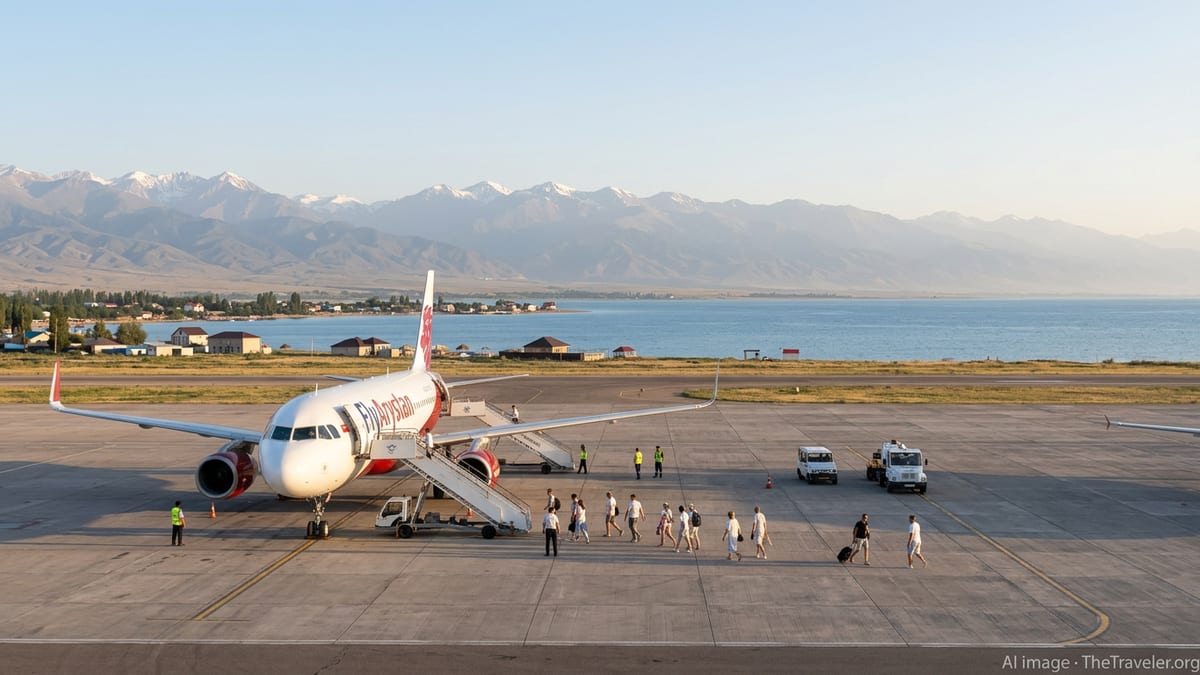
Kazakhstan’s low cost airline FlyArystan will resume its seasonal flights between Almaty and Issyk‑Kul for the summer 2026 season, a move expected to make cross‑border holidays more affordable while giving a fresh boost to tourism ties between Kazakhstan and Kyrgyzstan.
Get the latest news straight to your inbox!
Seasonal Route Returns After Strong First Year
FlyArystan first entered the Almaty to Issyk‑Kul market in July 2025, following the relaunch of direct services between Kazakhstan’s commercial hub and Tamchy’s Issyk‑Kul International Airport after a long break in scheduled air links. The carrier operated the route alongside Kyrgyz startup Asman Airlines, which inaugurated flights in June 2025, signalling renewed confidence in the lake’s tourism potential.
According to FlyArystan’s latest summer schedule and promotional materials, the airline will again operate the Almaty–Issyk‑Kul route in 2026 as a short seasonal service aligned with peak holiday demand. Flights are set to connect Almaty with Tamchy on the lake’s north shore, turning what is typically a seven to eight hour overland journey into a hop of just over an hour.
The decision to resume the route reflects strong initial demand in 2025, when regional travelers quickly embraced the convenience of flying directly to the lakeside rather than enduring lengthy border crossings and mountain roads by car or bus. With summer tourism across Central Asia continuing to grow, the 2026 season is expected to draw even more passengers seeking fast access to beach resorts and trekking gateways around Issyk‑Kul.
Airline analysts also see the move as part of a broader strategy by FlyArystan and its parent Air Astana Group to consolidate their role in short haul regional traffic, leveraging low cost operations on leisure routes that complement the group’s longer haul network.
Cheaper Fares Open Up Cross‑Border Summer Escapes
FlyArystan is promoting the Almaty–Issyk‑Kul service as a budget friendly option for holidaymakers, with its usual low cost model applied to the short international hop. The airline’s fare structure allows passengers to start with a basic seat only ticket and then pay extra only for services they actually want, such as checked baggage, inflight meals or advance seat selection.
This unbundled approach is designed to keep headline prices low on a route where cost has historically been a barrier for families and younger travelers. For many residents of Almaty, a weekend at Issyk‑Kul has long required either an expensive tour package or a full day of driving through congested border checkpoints. By offering a simple, point to point air connection, FlyArystan positions the lake as an accessible short break destination rather than a once a year expedition.
Regional tourism experts say that affordable flights could also encourage more Kyrgyz residents from Issyk‑Kul and Bishkek to visit Almaty for shopping, cultural events and medical services, creating a two way flow of visitors that benefits both sides. Lower airfares compared with traditional full service carriers may be particularly attractive at a time when high fuel costs and inflation have pushed up travel prices across the region.
Travel agencies in both countries are already preparing combined packages that bundle FlyArystan flights with lakeside guesthouses, family run hotels and excursions into the surrounding Tian Shan mountains, aiming to capture early bookings ahead of the 2026 high season.
Tourism Growth Around Issyk‑Kul Gains Momentum
The resumption of Almaty–Issyk‑Kul flights comes amid a period of strong growth for Kyrgyzstan’s flagship lake region. National statistics show that Issyk‑Kul regularly draws several million visitors over the June to August peak, consolidating its status as the country’s premier summer destination and a key pillar of the wider tourism economy.
Local authorities and private investors have responded with a wave of new accommodation, ranging from modern resort complexes on the north shore to renovated sanatoriums and traditional yurt camps on quieter stretches of beach. Community based tourism initiatives are promoting homestays and guided experiences in nearby mountain valleys, while cultural attractions such as the open air museum at Rukh Ordo and festivals along the lake shore are extending the season beyond the hottest weeks.
For Kyrgyzstan, better air connectivity with Kazakhstan supports national goals to diversify the economy and increase tourism revenue, particularly in regions outside the capital Bishkek. Issyk‑Kul’s combination of sandy beaches, high altitude scenery and relatively mild summer climate makes it an obvious showcase for efforts to brand the country as a year round outdoor destination.
Closer ties with Kazakh tour operators and airlines are also seen as an important way to reach a broader international market, using Almaty’s expanding role as a regional air hub to funnel visitors from Europe, the Middle East and East Asia onward to Kyrgyzstan’s lake and mountain resorts.
Short Flight, Big Time Savings for Regional Travelers
One of the strongest selling points of the resumed route is sheer time savings. Traveling overland from Almaty to Issyk‑Kul typically means a long drive via the Kordai border crossing into Kyrgyzstan, or a multi stage trip via Bishkek and Balykchy before continuing around the lake. Traffic, weather and border formalities can easily extend the journey to most of a day.
By contrast, the direct flight brings travelers from Almaty’s international airport to Tamchy in roughly 75 to 80 minutes of air time, with only a short transfer needed from the small lakeside airport to nearby resort zones such as Cholpon‑Ata. For families with children, older travelers or those on tight schedules, that difference can be decisive when choosing where to spend a summer holiday.
Tour operators say the route also opens up attractive one week itineraries that combine urban and outdoor experiences. Visitors can spend several days exploring Almaty’s cafés, museums and surrounding national parks before flying on to Issyk‑Kul for swimming, sailing, hiking or visits to hot springs, then return home without backtracking over long road distances.
The convenience factor may further encourage spontaneous trips. With seasonal flights scheduled several times per week, residents of Almaty can consider a last minute escape to the lake during heatwaves, while Kyrgyz residents might opt for quick shopping or medical trips to Kazakhstan’s largest city without committing to an extended overland journey.
Strengthening Kazakhstan–Kyrgyzstan Tourism Cooperation
Beyond the immediate benefits for holidaymakers, the return of FlyArystan’s Almaty–Issyk‑Kul flights underscores a broader trend of growing tourism cooperation between Kazakhstan and Kyrgyzstan. In recent years, the two countries have signed new agreements on resort development and land use around Issyk‑Kul, aiming to attract joint investment and coordinate infrastructure upgrades on both sides of the border.
Direct air links are viewed by policymakers as an essential component of this strategy, turning the lake into a shared asset rather than a purely domestic destination. By making cross‑border travel easier for citizens of both countries, airlines like FlyArystan and Asman help support plans for cross marketed tour products, joint festivals and sports events, and integrated transport corridors that may eventually include improved road and rail connections.
The 2026 season will serve as a test of how far low cost flights can translate into higher spending on the ground, particularly in smaller communities around Issyk‑Kul that rely on tourism for jobs and income. Hoteliers and guesthouse owners along the northern shore say early inquiries are promising, with many Kazakh families specifically asking about packages linked to the resumed Almaty flights.
If demand continues to build, industry observers believe the seasonal service could pave the way for longer operating periods in future years, additional frequencies, or even new point to point routes linking other Kazakh cities with Kyrgyz resorts, further knitting together Central Asia’s emerging tourism landscape.