

More news on this day
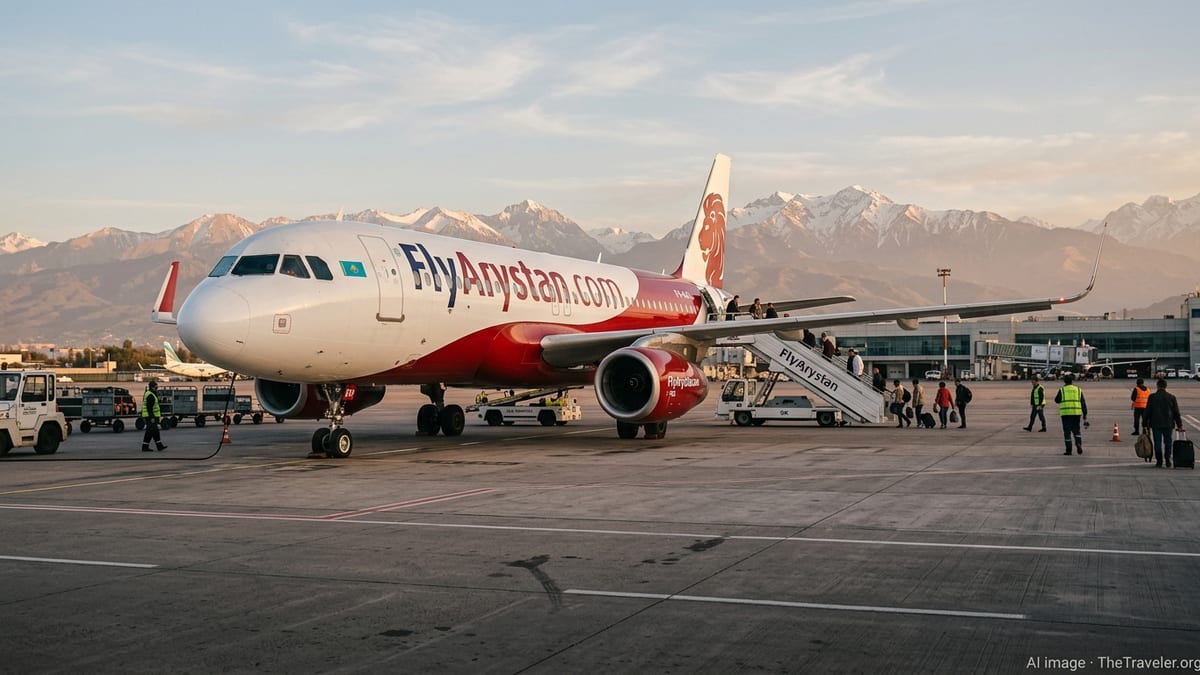
Kazakhstan’s low cost carrier FlyArystan is reviving direct flights between Almaty and Samarkand for the 2026 spring and autumn seasons, a move widely viewed as a fresh boost to regional tourism, cultural exchange and economic connectivity between Kazakhstan and Uzbekistan.
Get the latest news straight to your inbox!
Seasonal Route Returns on Key Central Asian Corridor
Publicly available information from FlyArystan and regional media shows that ticket sales have opened for the Almaty–Samarkand–Almaty service as part of the airline’s 2026 spring and autumn schedules. The route, which has operated on a seasonal basis in previous years, will again connect Kazakhstan’s largest city with Uzbekistan’s historic tourism hub on a short cross border hop.
The service is scheduled to operate twice weekly, typically on daytime departures that appeal to leisure travelers and short stay visitors. Reports indicate that flights will run in the spring from late March to the end of May, then resume in early September through late October, aligning with peak sightseeing periods in both countries and avoiding the most extreme summer heat in the region.
According to published coverage, one way fares are being promoted from around the low thirty thousand tenge range, underscoring FlyArystan’s strategy of positioning the route firmly in the budget segment. The airline is expected to deploy its standard single class Airbus A320 aircraft, which form the backbone of its regional network across Central Asia.
The return of the Almaty–Samarkand link comes as Kazakhstan and Uzbekistan step up broader efforts to expand cross border air connectivity. Other carriers in the region have added or announced services between major cities such as Astana, Turkistan and Samarkand, signaling intensifying competition on the Central Asian travel market.
Tourism Growth Along the Modern Silk Road
Tourism agencies and market analysts have long highlighted Samarkand and Almaty as anchor cities on the modern Silk Road, drawing visitors interested in Islamic architecture, mountain landscapes and Soviet era urban heritage. Direct flights between the two destinations are widely seen as a practical facilitator for multi country itineraries that combine Kazakhstan and Uzbekistan in a single trip.
Samarkand, known for landmarks such as Registan Square, Shah i Zinda and the city’s restored madrasas, has been at the center of Uzbekistan’s push to attract more international tourists. Almaty, framed by the northern Tien Shan mountains, has in parallel sought to build its profile as a gateway to hiking, winter sports and nature based tourism in southeastern Kazakhstan.
Industry observers note that the revived service gives tour operators more flexibility when designing packages that link the two cities without routing travelers through Tashkent or relying solely on overland crossings. This may encourage longer stays and more diverse itineraries, spreading visitor spending beyond traditional hubs and into secondary destinations along the corridor.
The timing of the seasonal flights also dovetails with major cultural and sporting events increasingly hosted in both countries. Spring and autumn schedules make it easier for visitors to connect festival calendars, historic sites and outdoor activities into a single journey, reinforcing Central Asia’s image as a cohesive tourism region rather than a series of standalone markets.
Deeper Cultural Exchange Between Neighboring States
Beyond tourism metrics, the restored Almaty–Samarkand route carries symbolic weight for cultural exchange between Kazakhstan and Uzbekistan. Both countries share Turkic and Islamic heritage, yet have distinct languages, cuisines and artistic traditions that many residents and diaspora communities are keen to explore more easily.
Observers of regional integration note that direct, affordable air links can encourage more frequent short visits for family, educational and cultural reasons. University partnerships, artistic collaborations, sports competitions and academic conferences all benefit from predictable, point to point connectivity that reduces travel time and costs.
Reports from previous iterations of the route suggest that passenger traffic includes a mix of tourists, business travelers, students and those visiting friends and relatives on either side of the border. The renewed 2026 schedule is expected to support this mix while also appealing to a growing number of independent travelers who use low cost carriers to explore Central Asia outside of group tours.
In the longer term, such routes contribute to the gradual weaving together of social and economic networks across the region. Easier access between Almaty and Samarkand may, for example, encourage joint cultural festivals, culinary exchanges or twin city initiatives, all of which reinforce people to people ties between Kazakhstan and Uzbekistan.
Economic Connectivity and Trade Opportunities
While tourism is a headline beneficiary, direct flights typically play a broader role in strengthening economic connectivity. Business associations and trade analysts often point to air links as a prerequisite for deeper commercial ties, especially for sectors that rely on frequent travel, such as services, technology, education and high value manufacturing.
Almaty remains a key financial and commercial hub for Kazakhstan, hosting regional offices of multinational companies as well as a dynamic small business sector. Samarkand, in turn, is evolving from a primarily heritage focused destination into a more diversified center that leverages its transport links, hospitality infrastructure and proximity to other Uzbek industrial regions.
The reactivated Almaty–Samarkand flights are expected to make it easier for entrepreneurs, investors and project teams to conduct site visits, attend meetings and explore joint ventures without complex routing. Even with a limited twice weekly frequency, the predictability of the schedule can underpin new patterns of cross border cooperation, particularly when combined with other routes connecting Astana, Tashkent and Turkistan.
Regional policymakers have in recent years emphasized the potential of Central Asia’s internal market, and improved air links are often cited in strategy documents as a supporting factor for trade growth. The FlyArystan route feeds into this broader push by adding another practical connection point between two of the area’s most prominent urban centers.
Low Cost Competition and the Future of Central Asian Air Travel
FlyArystan’s move fits within a wider trend of low cost carriers shaping travel behavior in Central Asia. The airline, part of the broader Air Astana Group, has expanded rapidly since its launch, focusing on high density routes and relatively short sectors that lend themselves to budget operations.
As more airlines introduce point to point connections linking regional cities, travelers are gaining alternatives to traditional hub and spoke models that routed most journeys through a small number of major airports. For routes such as Almaty–Samarkand, this can translate into shorter travel times, simpler itineraries and more competitive pricing.
Analysts suggest that the seasonal, twice weekly structure of the service may allow the airline to adjust capacity in line with demand peaks around holidays, school breaks and key travel periods. This flexibility is viewed as important in a market where leisure demand is growing but still sensitive to price and economic conditions.
Looking ahead, the success of the revived Almaty–Samarkand flights is likely to be watched closely by both aviation and tourism stakeholders across the region. Strong load factors and positive traveler feedback could encourage not only additional frequencies on this corridor but also the launch of new cross border routes that further knit together the emerging Central Asian travel network.