

More news on this day
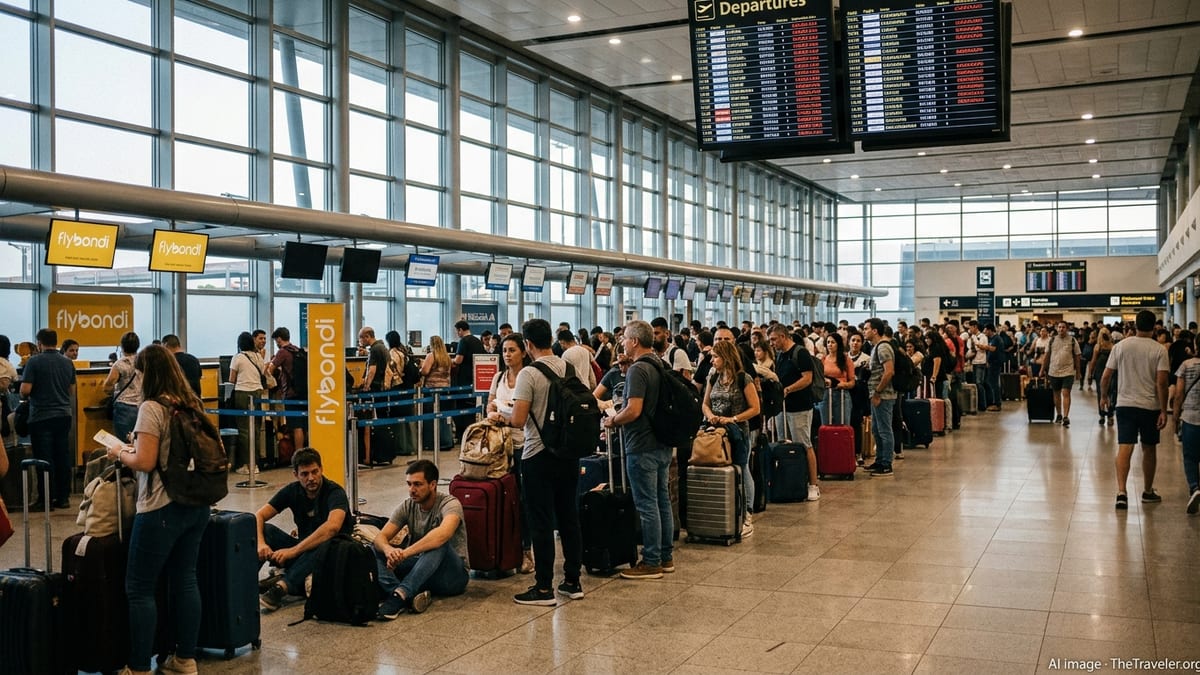
Hundreds of air passengers were left stranded at Buenos Aires area airports after a fresh wave of cancellations by Argentine low cost carrier Flybondi and delays on services operated by several other airlines, disrupting domestic and regional travel plans at the height of the late-summer season.
Get the latest news straight to your inbox!
Wave of Disruptions Hits Ezeiza and Buenos Aires Airports
Reports from local media and passenger accounts on social platforms describe crowded terminals and long queues at Ministro Pistarini International Airport in Ezeiza and at Aeroparque Jorge Newbery in central Buenos Aires, as travelers scrambled to rebook journeys following cancellations and significant delays. The latest disruption follows a pattern of operational instability at Flybondi, an ultra low cost carrier that has rapidly expanded across Argentina in recent years.
Publicly available flight tracking boards and airport departure and arrival data show multiple Flybondi services marked as cancelled or heavily delayed, alongside additional disruptions affecting Aerolíneas Argentinas, JetSmart and other regional operators. Passengers reported missed connections to onward domestic destinations such as Bariloche, Mendoza and El Calafate, as well as altered arrival airports within the Buenos Aires metropolitan area.
The disruption comes at a time of heightened sensitivity in Argentina’s aviation sector, with travelers already bracing for union actions and schedule changes that have periodically affected operations in early 2026. For many visitors and residents, the latest cancellations have added uncertainty to itineraries planned around public holidays, school breaks and high season trips to Patagonia and the northwest.
Flybondi’s Record Under Fresh Scrutiny
Flybondi, founded in 2016 as Argentina’s first ultra low cost airline, has long marketed low base fares and a point to point network linking Buenos Aires with major tourist and regional centers. However, consumer forums, travel discussion boards and previous news coverage document a history of frequent schedule changes, airport swaps between Aeroparque and Ezeiza, and day of travel cancellations that have left passengers with limited alternatives.
Recent posts from affected travelers in March 2026 describe flights within Argentina being cancelled with little notice, forcing last minute purchases on rival airlines or extended unplanned stays. Some passengers report difficulty accessing Flybondi’s customer service channels or completing rebookings through online systems, contributing to a perception of inconsistent post disruption support.
Aviation industry data and prior analyses of on time performance have placed Flybondi among the regional carriers with higher rates of delays and cancellations, particularly during peak travel periods or in the context of industrial action and infrastructure constraints. The carrier’s reliance on a relatively small fleet of aircraft and tight utilization schedules means that technical or staffing issues can quickly cascade into widespread disruption across its network.
Knock-On Effects for Other Carriers and Travellers
The latest operational problems are not confined to Flybondi’s own passengers. As seats on alternative airlines are snapped up by those affected by cancellations, travelers booked on Aerolíneas Argentinas, JetSmart, LATAM and other carriers have reported limited availability, higher last minute fares and busy customer service lines. According to published coverage of earlier disruption episodes, such surges in demand can ripple through Argentina’s domestic network for days.
Domestic airports from Ushuaia and El Calafate in Patagonia to Salta and Jujuy in the northwest depend heavily on a small set of operators, so concentrated cancellations at Buenos Aires gateways quickly translate into bottlenecks on popular tourist routes. Families, tour groups and independent travelers can find themselves stranded far from home or the start point of multi stop itineraries, with hotel bookings, excursions and ground transport thrown into disarray.
In some cases, passengers report that changes of airport within Buenos Aires have compounded the disruption. Shifting a flight from Aeroparque to Ezeiza or vice versa can require a cross city transfer of more than an hour in normal traffic, adding cost and complexity, particularly for those unfamiliar with the city or traveling with children and large amounts of luggage.
What Travellers Are Experiencing on the Ground
Accounts shared publicly by travelers over recent days describe scenes of confusion at check in counters and departure gates, with rolling delay announcements, last minute gate changes and flights that appear as on time on airport screens until shortly before boarding before being reclassified as cancelled. Some passengers say they only learned of cancellations after arriving at the airport, while others received emails or app notifications offering rebooking to flights one or more days later.
Reports indicate that many stranded travelers have resorted to queueing simultaneously at airline counters while searching on mobile phones for available seats on competing carriers or overnight accommodation. For international visitors who may not speak Spanish fluently, navigating refund policies, local consumer regulations and the complex geography of Buenos Aires airports has added to the stress of unexpected schedule changes.
Travel community discussions highlight a growing awareness among visitors to Argentina of the risks associated with tightly timed connections or same day links between domestic and international flights. Some contributors now recommend building in longer buffers, favoring airlines with larger fleets and more frequencies, or planning overland segments as an alternative where practical.
Ongoing Uncertainty and Advice for Upcoming Trips
With reports of union related actions and operational strains continuing into late March 2026, prospective travelers to and within Argentina are facing a period of uncertainty. Published guidance from consumer advocates and seasoned travelers suggests monitoring bookings closely in the days leading up to departure, checking both airline apps and airport boards, and being prepared with contingency plans.
For those already booked on Flybondi or other low cost carriers, publicly available information indicates that options in the event of disruption may include rebooking on later flights, accepting airport changes within the Buenos Aires area, or requesting refunds subject to each airline’s conditions of carriage. However, passengers should be prepared for long waits at service desks and potential delays in processing reimbursements.
Travel planners advising visitors to Argentina are increasingly emphasizing flexible arrangements, such as fully refundable hotel reservations and travel insurance policies that cover missed connections and extended stays. As the situation at Ezeiza and Aeroparque continues to evolve, the experience of the hundreds of travelers stranded in recent days is likely to influence how future visitors structure their itineraries in one of South America’s busiest aviation markets.