

More news on this day
Dubai-based carrier flydubai is deepening its reach into Southeast Asia with the launch of double-daily flights between Dubai and Bangkok from September 15, 2026, a move that will lift its Thailand schedule to 28 weekly services and further entrench Dubai’s role as a major transit hub for passengers traveling across Asia and beyond.
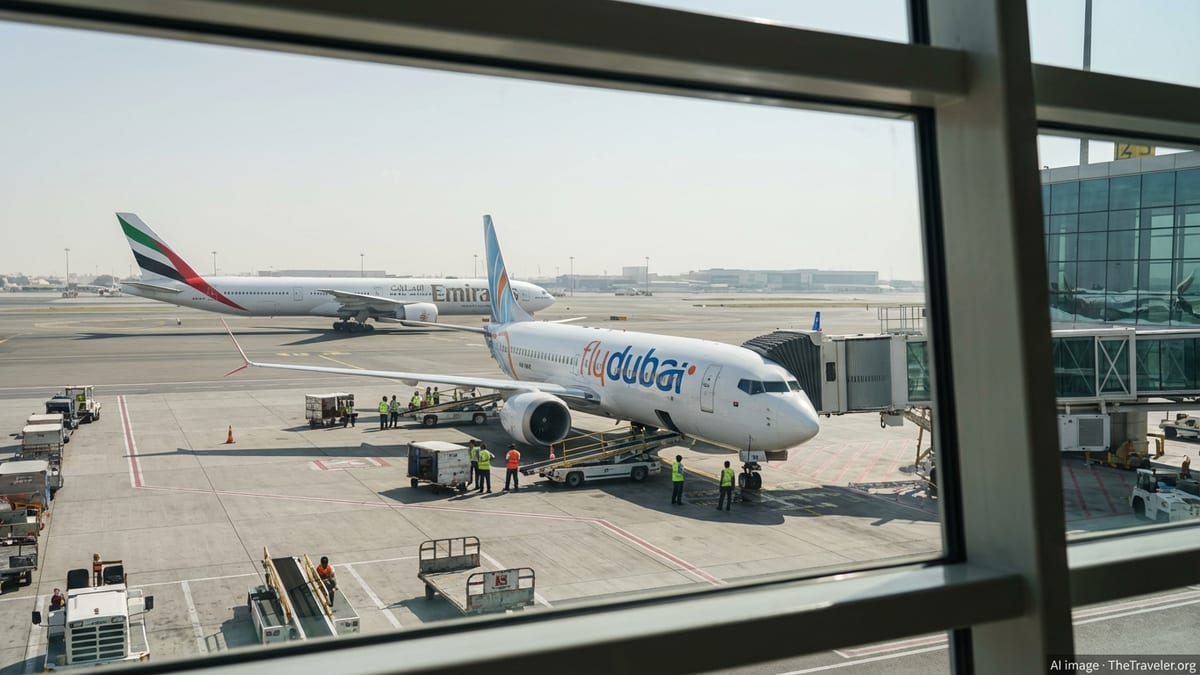
New Double-Daily Link Between Dubai and Bangkok
Flydubai has confirmed it will introduce twice-daily services between Dubai International Airport and Bangkok’s Don Mueang International Airport from September 15, 2026. The route will be operated with Boeing 737 MAX 8 aircraft, reflecting the airline’s strategy of using a single, fuel-efficient narrowbody fleet on medium-haul services.
The new operation will add significant capacity into one of Asia’s most popular city destinations. With Don Mueang joining Krabi on the network, flydubai will now serve Thailand with 28 flights per week, positioning the carrier as a key player on UAE–Thailand traffic flows and giving travelers a low-cost alternative to full-service Gulf rivals.
Schedules filed by the airline show departures from Dubai at 01:20 and 11:00, arriving in Bangkok in the late morning and evening. The return legs leave Don Mueang at 12:10 and 23:50, timing that allows overnight and daytime connections through Dubai to a wide range of onward destinations.
Return fares on the new route are pitched to appeal to both leisure and business travelers. Economy Lite return tickets from Dubai start from around AED 2,500, while Business Class fares begin near AED 9,000, with comparable pricing filed in Thai baht for passengers originating in Bangkok.
Strengthening Dubai’s Role as a One-Stop Global Hub
The new Bangkok flights are structured around Dubai’s role as a one-stop connection point between Europe, the Middle East and Asia-Pacific. By operating from Terminal 3 at Dubai International and under its codeshare partnership with Emirates, flydubai can plug the service into a combined network of more than 240 cities.
Passengers traveling from cities across the Gulf, Europe, North Africa or the Caucasus will be able to connect in Dubai on a single itinerary, with baggage checked through to Bangkok and coordinated minimum connection times. This model has been central to Dubai’s rise as a global transit node and is now being further extended into Southeast Asia’s high-growth markets.
For travelers heading beyond Thailand, the timing of the Bangkok flights supports same-day onward connections across Asia. Many regional and domestic services from Don Mueang depart in waves around midday and late evening, matching the arrival banks of flydubai’s inbound flights from Dubai.
Industry analysts note that the move illustrates how Dubai’s aviation ecosystem uses a mix of full-service and hybrid low-cost operations to funnel traffic through a single hub. Where Emirates focuses on widebody long-haul routes via Suvarnabhumi Airport, flydubai’s 737 operations into Don Mueang give the combined group more flexibility and price points across the Thailand market.
Why Flydubai Chose Bangkok’s Don Mueang Airport
Rather than operating into Bangkok’s larger Suvarnabhumi Airport, flydubai has selected Don Mueang, the Thai capital’s second international gateway. Located just north of central Bangkok, Don Mueang is heavily used by regional and low-cost carriers, making it a natural fit for flydubai’s point-to-point and short- to medium-haul connecting strategy.
The airport offers relatively easy access to downtown Bangkok and is well connected to surrounding provinces, an advantage for both business travelers and tourists who value shorter transfer times from the terminal to the city. For flydubai, the choice of Don Mueang also opens up convenient same-day links to a dense network of domestic Thai and regional Asian routes operated by partner and third-party airlines.
Operationally, Don Mueang can offer competitive costs and slot availability compared with the more congested Suvarnabhumi, which handles most of Thailand’s long-haul traffic. That gives flydubai flexibility to maintain and potentially grow frequencies while keeping its schedule tightly aligned with peak connection banks in Dubai.
The airport bifurcation also allows the wider Dubai aviation grouping to segment the Thailand market. Emirates continues to serve Suvarnabhumi with widebody aircraft aimed at premium and long-haul connecting passengers, while flydubai’s presence at Don Mueang targets cost-conscious travelers, regional connections and those heading to secondary Thai destinations.
Thailand Demand Underpins Southeast Asia Growth Strategy
Flydubai’s decision to invest in a double-daily Bangkok schedule underscores the enduring strength of demand for Thailand from its core markets. Executives at the airline describe the country as a consistently popular destination for both leisure and business travel, with resilient year-round traffic from the Gulf and Europe.
Bangkok’s appeal stretches beyond its role as Thailand’s commercial and political center. For many travelers, it is the starting point for onward journeys to beach destinations such as Phuket, Krabi and the islands of the Andaman Sea and Gulf of Thailand, as well as to cultural and nature-focused trips in the country’s north.
Flydubai already serves Krabi directly from Dubai, and the addition of Bangkok helps broaden the airline’s Thailand portfolio. Alongside its growing presence in Malaysia, including Langkawi and Penang, the Bangkok route forms part of a wider Southeast Asia strategy aimed at connecting medium-sized regional markets with Dubai and, via Emirates, to long-haul destinations.
Tourism authorities in both the UAE and Thailand have been actively promoting bilateral travel, and industry observers expect the new flights to support rising visitor flows in both directions. Additional capacity typically translates into more competitive fares and greater itinerary choice, stimulating demand from price-sensitive leisure segments and small and medium-sized businesses.
Schedules Tailored to Connections Across Asia and Beyond
The detailed schedule of the new service has been designed to maximize network connectivity. From mid-September 2026, flydubai plans to operate flights FZ1345 and FZ1335 from Dubai at 01:20 and 11:00 local time, arriving into Don Mueang late morning and late evening respectively.
Return services FZ1346 and FZ1336 will depart Bangkok at 12:10 and 23:50, reaching Dubai in the mid-afternoon and early morning. This pattern gives passengers a range of same-day connection options, including overnight links to European and Gulf cities and daytime flights on to South Asia, the Caucasus and Africa.
For travelers originating in Thailand, the late-night departure from Bangkok is especially attractive, enabling full working days in the capital before flying to Dubai and connecting onwards. The midday departure, meanwhile, serves leisure passengers and those making short regional hops into Bangkok earlier the same morning.
Because the route feeds into Terminal 3 at Dubai International, connecting passengers benefit from coordinated schedules with Emirates’ long-haul bank structure. Through-ticketing and baggage interline arrangements simplify the journey for travelers who may be changing airlines in Dubai but treating the trip as a single continuous itinerary.
Onboard Experience and Fleet Strategy
The Dubai–Bangkok service will be operated by flydubai’s Boeing 737 MAX 8 aircraft, in a two-class configuration offering both Economy and Business Class cabins. The airline highlights a relatively spacious Business Class layout with recliner-style seats, enhanced privacy and dedicated cabin service on medium-haul sectors such as Bangkok.
In Economy, passengers can expect modern slimline seating, personal entertainment screens on many aircraft and a buy-on-board or pre-ordered meal concept that allows travelers to customize their inflight experience. The product is positioned to appeal to cost-conscious holidaymakers while still offering optional extras such as extra-legroom seats and bundled fares with meals and checked baggage.
Across both cabins, flydubai emphasizes digital touchpoints throughout the journey, including online check-in, mobile boarding passes and pre-purchase options for ancillary services. These elements are particularly important on a route like Bangkok, which attracts a high share of independent travelers and younger passengers who plan and manage their trips online.
The deployment of 737 MAX aircraft on the route reflects the carrier’s broader fleet strategy. Operating a single narrowbody type helps simplify training and maintenance while allowing flydubai to open or increase frequencies on routes at relatively lower risk compared with committing widebody capacity.
Implications for Competition and Passenger Choice
Flydubai’s enhanced Thailand schedule feeds into a competitive marketplace for travel between the Gulf and Bangkok, where full-service rivals and regional low-cost carriers already operate. By offering a double-daily service aligned with Emirates’ hub in Dubai, the airline is positioning itself to capture a larger slice of connecting traffic between Europe, the Middle East, Africa and Southeast Asia.
For passengers, the most immediate impact of the new flights is likely to be increased choice in departure times, cabin products and fare levels. Travelers who previously relied solely on widebody services via Suvarnabhumi now have an additional option into Don Mueang, potentially closer to their final destination within greater Bangkok or nearby provinces.
Industry experts suggest that the route could also encourage more first-time visitors to Thailand from secondary cities across flydubai’s network. One-stop connections via Dubai from markets in the Caucasus, Central Asia and parts of Eastern Europe make Thailand more accessible, especially when paired with competitive fares and simplified connections.
The expansion also underlines how regional carriers are using narrowbody aircraft to tap into markets traditionally dominated by larger jets. By carefully calibrating frequencies and seat capacity, flydubai can respond more nimbly to seasonal shifts in demand while maintaining year-round connectivity that supports tourism, trade and diaspora travel.