

Low-cost carrier flydubai is set to strengthen air links between the United Arab Emirates and Thailand by expanding services on the busy Dubai–Bangkok route, tapping surging demand for travel to the Thai capital at a time when Bangkok is ranked the world’s most visited city and Dubai International Airport reports record passenger flows.
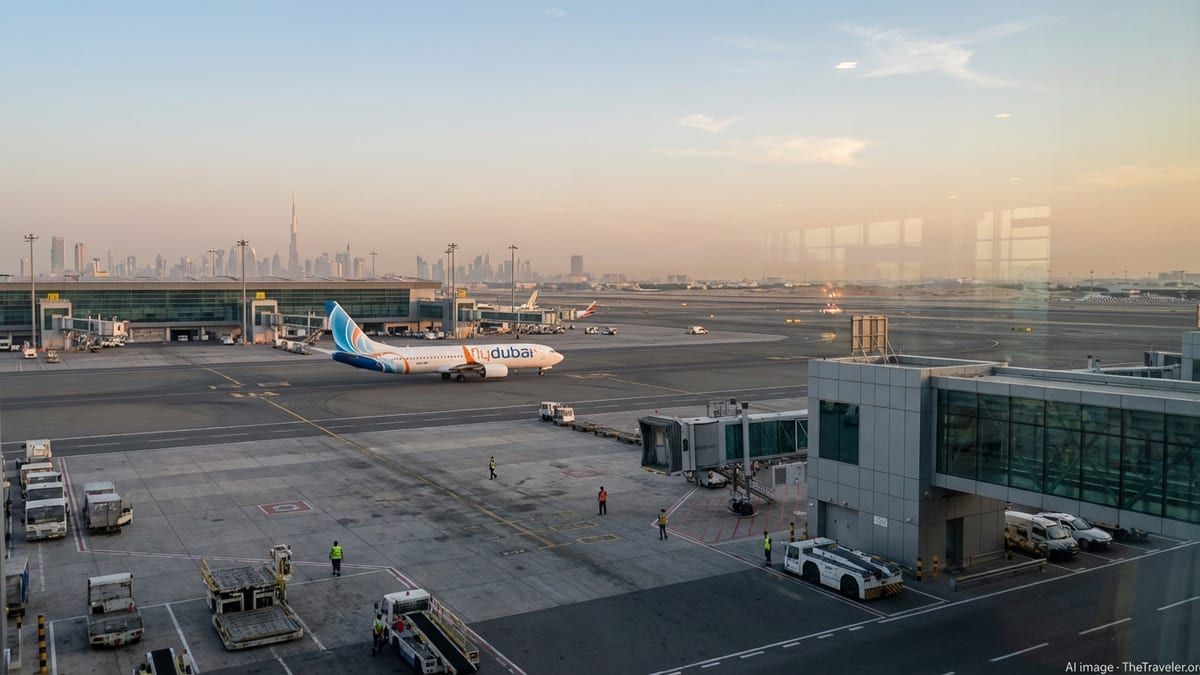
flydubai Scales Up on a Flagship Asian Route
The Dubai–Bangkok corridor has long been one of the Gulf’s most competitive and resilient long-haul markets, and flydubai’s latest capacity increase positions the carrier to capture a larger slice of booming leisure and business traffic between the Middle East and Southeast Asia. While the airline has operated Bangkok for several years, its decision to add flights and refine schedules reflects renewed confidence in regional demand and the strategic importance of Thailand within its broader Asian network.
Industry data show that Bangkok has cemented its place at the top of global tourism rankings, welcoming more than 32 million international visitors in 2024 according to research by Euromonitor International, ahead of Istanbul, London and Dubai. Against that backdrop, additional low-cost seats out of Dubai give travelers across flydubai’s growing network more options to reach what has become the world’s busiest international city break. Capacity moves on this scale also signal the continued normalization and expansion of long-haul low-cost flying from the Gulf.
For flydubai, the Bangkok expansion is also a way to diversify beyond its traditionally stronger short and medium haul markets. The airline has steadily deepened its presence in South and Southeast Asia, using fuel-efficient Boeing 737 aircraft to serve high-density city pairs at lower operating costs than legacy widebody operators. Bangkok, with its year-round demand and strong mix of price-sensitive and premium travelers, fits neatly into that strategy.
The move comes as Dubai International Airport underpins the city’s aviation ambitions with fresh traffic records. The hub handled more than 95 million passengers in 2025, solidifying its status as the world’s busiest international airport and creating a broader pool of potential customers for flydubai’s expanded Bangkok operation.
Bangkok Holds Tight to the “World’s Most Visited City” Crown
Bangkok’s enduring appeal is central to the business case for more capacity from the Gulf. Euromonitor’s latest city index places the Thai capital first globally by international arrivals in both 2024 and 2025, with more than 32 million and around 30 million visitors respectively. That momentum builds on earlier rankings by Mastercard and other industry trackers that consistently put Bangkok in the top tier of world tourism over the past decade.
The city’s draw lies in a powerful combination of affordability, accessibility and experience. Visitors are lured by headline attractions such as the Grand Palace and historic riverside temples, as well as by contemporary draws including world-class shopping malls, rooftop bars, street food districts and a fast-evolving creative scene. For regional airlines such as flydubai, this means steady year-round demand rather than a narrowly defined high season, smoothing load factors and revenue across the calendar.
Bangkok’s sustained leadership in visitor numbers also reflects Thailand’s relatively liberal entry regime compared with some rival destinations. Thai authorities have pursued visa relaxations and targeted promotions in key markets, including Gulf states and major Asian source countries, to accelerate the post-pandemic recovery. Such measures help make additional air capacity more viable, as carriers can count on easier access for the tourists they transport.
At the same time, the city’s tourism authorities are grappling with the complexities of managing growth in a destination that has become almost synonymous with mass tourism. Euromonitor’s ranking places Bangkok much lower on metrics such as overall urban attractiveness and sustainability, underscoring the need for smarter visitor management and infrastructure upgrades even as new air links are forged.
UAE–Thailand Air Corridor Enters a New Phase
The UAE and Thailand have quietly built one of Asia’s most robust long-haul travel corridors, and flydubai’s latest move suggests that a new phase of growth is under way. Full-service carriers from both countries already operate multiple daily flights between Dubai, Abu Dhabi and Bangkok, complemented by services to Thai beach destinations such as Phuket. Low-cost capacity from flydubai and other Gulf budget carriers is now adding a further layer of connectivity that reaches deeper into secondary markets.
Other UAE-based airlines are scaling up as well, illustrating a broader trend. Sharjah-based Air Arabia, for example, announced a third daily frequency to Bangkok from October 2025, citing strong passenger demand between the Gulf and Thailand. That follows a pattern of rising seat numbers across the corridor as tourism, trade and labor mobility recover and expand.
The deepening air ties sit atop increasingly close tourism relations. Thailand remains one of the most popular holiday options for residents and expatriates in the UAE, offering visa-friendly stays, competitive pricing and a short overnight flight. Conversely, Thai travelers have shown growing interest in Dubai and other Emirates as stopover and shopping destinations, capitalizing on aggressive marketing campaigns by Emirati tourism bodies aimed at Southeast Asian visitors.
Diplomatically, both governments have highlighted tourism and aviation as priority sectors in their economic partnership. The expansion of air services creates tangible benefits beyond leisure travel, facilitating bilateral trade in high-value goods, medical tourism flows, education links and investment-related traffic that rely on fast, reliable air transport.
Dubai’s Global Hub Power Extends flydubai’s Reach to Bangkok
One reason the Dubai–Bangkok route is so strategically important for flydubai is that it functions as much more than a simple point-to-point connection. Through coordinated schedules at Dubai International, the carrier can funnel travelers from Europe, the Middle East, Central Asia and parts of Africa onto its Bangkok services, effectively turning the Thai capital into a downstream hub in its own right.
Dubai’s central geographic location, combined with its status as one of the world’s busiest international hubs, allows relatively short total journey times from dozens of cities that do not yet have direct flights to Thailand. Travelers from secondary markets in the Caucasus, the Indian subcontinent, Eastern Europe or East Africa can connect via Dubai, often with a single stop and within a day’s travel, to reach Bangkok. The expanded schedule gives them more flexibility on departure times and connection windows.
flydubai’s long-standing codeshare and interline arrangements with larger Gulf carriers further amplify that reach. Passengers arriving in Dubai on partner flights can connect onto flydubai’s services, while those originating in Bangkok gain one-stop access to an extensive onward network across the Middle East, North Africa and Europe. In practice, each additional Bangkok frequency out of Dubai ripples across multiple regions, not just the UAE and Thailand.
This network effect helps explain why carriers are willing to commit aircraft to already crowded city pairs. While the local Dubai–Bangkok market is significant in its own right, the real growth lies in connecting traffic. By strengthening the Dubai–Bangkok link, flydubai is effectively tightening global access to the world’s most visited city via one of its busiest international gateways.
Competition and Collaboration in a Crowded Skies Market
flydubai’s capacity increase lands in a marketplace where competition on Gulf–Thailand routes is intense, with multiple full-service and low-cost players vying for share. Legacy Gulf airlines continue to operate widebody aircraft with premium-heavy cabins on Thailand services, targeting high-yield segments such as business travelers, high-spending tourists and connecting traffic from North America and Europe. In contrast, flydubai and other budget carriers are focused on stripping costs out of the model and stimulating demand with lower fares.
Yet the competitive dynamics are not purely adversarial. In the UAE, flydubai’s hybrid positioning and close commercial cooperation with larger local airlines means its Bangkok services often complement, rather than cannibalize, those of its partners. By deploying narrowbody jets on routes and time slots that may not justify widebody capacity, flydubai can profitably serve market segments that might otherwise go unaddressed.
For Thai carriers, the rise of Gulf low-cost operators injects both challenges and opportunities. While competition can pressure yields on core routes to the Middle East, partnerships through interline agreements and tourism promotion campaigns offer ways to capture incremental demand. As Bangkok strives to maintain its top global tourism ranking, having a diversified pool of airline partners connecting it to key source markets has become a strategic necessity.
Travel agents and online booking platforms report that price sensitivity remains high in many origin markets feeding Bangkok, particularly among younger travelers and group tours. Expanded low-cost capacity from Dubai therefore helps sustain Thailand’s appeal for budget-conscious tourists while freeing full-service carriers to focus on higher-yield segments and new long-haul routes.
Tourism Flows From South Asia and Beyond Drive Demand
Underlying the expansion of air links between Dubai and Bangkok is a wider reshaping of regional travel patterns, with South Asia, the Middle East and parts of Africa emerging as powerhouse source markets for both the UAE and Thailand. Official data from India, for example, show the UAE as the top outbound destination for Indian travelers in 2024, with Thailand also ranking among their preferred international choices. This creates a natural two-way bridge through Gulf hubs such as Dubai.
For many Indian, Pakistani, Bangladeshi and African travelers, Dubai serves as a first stop abroad, a place for work, trade and short leisure visits. From there, the option to connect onwards to Thailand on an affordable carrier like flydubai lowers the barrier to multi-country itineraries. The same holds true for expatriate communities based in the Gulf, who often look to Southeast Asia for short vacations combining beaches, culture and shopping.
As disposable incomes rise and visa processes digitize across Asia and the Middle East, analysts expect multi-stop regional travel to grow faster than traditional point-to-point holidaymaking. In that scenario, airlines with flexible networks, competitive pricing and strong hub operations stand to benefit disproportionately. flydubai’s strengthened Dubai–Bangkok link is emblematic of this shift, positioning the carrier to be an enabler of more complex, cross-regional journeys.
At the macro level, both Thailand and the UAE are leaning on tourism as a pillar of economic diversification and job creation. Enhanced air connectivity between the two helps spread visitor flows across seasons and source markets, making tourism revenues more resilient to shocks in any single region.
Infrastructure and Policy Support on Both Ends of the Route
The success of expanded Dubai–Bangkok air services rests not only on airline strategy but also on supportive infrastructure and policy frameworks at both ends of the route. In the UAE, authorities are pressing ahead with major investments in airport capacity, including a multibillion-dollar expansion of Al Maktoum International that will eventually absorb traffic from Dubai International. These plans reflect expectations of sustained passenger growth, including on Asia-focused routes.
Thailand, for its part, is pursuing upgrades and expansion projects at Bangkok’s main gateways to keep pace with its status as the world’s busiest tourism city. Suvarnabhumi Airport has been adding terminal capacity and enhancing passenger processing systems, while Don Mueang, a major base for low-cost carriers, is undergoing improvements to better handle surging regional traffic. Such investments are critical to ensuring that airlines like flydubai can add frequencies without running up against bottlenecks on the ground.
Policy decisions also play a decisive role. Thailand’s moves to temporarily ease visa rules for selected markets, expand e-visa and electronic travel authorization schemes, and promote longer stays among high-spending visitors all work in tandem with airline scheduling decisions. In the Gulf, the UAE continues to refine flexible, multi-tiered visa options aimed at tourists, medical visitors, remote workers and transit passengers, encouraging travelers to use Dubai as both destination and gateway.
As governments on both sides deepen cooperation in areas such as aviation safety, bilateral air services agreements and tourism promotion, airlines gain greater clarity to plan longer-term capacity commitments. flydubai’s expansion of its Dubai–Bangkok operation can be read in part as a vote of confidence in this evolving regulatory landscape.