

More news on this day
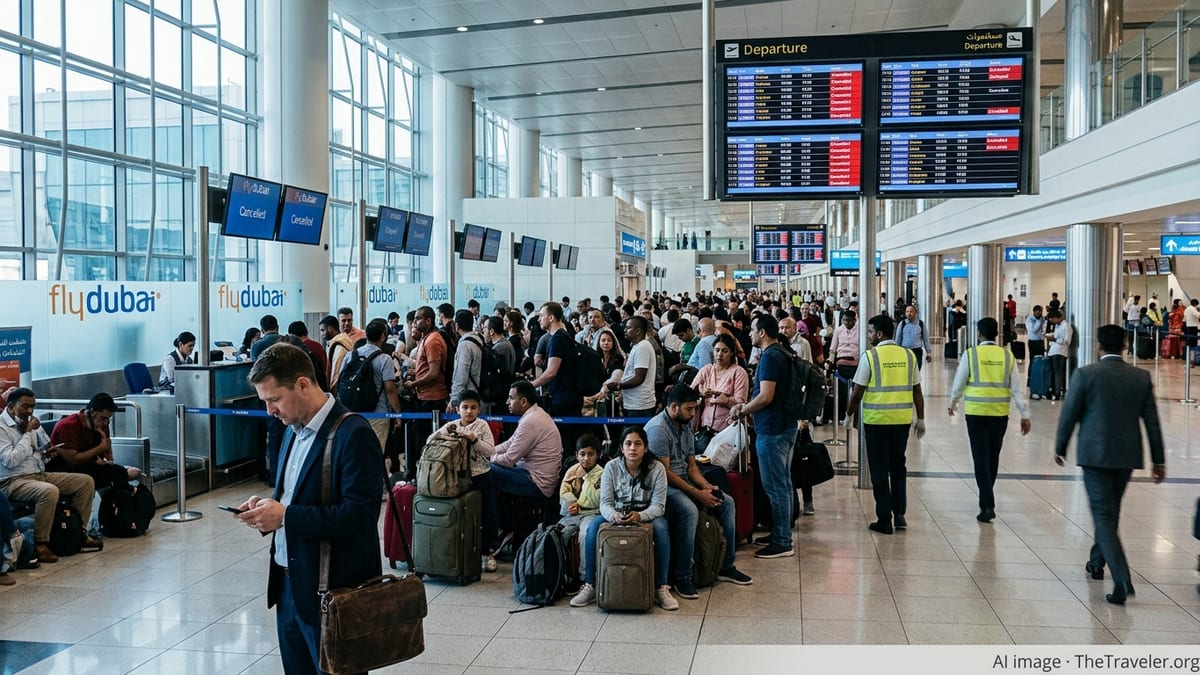
Passengers across the Middle East are facing extended delays and airport overcrowding after low-cost carrier FlyDubai cancelled around twenty flights, disrupting travel plans in Dubai, Abu Dhabi, Bahrain, Kuwait and several other cities as the region continues to grapple with wide airspace restrictions.
Get the latest news straight to your inbox!
FlyDubai Cuts Flights as Regional Airspace Remains Constrained
FlyDubai has cancelled roughly twenty flights across its network as airlines in the Gulf adjust schedules in response to ongoing airspace closures and capacity limits. Publicly available schedules and airport information show that services touching Dubai, Abu Dhabi, Bahrain, Kuwait City and other key regional hubs have been among those pulled from operation, leaving passengers with little choice but to wait for rebooking options.
The disruption follows days of highly restricted flying conditions across parts of the Middle East, where closures or severe limitations in the skies over Iran, Iraq, Kuwait, Bahrain and sections of the wider Gulf region have forced carriers to reroute or halt services. Reports from regional media and aviation tracking platforms indicate that while some airports have begun to resume limited operations, carriers are operating reduced schedules and selectively restoring routes rather than returning immediately to full capacity.
FlyDubai, which is based at Dubai International Airport and operates a dense network of short and medium-haul routes across the Middle East, North Africa and South Asia, has been particularly exposed to the airspace bottlenecks. The airline relies on efficient, direct routings through affected skies, and any closure or rerouting quickly undercuts the economics and logistics of its tightly timed turnarounds.
Aviation observers note that the carrier’s decision to trim at least twenty flights appears aimed at stabilising its operations rather than stretching limited aircraft and crew resources too thin while conditions remain uncertain.
Passengers Stranded from Dubai to Kuwait as Recovery Proves Slow
Across the region, the cancellations have translated into thousands of disrupted journeys. Passengers connecting through Dubai and Abu Dhabi report being unable to reach onward destinations after FlyDubai services were removed from schedules at short notice. Similar scenes have been described in Bahrain and Kuwait, where airport departure boards have shown gaps in normally frequent services and where some travellers have been left in terminals overnight waiting for alternative arrangements.
Travelers sharing their experiences on social media platforms describe crowded check-in areas and long queues at customer-service desks, as those affected seek clarification about new departure times or compensation options. Others report extended waits on airline hotlines as call centres struggle to keep pace with requests to rebook, reroute or refund trips originally planned for this week.
Airport operations in Dubai and Abu Dhabi have been gradually ramping back up after earlier near-total suspensions, but the pace of recovery remains uneven between airlines. Larger full-service carriers have begun to restore more of their long-haul services, while FlyDubai and other regional operators continue to work through backlogs of displaced passengers and aircraft that are out of position.
In some cases, passengers in transit have found themselves stranded not only in Gulf hubs but also in secondary airports across Asia and Europe, where connecting FlyDubai legs were cancelled, leaving them to arrange interim accommodation or seek space on other airlines operating limited relief flights into the region.
Knock-on Effects Across the Middle East Travel Network
The cancellation of twenty FlyDubai flights is a relatively small number compared with the hundreds of services grounded during the peak of the airspace shutdowns, but the impact on passengers has been magnified by the airline’s role as a connector between Gulf hubs and smaller regional cities. When multiple daily frequencies are pared back or removed entirely, travellers in destinations with fewer alternative carriers face a much longer wait for the next available seat.
Travel industry analysts point out that the Gulf’s aviation system functions as an interconnected web, where disruptions to a single carrier’s schedule can spill over into broader congestion. Missed connections on FlyDubai flights can, for example, affect load factors and boarding times for partner or interline services operated by other airlines out of Dubai and Abu Dhabi, adding to delays even on flights that remain technically operational.
Hotels near major airports in the United Arab Emirates, Bahrain and Kuwait have reportedly seen an uptick in last-minute bookings as stranded passengers seek somewhere to stay while they wait for new departures. Some travellers are also turning to surface transport or circuitous routings via unaffected countries to continue their journeys, increasing demand for seats on already busy alternative corridors.
With regional business travel, tourism and labour migration heavily dependent on reliable air links, the disruption is being felt not only by leisure travellers but also by workers commuting between Gulf states and their home countries in South Asia and beyond.
Airlines Juggle Safety, Schedules and Passenger Rights
Carriers in the region, including FlyDubai, have emphasised through public statements and published updates that safety considerations and compliance with airspace restrictions take precedence over maintaining normal flight schedules. Aviation experts note that sudden closures or military activity in key flight corridors leave airlines with limited options, often forcing them to ground aircraft until safer routes can be determined and authorised.
As operations gradually resume, FlyDubai and its peers are balancing the need to bring stranded passengers home with the challenge of re-establishing regular timetables. Priority is typically given to those whose original flights were cancelled, making it harder for new bookings to secure seats in the short term. Some travel agents in the Gulf report that availability on many near-term departures into and out of Dubai, Abu Dhabi and Bahrain remains very tight, particularly on popular routes to South Asia and Europe.
Consumer advocates in the region are reminding passengers to familiarise themselves with airline policies on cancellations and rebooking. Publicly available information from Gulf carriers generally indicates flexibility in allowing date changes or refunds when a flight is cancelled by the airline, though specific options can vary depending on the ticket type and route. Travellers are being advised to monitor their booking status closely, avoid heading to the airport without confirmed new travel plans, and retain receipts for any out-of-pocket accommodation or transport costs that might be claimable later.
For now, travel planners suggest that anyone with non-essential trips involving Dubai, Abu Dhabi, Bahrain or Kuwait in the coming days should consider the possibility of continued disruption and allow extra time, backup routings and flexible accommodation arrangements in case schedules change again with little notice.