

More news on this day
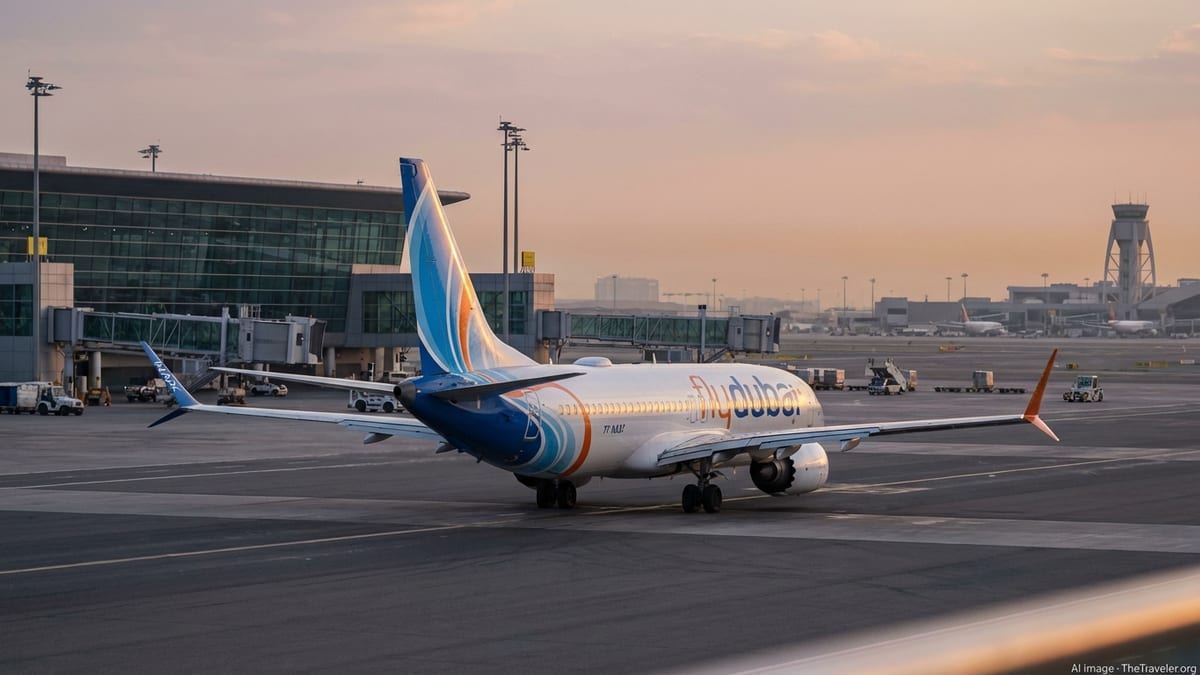
Dubai-based carrier flydubai is set to significantly expand its premium offering in 2026, adding seven Boeing 737 MAX 9 aircraft to its fleet as it targets rising demand for higher-yield business travel across its regional and medium-haul network.
Shift Toward Higher-Yield Premium Cabins
The planned introduction of seven additional Boeing 737 MAX 9s in 2026 marks a clear pivot in flydubai’s fleet strategy toward more premium capacity. The larger MAX variant will make up the majority of the 12 new Boeing 737 MAX aircraft scheduled for delivery next year, with the balance consisting of MAX 8 jets. Executives say the mix will allow the airline to pursue growth while tilting its cabin configuration toward business-class seats, which command higher fares and have seen strong uptake.
Flydubai currently operates only a small sub-fleet of 737 MAX 9s, with three aircraft delivered prior to the pandemic. Bringing seven more into service in 2026 will more than triple the type’s presence in the fleet, giving planners greater flexibility to deploy premium-heavy aircraft on routes where demand for front-cabin travel is strongest. The move follows a 19 percent increase in premium demand last year, underscoring a sustained shift in traveler preferences, particularly among corporate and high-frequency regional passengers.
The decision also reflects broader trends in Gulf aviation, where airlines are increasingly using narrow-body jets with upgraded business cabins to complement wide-body operations. As a close partner to Emirates, flydubai plays a key role in feeding traffic into Dubai International Airport, and a stronger premium proposition is expected to enhance connectivity at the hub for both regional and long-haul itineraries.
While the airline retains its low-cost heritage, industry analysts note that flydubai has steadily moved upmarket, especially in business class. The 737 MAX 9s, with a higher proportion of lie-flat and recliner premium seats compared with the MAX 8s, are central to that evolution.
Cabin Product: MAX 9 as a Premium Workhorse
The 737 MAX 9 is emerging as flydubai’s preferred platform for its most competitive short- and medium-haul business-class product. Compared with the carrier’s MAX 8 layout, the MAX 9 typically features four additional business-class seats while slightly reducing the number of economy seats, effectively trading volume for yield. This configuration is designed to capture higher-spending travelers on trunk routes where front-cabin load factors have remained robust.
Flydubai has invested heavily in its MAX cabin, introducing fully lie-flat business seats on selected aircraft. These suites offer direct aisle access in certain configurations, high privacy shells, and a bed length of up to 78 inches when fully reclined. The design targets overnight and longer regional sectors, where a true flat-bed product can command a significant fare premium over traditional recliners.
On board, the MAX cabin features upgraded lighting, quieter engines and improved fuel efficiency, which the airline has used as a selling point for both corporate clients and leisure travelers seeking a more comfortable experience. The retrofit of a large portion of the older 737-800 fleet with lie-flat business seating and enhanced economy cabins has already moved product standards closer to those of full-service competitors, and the incoming MAX 9s will help standardise that premium feel on more routes.
With more MAX 9s available, flydubai is expected to concentrate the type on strategic markets linking Dubai with major commercial centres in the Middle East, Eastern Europe, Central Asia and parts of Africa. These are sectors where overnight schedules, tight business timetables and corporate contracts make a strong business-class product especially valuable.
Record Growth Underpins Fleet Expansion
The additional MAX 9 deliveries are being made from a position of financial strength. Flydubai reported record revenue and passenger growth in 2025, supported by a network spanning more than 135 destinations and a fleet that reached 97 aircraft by year-end. Capacity and traffic both increased by around 6 percent in 2025, while passenger yield improved, underscoring the benefits of a more premium-leaning network and cabin strategy.
In 2025 the airline took delivery of 12 Boeing 737 MAX 8s and retired several older 737-800s, lowering the average age of the fleet to around five and a half years. That younger fleet not only cuts fuel and maintenance costs but also allows flydubai to position itself as a modern, comfort-focused carrier, particularly in key growth markets where newer aircraft are a visible differentiator.
Management has stressed that the 12 aircraft slated for 2026 deliveries, including the seven MAX 9s, are subject to manufacturer production schedules. Like many operators worldwide, flydubai has had to navigate delivery delays in recent years, prompting lease extensions on some older 737-800s to protect capacity. The airline’s latest update, however, signals confidence that delivery timelines are improving and that it can begin to shift more aggressively into its next phase of growth.
Strong performance has been matched by heavy investment in people and infrastructure. Flydubai has expanded its workforce by double digits, broadened its training programmes for pilots, engineers and dispatchers, and is progressing with a new maintenance facility at Dubai South, due to be completed in late 2026. These moves are intended to give the carrier greater control over operations as its fleet and network continue to scale.
Orderbook Signals Long-Term Ambition
The 2026 MAX 9 arrivals sit within a much larger long-term fleet plan. At the Dubai Airshow in late 2025, flydubai announced new commitments for 75 Boeing 737 MAX aircraft and 150 Airbus A321neo jets, valued at billions of dollars at list prices. The dual order marked a major strategic shift for the airline, which until now has operated an all-Boeing narrow-body fleet.
The expanded Boeing commitment gives flydubai flexibility across the MAX family, including the 8, 9 and future 10 variants, while the A321neo order opens the door to longer and denser single-aisle missions. Combined, the orders are intended to support both growth and replacement needs well into the next decade, ensuring that the airline can match capacity to demand across a wide range of markets.
Within that framework, the 737 MAX 9 is set to play a specialised role as the backbone of flydubai’s premium-focused narrow-body operations. With more aircraft of this type arriving from 2026, the airline will be better positioned to deploy business-heavy cabins on routes that feed into Emirates long-haul services or support point-to-point traffic where high-yield demand is strongest.
Industry observers say the scale of flydubai’s orderbook highlights Dubai’s confidence in continued tourism and trade growth, as well as the city’s ambition to maintain its status as one of the world’s leading aviation hubs. For the airline, the challenge will be to balance rapid expansion with operational resilience and consistent service quality.
Network Opportunities and Competitive Landscape
As more MAX 9s join the fleet, flydubai is expected to refine its network to take advantage of the aircraft’s range and cabin profile. The carrier has already flagged plans to add frequencies on selected routes in 2026 and to continue exploring new destinations, particularly in fast-growing leisure and business markets across Southeast Asia, Central and Eastern Europe and the Caucasus.
The airline is preparing to launch flights to Bangkok, positioning the Thai capital as an important gateway to Southeast Asia within its network. Additional MAX capacity, especially in premium cabins, will give schedulers more options to time flights for convenient connections in Dubai, reinforcing the city’s role as a transfer point between Europe, Asia and Africa.
Competition in the region is intensifying as both low-cost and full-service carriers upgrade cabins and add capacity. By equipping more narrow-body aircraft with lie-flat and enhanced recliner seats, flydubai aims to occupy a distinctive niche: offering a business-class experience approaching that of wide-body operators on shorter sectors, while retaining the cost discipline of a low-cost model.
For travellers, the introduction of additional 737 MAX 9s should translate into more choice of premium seating, improved schedule options and a higher likelihood of flying on the airline’s latest-generation cabins in 2026. For flydubai, it represents a bet that the appetite for comfort and convenience at the front of the aircraft will remain strong, even as overall capacity across the region continues to grow.