

More news on this day
Flydubai has reported a 19 percent year on year surge in business class demand for 2025, a sharp rise that is accelerating the Dubai based carrier’s shift from low cost origins to a more hybrid, full service model as it prepares new cabins and routes for 2026.
Premium Demand Powers Record 2025 Performance
The jump in higher yielding traffic comes alongside record operational figures for Flydubai. The airline carried 15.7 million passengers in 2025, expanding its network to 140 destinations across 58 countries and posting revenues of about 13.6 billion dirhams, up 6 percent on 2024. While post tax profit eased to roughly 1.9 billion dirhams as the carrier stepped up investment in its product and technology, executives have framed the profit dip as a deliberate trade off to capture long term premium demand.
Business class, once a relatively small part of Flydubai’s customer mix, is now a key profit driver. The 19 percent rise in demand in 2025 far outpaced overall passenger growth and underlined a structural shift in the airline’s client base, with more corporate travelers, small business owners and high spending leisure passengers opting for extra comfort and flexibility. That trend reflects the broader strength of Dubai as an aviation and commercial hub, where growing trade and tourism flows continue to stimulate premium travel.
The carrier has also benefited from a tight regional capacity environment and constrained wide body fleets at some competitors, which has pushed travelers to consider narrow body business cabins on routes once dominated by larger aircraft. By positioning itself as a value focused but increasingly premium option, Flydubai has been able to capture travelers trading up from economy as well as those shifting from legacy carriers on short and medium haul sectors.
Cabin Upgrades and the Rise of the “Business Suite”
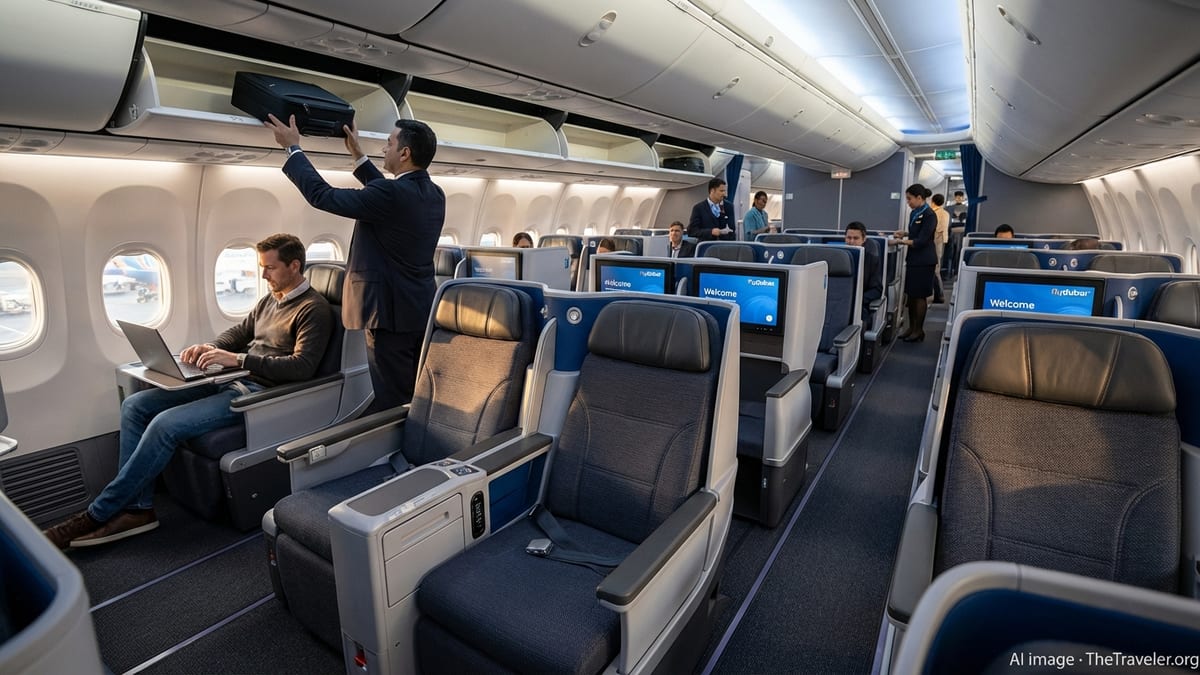
The surge in demand is closely linked to a multi year upgrade of Flydubai’s onboard product. On its Boeing 737 MAX aircraft, the airline has been rolling out a new business cabin built around fully flat or extended recliner seats, direct aisle access in many configurations and larger personal entertainment screens. Marketed as a step change from its early generation recliners, the new layout aims to narrow the gap with wide body business products that dominate long haul travel.
Across the fleet, business passengers now see a more consistent experience, including priority check in, fast track security at Dubai International, enhanced inflight dining and expanded entertainment libraries available without additional charges. The airline has also integrated its previously paid inflight entertainment into standard fares and refined its meal service to better reflect the carrier’s growing international network, particularly to Central and Eastern Europe, East Africa and South Asia.
These enhancements are part of a wider shift that began in late 2025, when Flydubai started bundling more services into its base fares and moving closer to a full service proposition. While economy customers benefit from complimentary hot meals and simpler baggage allowances, the most dramatic transformation has taken place in the front cabin, where the focus is on privacy, sleep quality and productivity for business travelers connecting through Dubai.
Technology, Revenue Management and Upgrade Strategies
Behind the scenes, Flydubai has been using more advanced revenue management tools to maximize the value of its limited premium inventory. The airline operates a relatively small number of business seats per aircraft, which makes accurate forecasting of demand crucial. By adjusting fare classes dynamically, offering targeted corporate deals and managing last minute upgrades through bidding and airport offers, the carrier has been able to keep load factors in business class high while preserving yields.
Digital upgrade platforms are playing a growing role. Eligible economy passengers can bid for business class seats in the days leading up to departure, with algorithms weighing bid value, seat availability and the customer’s frequent flyer status. Last minute offers during online check in or at the gate help to fill remaining seats without undercutting advance purchase fares, generating incremental revenue while also giving more travelers a first taste of the upgraded cabin.
The airline is also investing in data and AI driven systems to better identify high potential premium customers and tailor offers across its network. Executives have pointed to spending on flight training and technology in 2025 as part of a broader modernization program, designed to support sustained growth in premium traffic through the second half of the decade.
Network Priorities and New Routes for 2026
With business class demand climbing, Flydubai is shaping its 2026 network plan around markets that can support higher yielding cabins. The carrier has been particularly active in linking Dubai with secondary cities in Central and Eastern Europe, the Caucasus and Central Asia, many of which see a mix of corporate, visiting friends and relatives, and premium leisure demand. Additional capacity is expected on routes serving oil, gas and logistics hubs, where last minute corporate travel remains strong.
Industry analysts expect Flydubai to focus new 2026 routes on underserved mid haul markets of four to six hours’ flight time from Dubai, where a narrow body business product can compete effectively with larger aircraft on frequency and cost. Potential growth corridors include further expansion into the Balkans and Central Europe, deeper penetration into East Africa and new links to emerging tourism destinations in the Indian Ocean region. Within the Gulf and broader Middle East, additional frequencies are likely on city pairs where business demand has rebounded strongly since the pandemic.
At the same time, the airline is aligning its network strategy with longer term fleet plans. Flydubai is preparing for the arrival of its first Boeing 787 wide bodies later in the decade, which will introduce a three class layout including premium economy. The strong performance of business class in 2025 is being closely watched as a bellwether for how much premium capacity the airline can profitably deploy on future long haul routes once those aircraft enter service.
Competitive Landscape and Outlook
Flydubai’s premium pivot is unfolding against an intensely competitive backdrop. Gulf carriers are racing to refresh business cabins, with new suites, privacy doors and upgraded inflight connectivity becoming standard on flagship routes. For Flydubai, which built its brand on value and point to point connectivity, the challenge is to raise its product without eroding the cost discipline that underpinned its early growth.
The 19 percent increase in business class demand in 2025 suggests that the strategy is resonating with travelers who want a modern flat bed product and seamless connections in Dubai but are willing to trade some of the frills of larger full service carriers for sharper pricing. Partnerships within the UAE aviation sector, including alignment with Emirates on schedules and connectivity, give Flydubai an additional edge in attracting premium passengers who are mixing short and long haul trips.
Looking ahead to 2026, Flydubai is signaling continued investment in its business cabin, incremental network growth and further digital upgrades that aim to personalize offers and smooth the journey. If demand for premium travel in the Middle East and surrounding regions remains robust, the airline’s hybrid model, anchored by a fast growing business class segment, is likely to remain central to its expansion plans.