

More news on this day
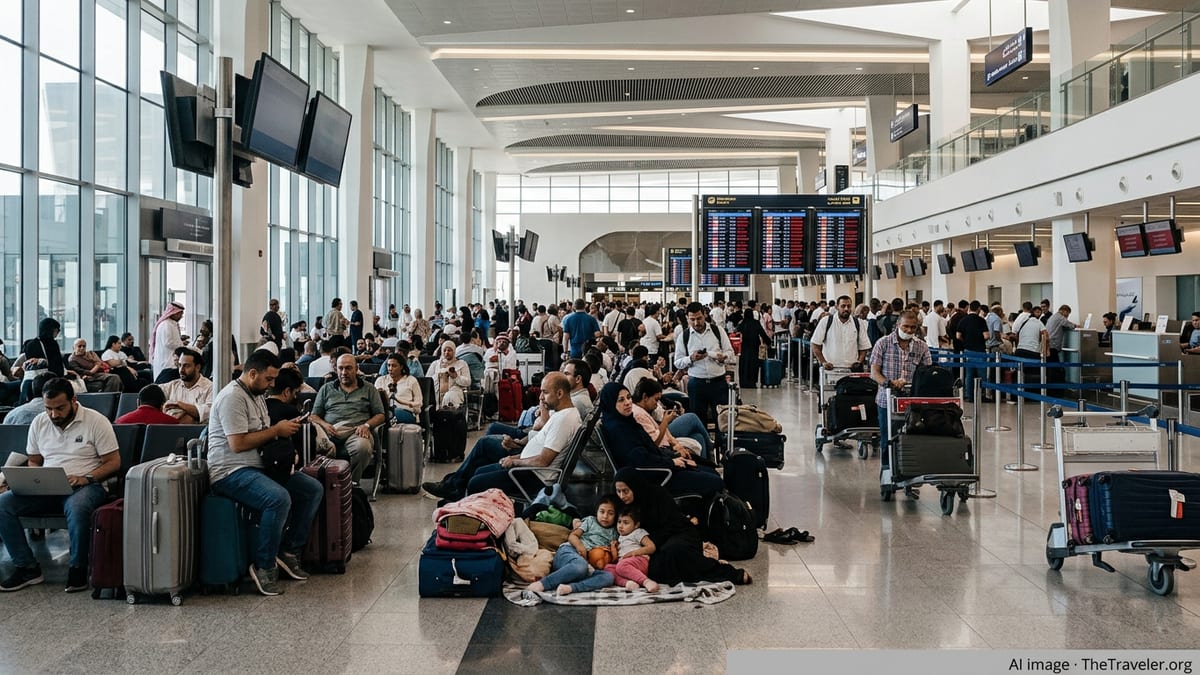
Travellers transiting Dubai International Airport are facing renewed disruption as Flydubai and Emirates ground several flights and report fresh delays on routes to Tbilisi, Manchester, Budapest, Kabul, Birmingham and other key destinations amid ongoing regional airspace turmoil.
Get the latest news straight to your inbox!
Targeted Groundings Hit Key Short and Medium-Haul Routes
Publicly available flight information and operational summaries from recent days indicate that both Emirates and Flydubai have withdrawn or temporarily grounded a small number of departures from Dubai International Airport while operating on a reduced schedule overall. The latest adjustments include selected services to cities such as Tbilisi, Manchester, Budapest, Kabul and Birmingham, with additional regional routes also affected as airlines juggle aircraft and crew availability.
Emirates documentation outlining its limited March and early April schedules shows that not all usual frequencies to Manchester, Budapest and Birmingham are operating, and some flights that had been listed as scheduled have subsequently been removed or flagged for disruption at short notice. Parallel coverage of Flydubai’s network points to intermittent cancellations on short-haul services into Central and South Asia, including Kabul, as well as cuts on selected Caucasus and regional routes.
Operational data suggests that seven individual flights across the two carriers were grounded within a short time window, triggering knock-on delays for connecting passengers. While the majority of Emirates’ long-haul network has been gradually restored, the continuing gaps on selected European and regional routes underscore the fragility of operations at Dubai International as carriers remain constrained by airspace closures and slot restrictions.
Travel industry trackers note that these Dubai-based disruptions are part of a broader pattern across West Asia, with hundreds of delays and cancellations reported regionwide over recent days. For passengers, the effect is particularly acute at Dubai International, which usually relies on tightly timed waves of departures and arrivals to keep transit connections flowing.
Regional Airspace Closures Continue To Disrupt Dubai Hub
The latest problems for travellers passing through Dubai stem from prolonged airspace restrictions linked to the wider Middle East security situation since late February 2026. According to published aviation analyses, multiple Gulf and regional carriers, including Emirates and Flydubai, have been forced to reroute or suspend services as key corridors over Iran and Iraq remain constrained, lengthening flight times and complicating schedules.
Reports on West Asia and Asia-Pacific operations describe how initial, near-total suspensions at Dubai and other Gulf hubs have given way to a patchwork of limited flights, special repatriation services and carefully controlled commercial operations. While Dubai International has technically reopened, it is functioning with reduced runway and terminal capacity, and airlines are prioritising certain trunk routes over thinner, secondary destinations.
This environment has made Dubai’s usual banked hub model difficult to sustain. Aircraft and crew that once turned around quickly between Europe, Asia and Africa now face extended ground time and more complex routings, which in turn makes it harder to offer consistent schedules to cities such as Tbilisi, Budapest or Birmingham. Where flights do operate, even minor upstream delays can cascade through the network, resulting in long waits or missed connections for transit passengers.
Industry commentary suggests that airlines are also responding to volatile demand patterns. Some travellers are actively avoiding routings through the Gulf until the regional picture stabilises, while others are willing to accept longer routings through alternative hubs if it means a higher chance of actually departing on time. These shifts are feeding back into airline decisions on which Dubai routes to maintain and which to prune temporarily.
Passengers Face Long Delays, Misconnections and Patchy Information
For travellers caught in the latest wave of disruption at Dubai International, the immediate impact has been long waits, missed onward flights and a scramble for scarce rebooking options. Online forums, travel advisories and media reports describe passengers arriving in Dubai to discover onward legs to Europe or Asia delayed for many hours or removed from departure boards after check-in.
Those routing through Dubai on mixed itineraries, particularly combinations of Flydubai and Emirates sectors, appear especially vulnerable when one segment is delayed or grounded. With some flights to destinations such as Manchester, Budapest and Birmingham operating on reduced frequencies, a cancelled departure can mean a lengthy layover or an overnight stay before the next available seat.
Several travel-focused outlets note that call centres and online support channels for major Gulf carriers have been heavily congested during the disruption period, leaving some customers reliant on airport service desks to secure new itineraries. In some cases, passengers have opted to abandon Dubai connections entirely, requesting refunds and booking replacement travel through alternative hubs in Europe or Asia where schedules appear more stable.
Consumer advocates say the uneven flow of information is compounding the stress. Flight-status tools may show flights as scheduled or on time until close to departure, even as other public data suggests routes are under review. Travellers are being urged by multiple advisory notices to monitor their bookings frequently, keep contact details up to date, and avoid travelling to the airport unless their specific flight is clearly confirmed as operating.
Knock-On Effects Across Europe, the Caucasus and South Asia
The grounding of individual departures and the throttling back of frequencies in Dubai are having visible ripple effects in destination markets. Published airport statistics and local media coverage in cities such as Manchester and Birmingham indicate lower than usual arrivals from Dubai, with some passengers re-routed via other European hubs or facing backlogs as they attempt to reach the United Kingdom from Asia and Australasia.
In Central and Eastern Europe, reduced operations on Dubai links to Budapest and Tbilisi are tightening capacity on alternative routes. Travellers who might normally rely on Dubai as a one-stop option between Asia and the Caucasus are increasingly pushed onto connections via Istanbul, Doha or European Union hubs, where airlines are also adjusting timetables to reflect regional airspace constraints.
For South and Central Asian destinations, including Kabul, the situation is even more complex. The combination of security considerations, dynamic airspace restrictions and limited alternative options means that each grounded flight carries a significant human impact. Reports from travel agencies and regional aviation trackers describe stranded passengers, particularly migrant workers and visiting families, who have fewer choices and may face financial penalties or visa complications if they cannot travel on schedule.
Airlines serving these markets are under pressure to balance safety, regulatory limitations and commercial viability. As a result, schedules may be reinstated or withdrawn at short notice, and spare capacity to clear backlogs can be hard to find. Travellers relying on these routes are being encouraged by travel advisers to build in greater flexibility than usual, including longer connection windows and contingency plans for overnight stays.
What Travellers Connecting via Dubai Should Do Now
Travel guidance published in recent days recommends that anyone due to transit Dubai International in the coming weeks treat their itinerary as subject to change until they are physically checked in and boarding. Passengers are being advised to verify their flight status repeatedly across both airline and airport channels, rather than relying on booking confirmations generated weeks earlier.
Experts in air travel disruption point out that, in the current environment, longer layovers may be a safer choice than tight connections, especially when itineraries involve a mix of carriers or routes through sensitive airspace. Where possible, travellers are encouraged to select through-tickets on a single airline, which improves the chances of automatic rebooking if a particular leg, such as a Dubai to Manchester or Dubai to Budapest sector, is grounded.
Published coverage also notes that many carriers are offering flexible change and refund policies while Middle East airspace remains unstable. Passengers who have not yet started their journey may wish to investigate voluntary date changes or alternative routings via other hubs, especially if they are travelling for non-essential reasons or have limited time at their destination.
With operational data and regional analyses suggesting that airspace and schedule volatility could persist for some time, Dubai’s position as a global transfer hub remains under strain. For now, travellers with upcoming flights involving Emirates or Flydubai through Dubai International are being urged by multiple advisories to stay alert to updates and be prepared for last-minute changes to their plans.