

More news on this day
Travellers flying across the United States this week are being urged to build in extra time, monitor their flights closely and brace for continued turbulence on the ground, as security staffing strains, severe weather and a protracted federal funding dispute keep airport delays in the spotlight.
Get the latest news straight to your inbox!
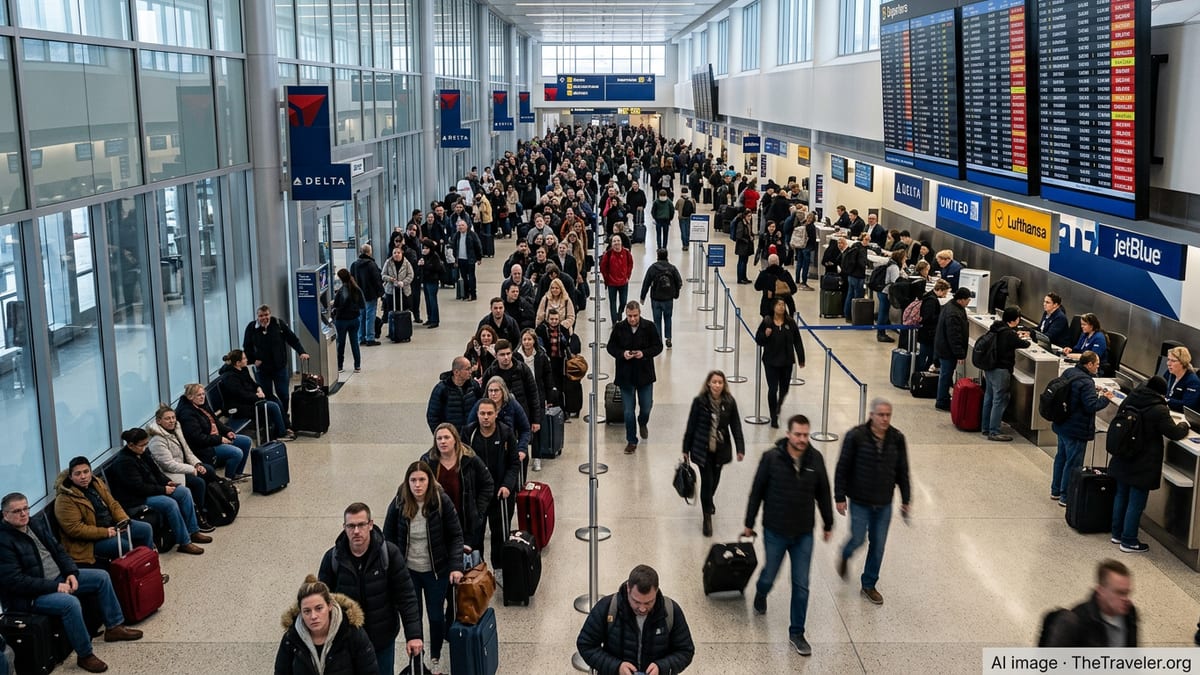
Delays persist amid shutdown fallout and spring storms
From Chicago to Houston and the East Coast, domestic air travel is entering one of its busiest stretches of the year while the Department of Homeland Security shutdown that began on February 14 continues to ripple through airport operations. Publicly available information shows that unpaid Transportation Security Administration officers have driven sporadic staffing gaps, contributing to long security lines and missed flights at some hubs even as conditions improve at others.
At the same time, spring weather has compounded the disruption. A ground stop and subsequent ground delay program at Chicago O’Hare and Midway on March 31 due to thunderstorms led to cascading schedule changes, according to regional television coverage. Earlier in March, airlines issued multiple travel waivers around storms in the Midwest, the Hawaiian Islands and along the East Coast, allowing passengers to rebook without change fees as operations slowed.
Recent reporting from outlets including the Associated Press and regional broadcasters indicates that while some of the most severe bottlenecks have eased in select cities as back pay begins to flow to federal workers, uncertainty remains the defining feature of air travel. Wait times can swing from minutes to hours from one airport to the next and even between terminals in the same city, leaving travellers to shoulder more of the planning burden.
With no firm end date yet for the funding standoff and more volatile spring weather in the forecast, travel analysts quoted in national coverage caution that sporadic slowdowns are likely to persist into April. That backdrop is shaping the latest round of practical advice from airports, airlines and travel experts for anyone flying through the United States.
Arrive earlier, but not excessively early
Most large U.S. airports and airline advisories now recommend that passengers arrive at least two hours before domestic departures and three hours before international flights, guidance echoed in recent bulletins from airports such as Seattle-Tacoma. Travel columns in major newspapers and magazines note that, amid current delays, cutting those times close has become far riskier, particularly for morning and late afternoon peaks.
Some commentators are also pushing back on the trend of showing up vastly earlier than needed. Consumer travel coverage points out that arriving four or five hours before a flight can clog ticketing halls and security queues, especially when check in counters and bag drop systems are not yet open. In several recent articles examining the impact of long security lines, experts suggest targeting the upper end of official recommendations rather than doubling them.
To fine tune timing, current guidance highlights the value of real time data. The MyTSA app and many airport websites publish approximate checkpoint wait times, while some terminals display wait time boards that help travellers pivot to a faster lane if one exists. Travel advice pieces stress checking those tools before leaving for the airport and again on arrival, then moving quickly to security rather than lingering in the check in area.
For travellers departing from smaller regional airports, recent local reporting indicates that arriving 90 minutes ahead for flights with checked baggage and around an hour for carry on only itineraries may still be sufficient, particularly for those with TSA PreCheck. However, analysts warn that staffing shortages can appear suddenly, so building in an extra buffer remains prudent while the shutdown continues.
Use airline tools, waivers and rebooking options
With storms, ground stops and staffing issues triggering rolling delays, airlines are increasingly leaning on digital tools and flexible policies to manage crowds. Major carriers have posted multiple travel waivers in March tied to thunderstorms in Chicago, winter weather in the Midwest and operational issues in Houston, allowing affected travellers to change flights within specified windows without incurring change fees or fare differences.
Travel industry coverage advises passengers to check the travel alerts or advisory pages of their airlines in the days leading up to departure, even if their flight still appears on time. When a waiver is in place, rebooking before a major storm or peak delay period can help avoid getting stranded at the airport later in the day. Corporate travel managers interviewed in recent analysis report that they are proactively retiming trips around hubs like Chicago O’Hare when severe weather is forecast.
Airlines are also pushing more notifications through their mobile apps, text alerts and email. According to recent consumer reporting, carriers may flag unusually long security lines, gate changes or tight connections and suggest arriving earlier or changing to a later flight. Travel experts recommend downloading the airline’s app, ensuring contact details are up to date and enabling push notifications well before travel day, so that options appear quickly if disruption hits.
For travellers who do experience a significant delay or cancellation, aviation attorneys quoted in recent coverage advise keeping all documentation, including boarding passes, delay notices and any written confirmation of meal vouchers or hotel arrangements. While U.S. federal regulations provide limited compensation compared with some other regions, airlines often extend goodwill gestures, particularly when disruptions are prolonged or repeated.
Plan for security slowdowns and pack strategically
Security screening remains one of the biggest pressure points in the current environment. Publicly available wait time data and reports from major hubs like Houston and Atlanta show queues periodically stretching to two hours or more during busy periods when staffing is thin. In response, airports and travel experts are emphasizing preparation at home to make each checkpoint interaction faster.
Recent guidance encourages travellers to review the latest rules on liquids, electronics and carry on bag sizes and to pack so that laptops, tablets and required documents are easy to access. Articles focused on current TSA conditions suggest placing prohibited items in checked luggage or leaving them at home altogether, since secondary bag searches slow lines significantly when workers are already stretched.
Enrolling in programs such as TSA PreCheck and CLEAR remains a commonly recommended long term strategy, although recent coverage notes that even expedited lanes have occasionally seen extended waits during the shutdown. Travellers are being advised to treat these programs as time savers, not guarantees, and to continue arriving with generous buffers even when they hold trusted traveller status.
Airports are also promoting accessibility resources, including social stories, quiet rooms and assistance for travellers with disabilities or sensory sensitivities. A recent advisory from Seattle-Tacoma International Airport, for example, highlights tools designed to help families rehearse each step of the journey in advance, which can reduce stress if they encounter an unexpectedly long line or checkpoint change on the day of travel.
Adjust connections, ground transport and expectations
Beyond the airport perimeter, travel planners are also reassessing how they build full itineraries. Given the risk of rolling delays, analysts cited in recent coverage recommend avoiding tight domestic connections, especially when itineraries route through weather prone hubs or cities experiencing repeated staffing challenges. Building in longer layovers or selecting nonstop routes where available can reduce the chance of missed flights.
On the ground, local news outlets and travel segments are advising passengers to leave extra time for traffic, rideshare surges and parking constraints around major airports. With many travellers rebooking at the last minute under airline waivers, curbside pickup zones and parking facilities at some hubs have periodically become congested, adding yet another variable to already complex journeys.
Perhaps the most consistent message in current public guidance is to expect variability. Coverage from national and regional media stresses that, despite some signs of improvement at specific airports as TSA workers start receiving pay, conditions remain fluid from day to day. Travellers are being urged to build flexibility into their plans, stay informed through official channels and prepare for longer lines, even if they ultimately move more quickly than feared.
For now, anyone flying through the United States is likely to find that the biggest challenges of their journey occur before boarding. Careful preparation, strategic use of airline and airport tools and realistic expectations about potential delays are emerging as the key defences against an unsettled travel landscape.