

Flying to Japan is often the start of a long-anticipated journey, but what happens after your plane lands can set the tone for your entire trip. Choosing the right airport, understanding arrival procedures, and knowing how to reach your final destination will help you step into Japan with confidence rather than confusion. This guide walks you through Japan’s major international gateways and explains what to expect from the moment you touch down.
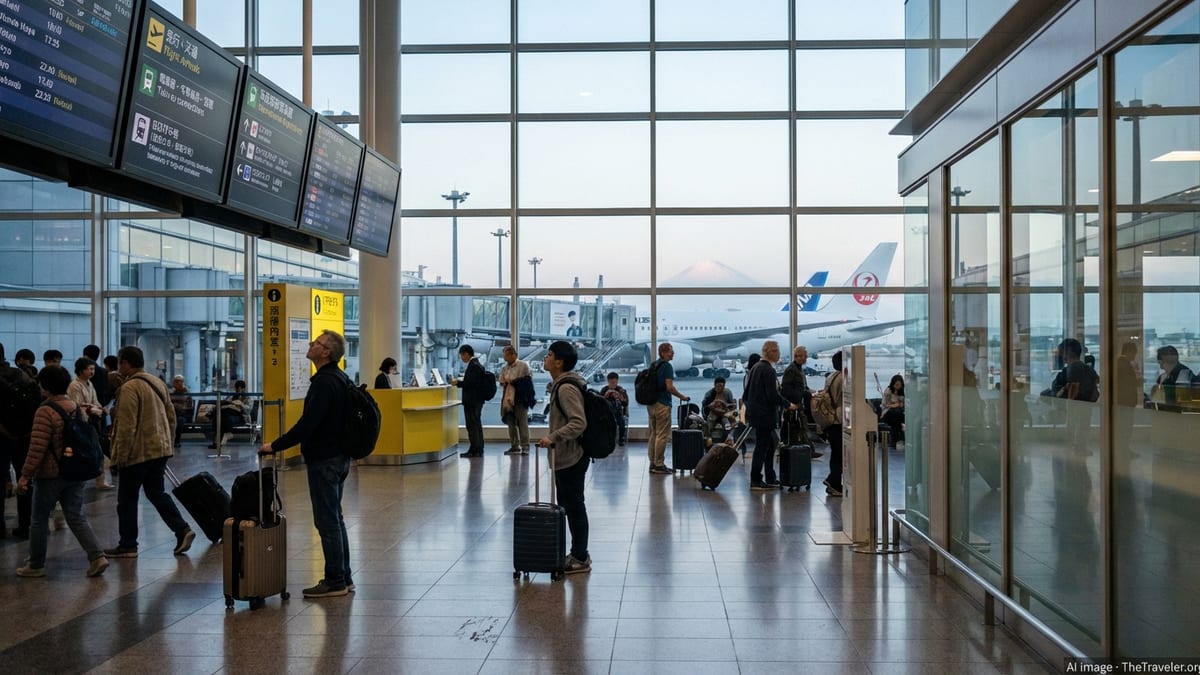
Japan’s Major International Gateways
Japan has a dense network of airports, but a handful of major hubs handle the bulk of international traffic. For most visitors, the journey begins at Tokyo’s two airports, Narita International Airport and Tokyo International Airport, better known as Haneda. These are followed by Kansai International Airport for the Osaka and Kyoto region, Chubu Centrair International Airport for Nagoya and central Japan, and New Chitose Airport near Sapporo for Hokkaido. Fukuoka Airport on Kyushu also plays a growing role, especially for travelers from East Asia.
Haneda and Narita consistently rank among the world’s top airports for cleanliness and passenger experience, reflecting Japan’s reputation for efficiency and meticulous attention to detail. Recent global airport rankings place Haneda near the very top worldwide and Narita not far behind, which means travelers arriving there can generally expect orderly procedures, clear signage, good accessibility, and a wide range of services immediately after landing.
Beyond these main hubs, several regional airports such as Naha in Okinawa and Hiroshima, Sendai, and Kagoshima host international flights, mainly from nearby Asian cities. These can be very convenient if you plan to focus on one region rather than touring the entire country. However, their long-haul connections are limited, and you may need to connect through Tokyo, Osaka, or Nagoya when arriving from North America, Europe, or Oceania.
When planning your trip, it often makes sense to choose your arrival airport based on your first few nights in Japan rather than simply searching for the cheapest fare. Flying into the airport closest to your initial destination will save time and energy, especially after a long-haul flight.
Haneda vs Narita: Choosing the Right Tokyo Airport
If you are heading to Tokyo, you will likely land at either Haneda (HND) or Narita (NRT). Both serve the Greater Tokyo area, but they feel quite different in terms of distance from the city center, transport options, and flight patterns. Haneda sits much closer to central Tokyo, on the edge of Tokyo Bay, while Narita lies in neighboring Chiba Prefecture, significantly farther from downtown.
Haneda is generally the more convenient choice for most leisure travelers because it offers shorter travel times into the city and a compact, easy-to-navigate layout. The Tokyo Monorail and Keikyu Line connect Haneda to key hubs such as Hamamatsucho and Shinagawa in around 15 to 25 minutes, with frequent departures from early morning until late at night. Limousine buses and taxis serve major hotels and neighborhoods, which is especially helpful if you are carrying large luggage or traveling with family.
Narita traditionally handled more long-haul international flights and remains a major intercontinental gateway, with extensive connections across North America, Europe, and Asia. It is farther from central Tokyo, with typical travel times of around one hour by express train and significantly longer by bus or car in heavy traffic. However, it is also well organized, with dedicated rail links such as the Narita Express and Keisei Skyliner that provide comfortable access to Tokyo Station, Shinjuku, Shibuya, and Ueno.
If you have a choice, consider your arrival time, hotel location, and tolerance for ground travel. A late-night arrival at Narita, followed by a long journey into the city, can be tiring. On the other hand, Narita might offer more direct flight options from your home city or more competitive fares. If your itinerary includes long-distance rail travel, such as using a rail pass, Narita’s direct connection to Tokyo Station via the Narita Express can be convenient for boarding bullet trains soon after you arrive.
Kansai, Chubu, and Regional Hubs Beyond Tokyo
Not every trip to Japan begins in Tokyo. Kansai International Airport (KIX), built on an artificial island in Osaka Bay, is the primary gateway for travelers visiting Osaka, Kyoto, Nara, and Kobe. It handles numerous international flights from Asia, Europe, and beyond, as well as extensive domestic connections. From Kansai, express trains run to central Osaka, Kyoto, and Kobe, while limousine buses serve many hotels and outlying areas. Arriving here makes sense if your focus is western Japan or if you plan to travel overland from Kyoto towards Hiroshima and Kyushu.
Chubu Centrair International Airport (NGO) serves the Nagoya region and the broader Chubu area, including access to the Japanese Alps, Takayama, and Shirakawa-go. It is a useful arrival point for travelers interested in skiing in central Honshu, exploring traditional mountain towns, or connecting to smaller regional airports. The airport is compact but modern, with a dedicated rail link to Nagoya Station and a range of services that are easy to navigate even for first-time visitors.
New Chitose Airport (CTS), near Sapporo on the northern island of Hokkaido, and Fukuoka Airport (FUK) on Kyushu are the main international portals for those regions. New Chitose has strong seasonal traffic, especially during winter sports season, when travelers arrive for Hokkaido’s ski resorts and snow festivals. Fukuoka, surprisingly close to the city center, offers easy access to Kyushu’s hot springs, historical sites, and vibrant food culture. Both airports also act as hubs for domestic flights, making them practical arrival points if your trip is focused outside Honshu.
When comparing arrival airports, weigh flight availability, onward transport, and the character of the destination city. For example, flying into New Chitose in winter can shorten your journey to the ski slopes significantly compared with landing in Tokyo and continuing by train or a domestic flight. Similarly, arriving directly in Fukuoka can be more efficient than flying to Osaka and working your way down through western Honshu.
Entry Requirements, Visas, and Pre-Arrival Preparation
Before booking flights, it is important to understand Japan’s entry requirements for your nationality. As of early 2026, Japan grants short-term visa-free entry for tourism and business to citizens of more than 70 countries and regions, including the United States, Canada, Australia, New Zealand, the United Kingdom, and most European Union states. These travelers typically receive permission to stay for up to 90 days upon arrival without applying for a visa in advance, provided they meet standard conditions such as holding a valid passport and being able to demonstrate an onward or return ticket.
Nationals of many other countries can apply for a short-term tourism visa or an electronic visa before travel. Japan has expanded its e-visa system in recent years, allowing eligible travelers from certain non-exempt countries to apply online, upload documents, and receive digital approval, which they present at the border. Processing times and fee levels can change, so it is important to check the latest guidance from Japanese authorities or your nearest embassy well before your departure date.
Japan periodically updates visa exemptions, stay durations, and fee structures. Some countries enjoy special arrangements that allow for possible extensions beyond the standard 90 days, subject to immigration approval from within Japan. Looking ahead, the government has signaled plans to raise some visa and travel-related fees and to introduce an electronic travel authorization for visa-exempt visitors later in the decade, which would involve an additional pre-travel screening step and a modest processing charge. These changes are not in effect yet but are worth monitoring when planning future trips.
Regardless of whether you are visa-exempt, you should ensure your passport has at least six months of remaining validity beyond your intended stay and at least one or two blank pages. Travel insurance with medical coverage is strongly recommended, as healthcare in Japan is high quality but can be expensive for uninsured visitors. Keeping printed or digital copies of hotel confirmations and your return ticket can also speed up immigration checks.
Immigration, Customs, and the Visit Japan Web System
Arrival procedures at Japanese airports are generally straightforward, but they involve several distinct checkpoints: quarantine or health screening where applicable, immigration, baggage claim, and customs. To streamline these steps, Japan operates an online platform often referred to as Visit Japan Web, which allows travelers to submit immigration information, customs declarations, and some health details before departure. Completing this process in advance generates QR codes for each step that can be scanned on arrival, reducing the need for paper forms and saving time at busy airports.
While participation in digital pre-clearance has gradually become the norm at major airports, paper forms are still available and accepted. However, filling them out on the plane or after landing can slow you down, especially if several international flights arrive at the same time. Using the online system, printing a backup copy of your QR codes, and taking screenshots on your phone is a practical way to build in redundancy in case of connectivity issues or device problems when you land.
At the immigration counter, you will present your passport, completed immigration information or QR code, and possibly answer brief questions about your stay. First-time visitors may have fingerprints and a photo taken. After immigration, you collect your checked luggage and proceed to customs. Officers may ask about what you are bringing into the country, especially if you have large amounts of cash, new electronics, or food products. There are limits on items such as tobacco, alcohol, and cash imports, and strict rules regarding certain agricultural products and medicines, so review these before packing.
Japan enforces customs and quarantine regulations seriously, particularly where food, plants, and animal products are concerned. Bringing prohibited fresh produce, meat, or dairy can result in confiscation or, in serious cases, penalties. Medications that are common elsewhere may be restricted or require documentation in Japan. When in doubt, carry prescriptions in original packaging, bring a copy of your doctor’s note, and check in advance whether you need a special import certificate for larger quantities or particular substances.
From Arrivals Hall to City Center: Transport and Timing
Once you enter the arrivals hall, your next challenge is reaching your hotel or first destination. Japanese airports typically offer a range of transport options that prioritize reliability and punctuality. For most travelers, rail or bus is the preferred balance between cost and convenience, while taxis and private transfers offer maximum comfort at a higher price. Each major airport posts clear bilingual signage, and information counters can help you compare options if you are uncertain.
From Haneda, the Tokyo Monorail connects the airport to Hamamatsucho Station, where you can transfer to the circular Yamanote Line or other JR lines to reach major districts. The journey into central Tokyo can take as little as 15 to 25 minutes. The Keikyu Line offers another fast rail link to Shinagawa, with onward connections to Shibuya, Shinjuku, Yokohama, and beyond. Limousine buses and local buses provide direct access to key hotels, business districts, and some residential areas, which can be especially convenient late at night or with heavy luggage.
From Narita, dedicated airport trains such as the Narita Express and the Keisei Skyliner run to central Tokyo in roughly an hour or slightly less, depending on the destination station. These trains require tickets or seat reservations, but the process is usually well signposted in English. Slower, cheaper rail services and highway buses can save money if you are not in a hurry. Taxis from Narita to central Tokyo are comfortable but can be very expensive compared with public transport, and traffic can extend journey times significantly.
In Kansai, Chubu, New Chitose, and Fukuoka airports, rail links and limousine buses provide similarly structured access to central city stations. When planning, pay attention to late-night and early-morning schedules, as some express services stop running before midnight, leaving only slower or more expensive options. It is wise to compare arrival time, immigration waiting periods, and last-train times, particularly if you are booked on a flight that lands late in the evening.
Money, Connectivity, and Airport Essentials on Arrival
On landing in Japan, you will quickly confront three practical questions: how to pay for things, how to get online, and whether you should arrange transport tickets immediately at the airport. Although Japan still handles a significant amount of cash, digital payments and transit cards are now widespread. Most international terminals feature ATMs that accept major foreign cards, currency exchange counters, and counters or vending machines where you can purchase prepaid IC cards or rail passes.
IC cards, such as Suica and Pasmo in the Tokyo region or Icoca in Kansai, can be used on trains, subways, buses, and at many shops and vending machines. Buying or topping up an IC card at the airport can simplify your first few days, allowing you to tap in and out of transport systems without studying complex fare tables. Some visitors also choose to purchase dedicated airport-to-city tickets, rail passes, or tourist cards at airport counters, especially in Tokyo and Osaka, where package deals for airport trains plus local transit can offer value.
For connectivity, major airports host kiosks and vending machines for SIM cards and portable Wi-Fi routers. Having mobile data from the moment you land can be extremely helpful for navigating transport systems, accessing translation apps, and using digital maps. While some travelers rely on international roaming plans from their home carriers, local SIMs or rental routers can provide better coverage and lower costs during longer stays. It is useful to verify SIM compatibility with your phone in advance, especially if it is locked to a particular provider.
Beyond money and connectivity, take a moment in the arrivals hall to orient yourself. Collect any rail or bus pamphlets available in English, confirm where your chosen transport departs from, and note the location of convenience stores or food outlets in case you need a quick meal or drink. Japanese convenience stores at airports often offer a surprising variety of ready-to-eat meals, drinks, and travel necessities, including toiletries and basic over-the-counter remedies.
Jet Lag, Etiquette, and First Impressions After Landing
Long-haul flights to Japan from North America or Europe often involve crossing multiple time zones, which can leave you feeling disoriented on arrival. Planning your first few hours thoughtfully will make your transition more comfortable. Avoid scheduling intensive sightseeing immediately after landing, especially if your flight arrives early in the morning or late at night. Instead, aim for a calm first day with light activities, a straightforward airport-to-hotel transfer, and an early night to reset your body clock.
Japan’s airports introduce you gently to the country’s social norms. You will notice quiet public spaces, orderly queues, and considerate behavior in shared areas. When using trains or buses from the airport, keep voices low, avoid speaking on the phone in crowded carriages, and manage your luggage so that it does not block aisles or seats. These small gestures will help you blend into the local rhythm and make the journey more pleasant for everyone.
Smoking areas, if present, are usually confined to designated rooms or outdoor zones clearly marked in the terminal. Eating and drinking are generally fine in airport seating areas and on long-distance trains, but are sometimes discouraged on local commuter services. Rubbish bins may be less common than you are used to, so carry a small bag for your trash until you can dispose of it properly.
Finally, remember that airport staff, transport employees, and information counter personnel are accustomed to assisting international travelers and often speak basic English or another foreign language. If you are confused about which train to take, how to buy a ticket, or where to find your departure platform, asking politely for help will almost always produce clear and friendly guidance.
The Takeaway
Flying to Japan does not have to be daunting if you understand your airport choices and arrival procedures. Tokyo’s Haneda and Narita airports, along with Kansai, Chubu Centrair, New Chitose, and Fukuoka, form a reliable network of gateways that can bring you close to your intended destination from the outset. Selecting the most suitable airport based on your itinerary, then preparing for immigration, customs, and ground transport, will help you start your trip on the right foot.
Taking advantage of digital tools such as the Visit Japan Web system, planning your route from the arrivals hall to your hotel, and arranging essentials like cash, transport cards, and connectivity in advance will further smooth the journey. Combine these practical steps with a basic awareness of local etiquette, and your first hours in Japan can be calm, efficient, and even enjoyable, setting the tone for a rewarding visit.
FAQ
Q1. Do I need a visa to visit Japan as a tourist?
Many travelers from North America, Europe, Oceania, and parts of Asia can enter visa-free for short-term stays, but requirements vary by nationality and can change, so always confirm with official sources before booking.
Q2. Which Tokyo airport is better for first-time visitors, Haneda or Narita?
Haneda is usually more convenient because it is closer to central Tokyo and offers faster transport into the city, while Narita may provide more long-haul flight options and sometimes lower fares.
Q3. How long does it take to get from Narita Airport to central Tokyo?
High-speed trains such as the Narita Express or Keisei Skyliner typically take around one hour, while buses and cars can take longer depending on traffic and your exact destination.
Q4. Is the Visit Japan Web system mandatory for entry?
The digital system is strongly encouraged and widely used at major airports because it speeds up immigration and customs, but paper forms are still available for travelers who have not registered in advance.
Q5. Can I use credit cards and mobile payments immediately after arriving?
Most international terminals accept major credit cards, and many shops and transport operators support contactless and mobile payments, though it is still wise to withdraw some cash for smaller purchases.
Q6. Should I buy a rail pass at the airport or later?
If your itinerary includes long-distance train travel soon after arrival, purchasing or activating a rail pass at the airport can be convenient, but if you will stay in one city for several days first, you may prefer to wait.
Q7. What is the best way to get from Haneda Airport to my hotel?
For most visitors a combination of the Tokyo Monorail or Keikyu Line plus local trains works well, while limousine buses or taxis are better if you have heavy luggage or arrive very late at night.
Q8. Are English signs common in Japanese airports and trains?
Yes, major airports and key train and subway lines display information in Japanese and English, and sometimes in other languages, making it relatively easy for first-time visitors to navigate.
Q9. How early should I arrive at the airport for my departing flight from Japan?
For international departures it is prudent to arrive about two to three hours before your scheduled departure time, allowing for check-in, security, and potential queues at immigration.
Q10. Can I sleep at the airport if I arrive late at night?
Many Japanese airports stay open overnight with seating and rest areas, though comfort levels vary, and some terminals have nearby hotels or capsule hotels that may provide a better rest after a long flight.