

More news on this day
Saudi Arabian low cost carrier flynas is rolling out more than 1.7 million seats for the upcoming Ramadan and Umrah season, expanding its flight capacity by about 20 percent compared with last year as the kingdom braces for another surge in domestic and international travel demand.
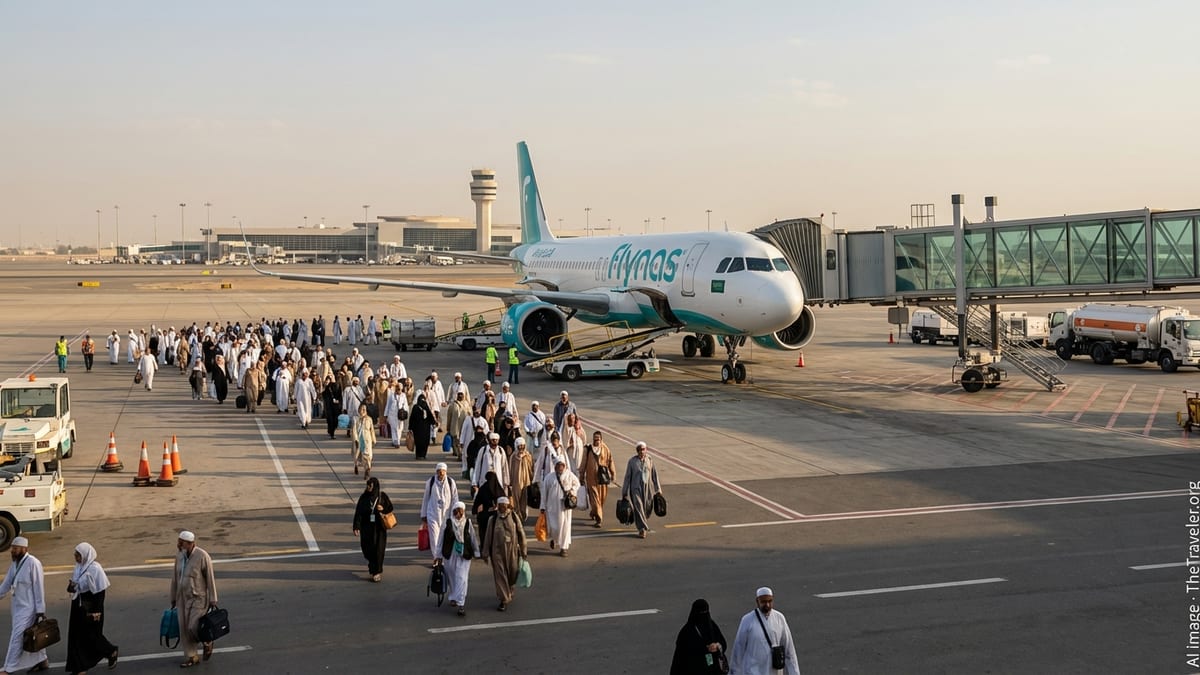
Major Capacity Boost for Ramadan and Umrah
Flynas confirmed that it will offer in excess of 1.7 million seats across its domestic and international network during Ramadan 1447H, up from around 1.5 million seats in the same period a year earlier. The move represents a year on year increase of about 20 percent in available capacity, underscoring the airline’s role in carrying pilgrims and visitors to Saudi Arabia’s key gateway cities of Jeddah, Madinah and Riyadh.
The additional seats will be deployed on both scheduled domestic services linking major Saudi cities and on international routes feeding into the kingdom from the wider Middle East, North Africa, Asia and Europe. By widening its offering at peak times, flynas aims to ease pressure on high demand sectors and give passengers more flexibility in choosing travel dates and departure points during the holy month.
Ramadan traditionally coincides with one of the busiest periods for Saudi airports, driven by pilgrims performing Umrah as well as residents traveling for family visits and holidays. Civil aviation data in recent years has shown double digit growth in passenger volumes and flight movements during the month, putting pressure on airlines and airport operators to keep pace with rising demand.
For flynas, scaling up capacity has become an annual exercise. The carrier previously added around 1.2 million seats for Ramadan 2024 and approximately 1.5 million seats for Ramadan 2025 as it took delivery of new Airbus A320neo aircraft and streamlined its operating schedule. The latest increase takes that growth trajectory a step further and signals confidence that the market will continue to absorb more seats.
Network Expansion Targets Key Pilgrim Gateways
The capacity build up is closely tied to flynas’s focus on routes that serve the Two Holy Mosques in Makkah and Madinah. Jeddah’s King Abdulaziz International Airport, the main air gateway for Umrah traffic, has handled more than five million passengers in recent Umrah seasons, while Madinah’s Prince Mohammed bin Abdulaziz International Airport continues to see steady growth in religious tourism traffic.
Flynas is directing a significant portion of the additional seats to flights serving these airports, including high frequency domestic links from Riyadh, Dammam and Abha, and international services from key source markets such as Pakistan, Egypt and Turkey. Recent schedule enhancements have also included new and seasonal routes connecting secondary Saudi cities to regional hubs, widening direct access for pilgrims and visitors.
From late March 2026, the airline is set to launch six new international services from its new base in Abha, with flights to Dubai, Cairo, Istanbul and Addis Ababa as well as seasonal routes to Kuwait and Trabzon. Additional services from Jeddah to destinations including Entebbe and Rabat are also planned, strengthening connectivity for travelers transiting through Saudi Arabia during and beyond Ramadan.
Industry analysts note that these moves position flynas as a key beneficiary of broader efforts to expand Saudi Arabia’s air connectivity. By adding both frequencies and new city pairs, the carrier is not only responding to near term seasonal peaks but also laying foundations for year round growth in inbound tourism and religious travel.
Supporting Saudi Vision 2030 and Air Connectivity Goals
The latest capacity expansion aligns with Saudi Arabia’s National Aviation Strategy and Vision 2030 targets, which call for the kingdom to handle around 330 million air passengers annually by the end of the decade. The strategy centers on opening more international routes, boosting airline fleets and investing in airport infrastructure to accommodate higher volumes of visitors.
Flynas has emerged as one of the fastest growing airlines in the Middle East on the back of this policy environment, with its capacity from 2019 to 2024 rising more than 60 percent and its fleet now exceeding 60 Airbus aircraft. The carrier has articulated plans to operate over 160 aircraft by 2030, a scale up that will require sustained expansion of both domestic and international networks.
Ramadan and Umrah are seen as crucial test beds for this growth strategy. High seasonal demand places pressure on operational resilience, load management and customer service. By successfully deploying more than a million additional seats during the holy month, flynas can demonstrate its ability to manage complex, high intensity operating conditions while supporting national tourism and pilgrimage objectives.
The airline’s efforts complement initiatives such as the Air Connectivity Program, which works with carriers to open new routes targeting key source markets in Europe, the Gulf, South Asia and Southeast Asia. Together, these measures are intended to make trips to the holy cities more accessible, shorten journey times and give pilgrims greater choice over airlines, schedules and price points.
Fleet Growth and Operational Readiness
Underpinning the new capacity are continued deliveries of fuel efficient Airbus A320neo aircraft, which offer lower operating costs and increased range compared with earlier models. Flynas took delivery of additional A320neo jets in 2025 and 2026, enhancing its ability to add frequencies on core regional routes and open new markets while maintaining a single type narrow body fleet for cost efficiency.
The airline has also deployed wide body Airbus A330 aircraft on high density sectors during peak pilgrimage periods, allowing it to consolidate demand and offer more seats on fewer slots at constrained airports. Flexible use of narrow body and wide body equipment is viewed as a key tool in managing tight airport capacity during peak days of Ramadan and the final ten nights when demand typically spikes.
On the ground, Saudi airports have implemented expanded Ramadan operating plans covering terminal staffing, baggage handling and passenger processing. At Jeddah, airport managers have reported handling tens of thousands of flights and millions of bags over a single Umrah season, with investments in technology and process optimization aimed at reducing congestion and wait times for arriving and departing pilgrims.
For passengers, the most visible impact of the flynas capacity increase will be greater seat availability and a wider range of departure dates and times, especially on routes that traditionally sell out well ahead of Ramadan. Travel agents and booking platforms report that early availability of schedules and seats helps groups and families better coordinate itineraries, particularly for travelers coming from farther afield.
Implications for Fares and Traveler Experience
The increase in seats comes amid ongoing scrutiny of airfares on key Umrah routes, where demand has pushed ticket prices sharply higher in some markets during past Ramadan seasons. While capacity additions from carriers including flynas are designed to relieve pressure on constrained sectors, the net effect on fares will depend on broader market dynamics, including fuel prices, currency fluctuations and competitive responses from other airlines.
Industry observers say that more seats and more routes typically improve traveler options, even if headline fares do not fall significantly. For many pilgrims, especially those traveling in family groups or from lower income countries, the ability to secure confirmed seats on preferred travel dates can be as important as ticket price when planning a once in a lifetime religious journey.
Flynas is highlighting schedule flexibility, additional frequencies and expanded city pairings as core benefits of its Ramadan offering. The carrier’s low cost model emphasizes optional services and unbundled fares, allowing travelers to tailor spending on baggage, meals and ancillary products according to their budgets.
As Saudi Arabia deepens its push to welcome more visitors for both religious and leisure travel, this year’s Ramadan capacity expansion by flynas will be closely watched by policymakers and competitors alike. Its performance will offer a real time indicator of how effectively the kingdom’s aviation ecosystem can scale to meet intensifying demand for access to the holy cities and other emerging destinations across the country.