

More news on this day
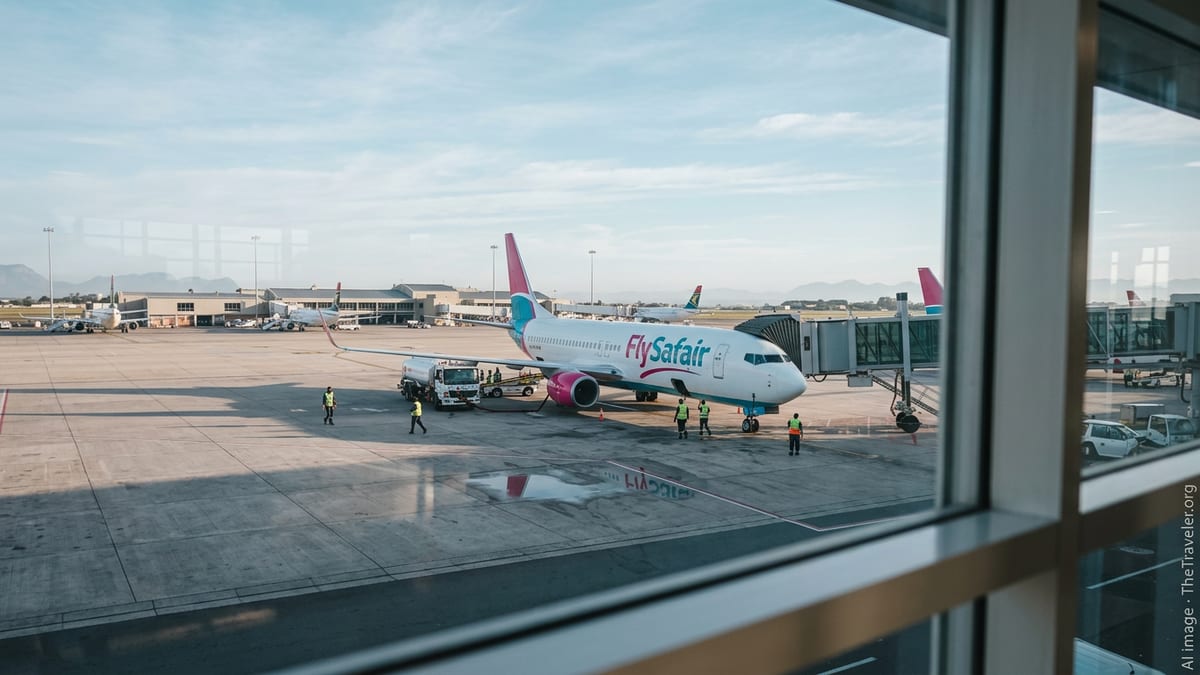
FlySafair, South Africa’s largest domestic airline, is introducing a temporary fuel surcharge on new ticket bookings from March 12 as jet fuel prices at local airports surge about 70 percent in a single week, pushing operating costs sharply higher and forcing the carrier to partially pass the shock on to passengers.
Get the latest news straight to your inbox!
Dynamic Surcharge to Offset Sudden Fuel Shock
The airline’s new levy, described as a temporary dynamic fuel surcharge, will apply to flights departing on or before May 12 2026. It is designed to move in line with fuel price trends rather than being a fixed, permanent hike. The surcharge will be itemised as a separate line on tickets, allowing customers to see exactly how much of their fare is attributable to the fuel spike.
FlySafair executives say the carrier had been absorbing rising fuel costs for weeks before the latest surge, which was triggered by escalating conflict in the Middle East and supply disruptions in global refining. With Jet A1 prices at South Africa’s coastal airports now up by roughly 70 percent in just seven days, the airline argues that passing on at least a portion of those increases has become unavoidable to preserve network integrity and frequency.
The surcharge applies only to new bookings made from March 12 onward and is restricted to departures within the two-month window to reflect what the airline still hopes will be a short-lived crisis. Bookings issued before March 11 remain protected at original prices, and no retrospective charges will be added, a key reassurance for price-sensitive leisure travellers who typically book far in advance.
Importantly for budget-conscious flyers, FlySafair is not rebasing its entire fare structure. Instead, it is using the fuel surcharge as a discrete buffer mechanism, allowing more rapid adjustments should jet fuel prices retreat or stabilise in the coming weeks.
How the Surcharge Will Appear on Tickets
Unlike some rivals that roll higher fuel costs into the base fare, FlySafair is ringfencing the increase as a clear fuel surcharge. For customers, that means the base ticket price will still reflect the underlying seat cost, while the surcharge line will explicitly track the impact of jet fuel volatility.
The airline has indicated that surcharge amounts will vary by route and flight length, in line with the actual fuel burn required for different sectors. Short hops between major South African cities are expected to attract smaller levies than longer domestic or regional flights that consume significantly more fuel per sector.
Industry analysts say this approach supports transparency and may help FlySafair maintain its reputation as a no-nonsense low-cost carrier. At the same time, it gives the airline flexibility to dial the surcharge up or down quickly, without repeatedly re-pricing hundreds of individual fare classes across its network.
For travellers, the practical takeaway is that headline fares may still look competitive in search results, but the final price at checkout will include an added fuel line. This makes it more important than ever to compare total trip costs across airlines rather than just the starting fare.
Global Fuel Spike Filters Into South African Skies
FlySafair’s move comes amid a global surge in jet fuel prices that has rippled through aviation markets from Asia to Europe and now into southern Africa. Spot jet fuel benchmarks have nearly doubled since early January, driven by higher crude prices, refinery disruptions and longer flight routings around conflict zones that increase fuel burn.
Carriers across regions are reacting in similar ways, from outright fare hikes to new or expanded fuel surcharges. South African competitors have already adjusted prices, with some choosing to bundle increases into the base fare rather than list a dedicated fuel fee. For domestic travellers, the changes mark the first broad-based escalation in ticket prices since the early rebound from the pandemic.
While South Africa’s domestic market is relatively insulated from long-haul shocks, it is highly exposed to local jet fuel supply and pricing at key hubs such as Johannesburg, Cape Town and Durban. The recent week-on-week jump at coastal airports has been particularly severe, according to industry reports, squeezing margins on popular leisure routes into and out of Cape Town at the very moment demand remains robust.
Economists note that a weakening rand has compounded the problem, pushing up the local-currency cost of imported fuel and leaving airlines that price largely in rand with little room to manoeuvre. In this context, FlySafair’s surcharge is seen as a defensive tactic to preserve route viability rather than a profit grab.
Protecting the Low-Cost Model While Managing Risk
As a low-cost carrier, FlySafair’s business model is built on high aircraft utilisation, tight cost control and consistently low fares. Fuel is typically the single largest variable cost for such airlines, often accounting for a quarter or more of total operating expenses. A sudden 70 percent spike in fuel prices can therefore erode margins within days if not addressed swiftly.
By opting for a temporary surcharge instead of an across-the-board fare reset, the airline is effectively using a hedge against fuel volatility that can be removed as quickly as it was imposed. This approach gives management the option to roll back the fee if geopolitical tensions ease, supply chains normalise or fuel markets cool in the coming months.
It also allows FlySafair to continue marketing itself as a low-fare leader, since core base fares remain competitive and visible, especially in price-sensitive search engines and online travel agencies. The airline’s decision to protect existing bookings further reinforces customer goodwill, ensuring early bookers do not feel penalised for a shock that occurred after they locked in their travel plans.
However, travel agents warn that if elevated fuel prices persist beyond May, the carrier may need to extend or reconfigure the surcharge, or eventually rebase fares more structurally. For now, the two-month window suggests management is betting on at least some easing in fuel markets by early winter.
What Passengers Should Expect in the Weeks Ahead
For travellers planning domestic trips within South Africa between mid March and mid May, the most immediate impact will be modestly higher all-in ticket prices on FlySafair. The surcharge levels had not been publicly detailed in full at the time of the announcement, but the airline has signalled that it aims to recover only a portion of the fuel spike to keep flying affordable.
Customers who already hold FlySafair tickets for this period can expect their fares to remain unchanged, unless they opt to make voluntary changes that reissue a booking under the new rules. In that case, any new itinerary falling within the affected dates is likely to attract the surcharge.
Travel advisors recommend that price-sensitive passengers book sooner rather than later, as other South African carriers may still follow with more visible fuel-related adjustments if current price pressures continue. They also suggest monitoring airline communications closely, since changes to the surcharge mechanism, including possible reductions, are likely to be announced at short notice.
For now, FlySafair’s move underscores how quickly global fuel volatility can cascade into local airfares. While the surcharge is framed as a temporary response, it offers a glimpse of how airlines across the world are preparing to shield their balance sheets from a new era of unpredictable jet fuel costs.