

More news on this day
Hundreds of airline passengers were left stranded across England and Northern Ireland today as a combination of dense fog and staffing constraints triggered widespread disruption at major airports, with more than 560 flights delayed and at least 21 cancelled at hubs including Liverpool, Manchester, London, Newcastle and Belfast.
Get the latest news straight to your inbox!
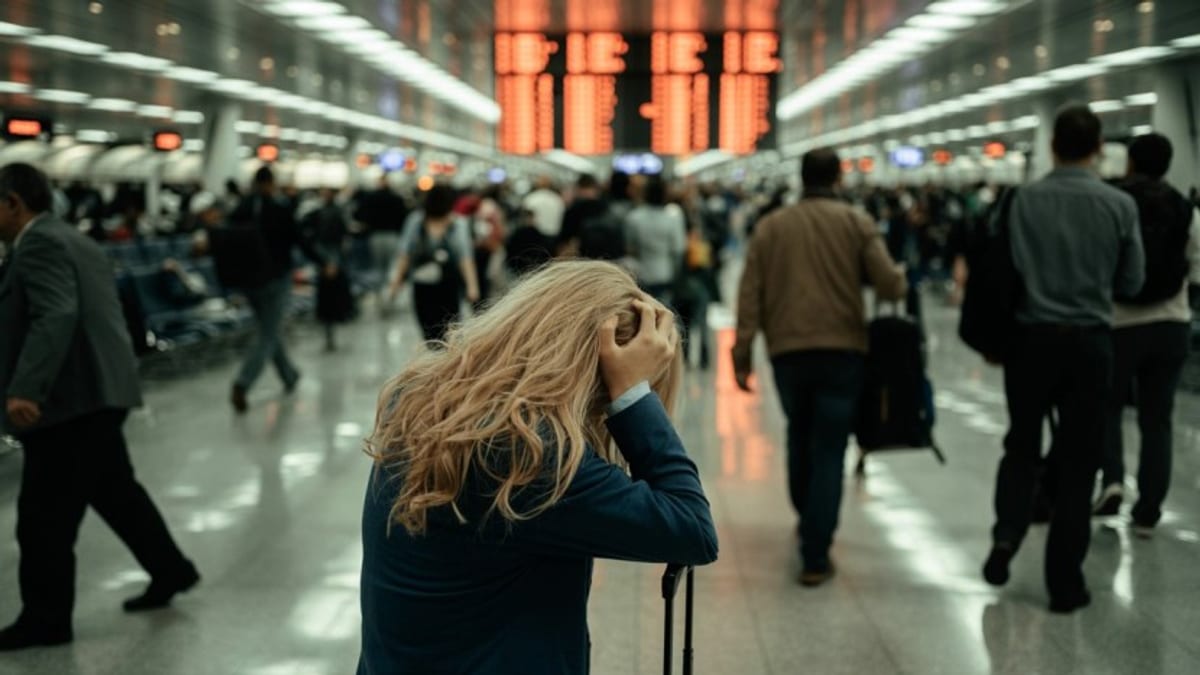
Image by Travel And Tour World
Major UK Airports Hit by Daylong Disruption
Operational data and live departure boards for Monday indicate heavy knock-on disruption at several of the United Kingdom’s busiest regional and national gateways, including Manchester Airport, Liverpool John Lennon Airport, London’s main airports, Newcastle International and Belfast City. Across these hubs, more than 560 departures and arrivals were reporting delays, while at least 21 services were cancelled outright, forcing passengers to rebook or abandon their travel plans.
Published coverage shows that the worst of the disruption has been concentrated in the late morning and afternoon peaks, when low cloud and fog reduced visibility on approaches and departures. To maintain safe spacing between aircraft, traffic flows had to be reduced, which quickly cascaded into long queues on the ground and in the air. Aviation analysts note that similar weather events in recent winters have repeatedly exposed how quickly UK airport operations can seize up when conditions deteriorate.
By early evening, delays of more than an hour were being reported on a wide range of domestic and short haul European routes, with some aircraft forced into holding patterns over northern England before being cleared to land. Travellers arriving into Manchester and London spoke of extended waits on taxiways as congestion built at terminal stands.
Although disruption levels varied from airport to airport, publicly available movements data suggest that Liverpool, Manchester and the London area airports together accounted for the majority of today’s delayed flights, while Belfast and Newcastle reported smaller but still significant backlogs as schedules slipped behind.
Virgin Atlantic, British Airways, Jet2 and Wizz Air UK Among Affected Carriers
The delays and cancellations have cut across full service and low cost airlines alike. According to live schedule information, Virgin Atlantic, British Airways, Jet2, Wizz Air UK and several European carriers all saw aircraft held at gates, rerouted or forced to operate hours behind schedule as conditions worsened.
Long haul services were not immune. Reports indicate that some transatlantic flights into Manchester and London were required to slow en route or enter holding stacks because of arrival restrictions, contributing to missed connections for passengers with onward journeys. In some cases, inbound long haul services arrived so far behind schedule that return departures had to be retimed or combined, intensifying evening peak congestion.
Short haul leisure routes from northern England to Mediterranean destinations and city break favourites also experienced extended delays, with Jet2 and Wizz Air UK particularly exposed on high frequency routes. Where aircraft and crews ran out of legal duty hours, flights were cancelled or rolled to the following day, leaving passengers in need of overnight accommodation or alternative travel.
British Airways and Virgin Atlantic, both of which rely heavily on London airports for connecting traffic, faced the added complexity of re-accommodating disrupted passengers within tightly packed long haul networks. Publicly available information shows that, in some cases, travellers were switched to later services or rerouted via different European hubs in order to complete their journeys.
Weather, Staffing and Air Traffic Capacity Combine to Snarl Operations
Aviation specialists point to a combination of factors behind the latest disruption. Dense early morning fog across parts of England and the Irish Sea corridor narrowed the window for safe takeoffs and landings, requiring increased separation between aircraft. This reduced capacity at precisely the time when many first wave departures and overnight arrivals are scheduled, creating an immediate backlog that rippled through the day.
At the same time, ongoing staffing constraints in ground handling and air traffic management appear to have limited the ability of airports and airlines to recover as visibility improved. Industry performance reports for recent months highlight a pattern in which relatively short periods of bad weather can trigger disproportionately long delays when teams are already operating near capacity, leaving little slack to catch up.
Air traffic control flow restrictions over northern England and the Irish Sea added further pressure, as aircraft bound for Liverpool, Manchester, Newcastle and Belfast were held on the ground at departure airports or slowed in flight to avoid exceeding safe traffic levels. Each hold or speed reduction translated into later arrivals, which then pushed back subsequent departures as aircraft and crews missed their scheduled slots.
Observers note that similar episodes in previous years have prompted calls for greater investment in ground resources and more flexible rostering, particularly at busy UK airports that serve as key transfer points for both domestic and international journeys.
Passengers Face Long Queues, Missed Connections and Overnight Stays
For passengers, today’s disruption translated into long queues at check in desks and customer service counters as travellers sought rebookings, meal vouchers and hotel rooms. Social media posts from across the affected airports described crowded departure halls, limited seating and real time departure screens dominated by delay notifications.
Those with tight connections were among the hardest hit, especially at Manchester and London, where many travellers were due to transfer from short haul feeder flights onto long haul services with Virgin Atlantic and British Airways. Missed onward flights left some passengers waiting hours for the next available seat, while others were offered rerouting via different European hubs or alternative UK airports.
Families and leisure travellers heading to school holiday destinations also encountered difficulties, particularly where evening departures were cancelled after running late throughout the day. In those cases, travellers reported being advised to return home or arrange overnight stays before attempting to fly the following day, adding extra cost and uncertainty to their trips.
Consumer advocates note that under UK and European passenger rights rules, travellers on eligible flights that arrive more than three hours late or are cancelled for reasons within an airline’s control may be entitled to compensation and assistance. However, when disruption is attributed primarily to adverse weather or external air traffic control constraints, compensation may not apply, leaving many passengers reliant on travel insurance or out-of-pocket spending.
Knock-On Effects Expected Into Tomorrow’s Schedules
While some improvement was reported later in the day as visibility increased and traffic flows were gradually restored, flight tracking data suggest that the impact will continue into tomorrow’s morning schedules. Aircraft and crews remain out of position at several bases, particularly in northern England, and overnight curfews or noise restrictions at certain airports limit the scope for late night recovery movements.
Airline operations teams are expected to spend the night reshuffling aircraft rotations, crew pairings and spare capacity in an effort to stabilize timetables for Tuesday. Publicly available forecasts indicate more settled weather, which should allow airports and airlines to work through the backlog, although early morning peaks may still see delays as the system resets.
Travel experts advise passengers due to fly over the next 24 hours from Liverpool, Manchester, London, Newcastle or Belfast to monitor their airline’s app or departure boards closely, arrive at the airport with extra time and be prepared for potential gate changes or retimings. Those with flexible plans are being encouraged to consider off peak flights where possible, as midday and late evening services typically have more room to absorb residual disruption.
Industry observers argue that today’s events will renew scrutiny of the resilience of UK air travel infrastructure in the face of increasingly volatile weather and persistent staffing challenges, particularly as passenger numbers continue to recover toward and in some cases surpass pre-pandemic levels.