

More news on this day
Hundreds of passengers were left stranded at Miami International Airport on Sunday as dense morning fog and a fast-moving winter storm across the eastern United States contributed to at least 67 flight cancellations and 222 delays, disrupting links between South Florida and major hubs including New York, Chicago, Los Angeles and key destinations in Mexico.
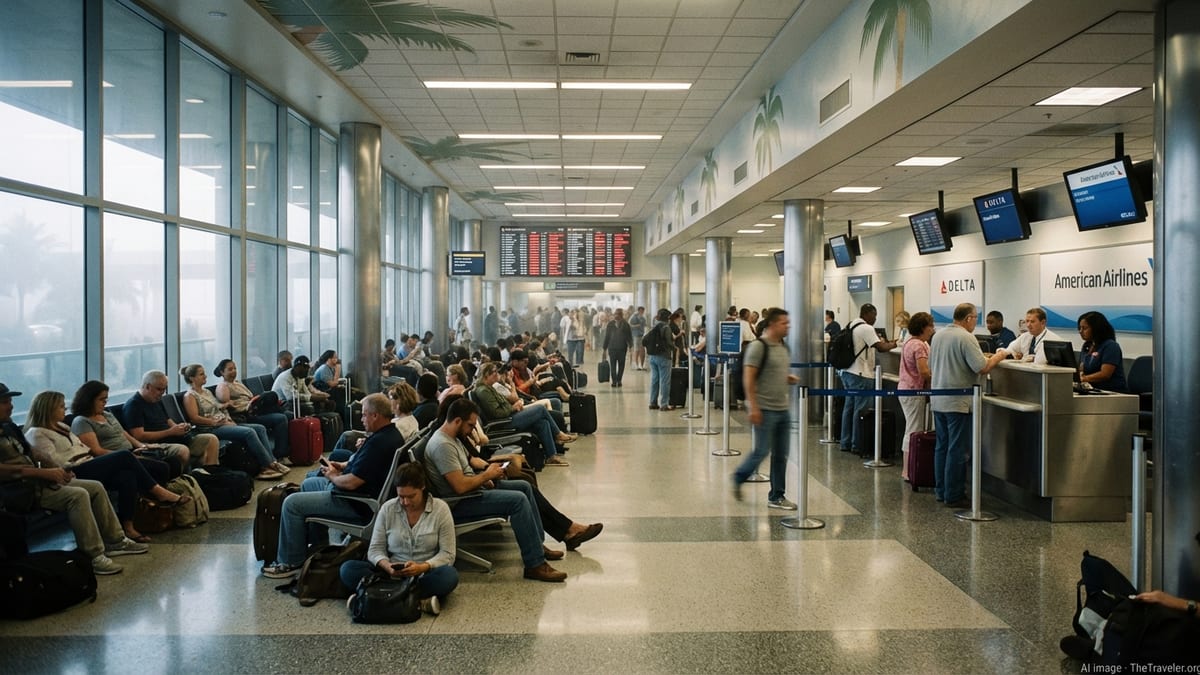
Weather Trouble at a Critical Gateway
The disruption hit Miami International Airport just as early morning departures and arrivals were ramping up, when low clouds and fog reduced visibility and forced air-traffic managers to slow traffic into one of the country’s busiest international gateways. Miami, a primary bridge between North America and Latin America, often feels the impact of even short-lived ground stops or flow restrictions, as tightly scheduled banks of flights leave little room for recovery when conditions deteriorate.
According to real-time airport status information, Miami was reporting fog and low ceilings early on February 22, prompting spacing restrictions on arrivals and ripple effects across the departure board. While the local weather began to improve by mid-morning, the backlog of aircraft and crews meant that delays continued to stack up through the day for both domestic and international services.
Compounding the local visibility problems, a broader winter storm system moving up the East Coast tightened the squeeze on airlines trying to keep their networks running. Carriers already contending with widespread weather waivers across the Mid-Atlantic and Northeast faced fresh constraints as Miami, normally a reliable warm-weather escape, briefly became another chokepoint.
American, Delta and Other Carriers Feel the Strain
American Airlines and Delta Air Lines were among the hardest-hit carriers at Miami, as the combination of fog-related traffic management measures and knock-on effects from winter weather elsewhere forced them to cancel or delay dozens of flights. As primary operators on routes linking Miami to New York, Chicago and Los Angeles, both airlines saw their carefully timed schedules unravel over the course of the morning.
American, which maintains a significant presence in South Florida and operates a dense schedule of connections into Mexico and the Caribbean, was forced to trim services to keep aircraft and crews positioned safely. Delta, feeding passengers through its own hubs in Atlanta and New York, grappled with the same dual challenge: conditions deteriorating at northern airports affected by the storm, and visibility limits in Miami constraining the flow of flights into and out of the region.
Other domestic and international carriers operating from Miami, including low-cost competitors and Latin American airlines, also reported scattered delays and operational holds as they waited for departure slots or inbound connecting aircraft. While many of these operators were able to keep outright cancellations relatively limited, the accumulation of shorter delays still translated into hours of uncertainty for travelers watching departure times repeatedly shift on terminal display boards.
Network Ripple Effects Reach Major U.S. Cities
The disruption at Miami quickly spread along some of the busiest air corridors in the United States. Flights between South Florida and the New York metropolitan area were among the first to feel the pressure, with services to John F. Kennedy, LaGuardia and Newark experiencing a mix of cancellations, rolling delays and extended holding patterns as the winter storm tightened its grip on the Northeast.
Chicago, another key hub for both American and United, saw knock-on consequences as aircraft originating in or destined for Miami arrived late or were removed from rotation altogether. That, in turn, affected travelers connecting onward to the Midwest, West Coast and smaller regional markets, many of whom found themselves arriving hours behind schedule or searching for scarce same-day rebooking options.
Links between Miami and Los Angeles were also disrupted, with cross-country flights delayed while crews and equipment were repositioned around other weather-impacted hubs. Even when operations in Miami began to stabilize, the long-distance nature of these services meant that delays propagated throughout the day, affecting not just Florida-bound passengers but also travelers starting their journeys in California.
Mexico and Latin American Routes Disrupted
Miami’s role as a gateway to Mexico and Latin America meant that the disruption was felt well beyond U.S. borders. Morning and midday departures to major Mexican cities, including Mexico City and resort destinations on the Caribbean and Pacific coasts, faced delays as airlines prioritized aircraft for routes with the highest number of stranded passengers and the most limited alternative options.
Some Mexico-bound travelers reported waiting in crowded gate areas as departure times slid repeatedly, with airline agents citing a combination of late-arriving inbound aircraft from weather-affected northern hubs and ongoing traffic management initiatives at Miami. For passengers with onward connections within Mexico or into Central and South America, the schedule changes created a domino effect of missed links and forced overnight stays.
Latin American carriers using Miami as a North American entry point also had to adjust their operations, retiming departures to ensure that connecting customers could reach their flights. In several cases, airlines opted to consolidate lightly booked services or swap aircraft types at the last minute, moves that helped reduce the number of outright cancellations but also created confusion over seat assignments and baggage handling.
Inside the Airport: Long Lines and Limited Answers
Inside the terminals, the disruption translated into long check-in queues, crowded security lanes and jammed customer-service desks as hundreds of passengers sought new travel options. Families returning from vacations, cruise passengers heading home after disembarkation at PortMiami and business travelers trying to reach Monday meetings all converged on airline counters in search of clarity.
Many travelers turned first to airline mobile apps and self-service kiosks, which in some cases automatically rebooked them on later flights or offered the option to change dates without additional fees. But for those with complex itineraries involving multiple airlines or international connections, a face-to-face discussion with an agent was often still necessary, feeding already lengthy wait times.
Airport staff moved through the concourses directing passengers toward less crowded assistance points and reminding them to monitor flight status boards frequently. Over loudspeakers, announcements urged travelers to stay close to their departure gates and to have boarding passes and identification ready, as some airlines attempted to expedite boarding for flights that suddenly received takeoff clearance after long holds.
Airlines Roll Out Waivers and Recovery Plans
With delays and cancellations mounting across their networks, major carriers serving Miami expanded existing weather waivers and flexible travel policies. These waivers typically allowed customers scheduled to travel through affected airports, including Miami and storm-hit hubs in the Northeast, to rebook onto alternative flights within a limited date range without changing fees, and in some cases without fare differences.
American, Delta and other airlines emphasized that customers whose flights were canceled outright were entitled to a choice between rebooking at no extra cost or requesting a refund, consistent with federal regulations. However, passengers whose flights were significantly delayed but not canceled often had fewer options, especially when alternative seats on the same day were already taken.
Operations teams shifted into recovery mode by mid-afternoon, focusing on rebalancing aircraft and crews to restore a more predictable schedule. This included flying some aircraft empty to reposition them for the evening rush, extending shifts for available crew members within regulatory limits and coordinating with air-traffic control to secure departure slots during brief windows of improved weather.
Advice for Affected and Upcoming Travelers
For passengers caught up in Sunday’s turmoil, travel experts recommended a combination of digital tools and old-fashioned persistence. Keeping airline apps refreshed, signing up for text alerts and checking the main airport departure boards regularly were crucial steps in staying ahead of last-minute gate changes or surprise boarding calls for flights that were suddenly cleared to depart.
Those yet to begin their journeys were urged to check flight status before leaving home, even if their departure airport was not directly affected by fog or winter storms. Because many of the delays at Miami were linked to aircraft and crews originating elsewhere, travelers in cities like New York, Chicago and Los Angeles faced potential disruptions even under clear skies.
Analysts also noted that flexible itineraries, such as choosing earlier flights in the day and allowing more time for connections, can significantly improve the odds of successful travel during active weather patterns. In some cases, travelers with critical commitments were advised to consider rebooking through alternative gateways less exposed to the current storm track or fog-related restrictions, even if that meant less direct routings.
Ongoing Vulnerability to Weather Shocks
The events at Miami underscored how vulnerable the modern U.S. air travel system remains to even localized weather shocks. A brief period of dense fog at a major hub, when combined with a broader winter storm affecting distant airports, can quickly result in dozens of cancellations and hundreds of delays, stranding passengers far from the immediate source of the problem.
Industry observers pointed out that while airlines have invested heavily in operations-control technology and predictive analytics, they continue to operate near capacity on peak travel days, leaving limited slack when conditions deteriorate. Hub-and-spoke networks, which concentrate large volumes of passengers and aircraft in a handful of key airports, can magnify the impact when any one of those nodes encounters weather-related constraints.
For Miami, Sunday’s disruptions served as a reminder that even a coastal, warm-weather gateway is not immune from the cascading effects of winter storms thousands of miles away. As carriers and airports look ahead to the remainder of the winter season, they are once again balancing the competing imperatives of maintaining full schedules and building enough resilience to withstand the next bout of fog, ice or snow without leaving hundreds of travelers sleeping under terminal departure boards.