

More news on this day
The UK Foreign, Commonwealth & Development Office has updated its highest-level travel warnings for Lebanon and sections of Saudi Arabia, advising British nationals not to travel to a number of regions as conflict and missile threats intensify across the Middle East.
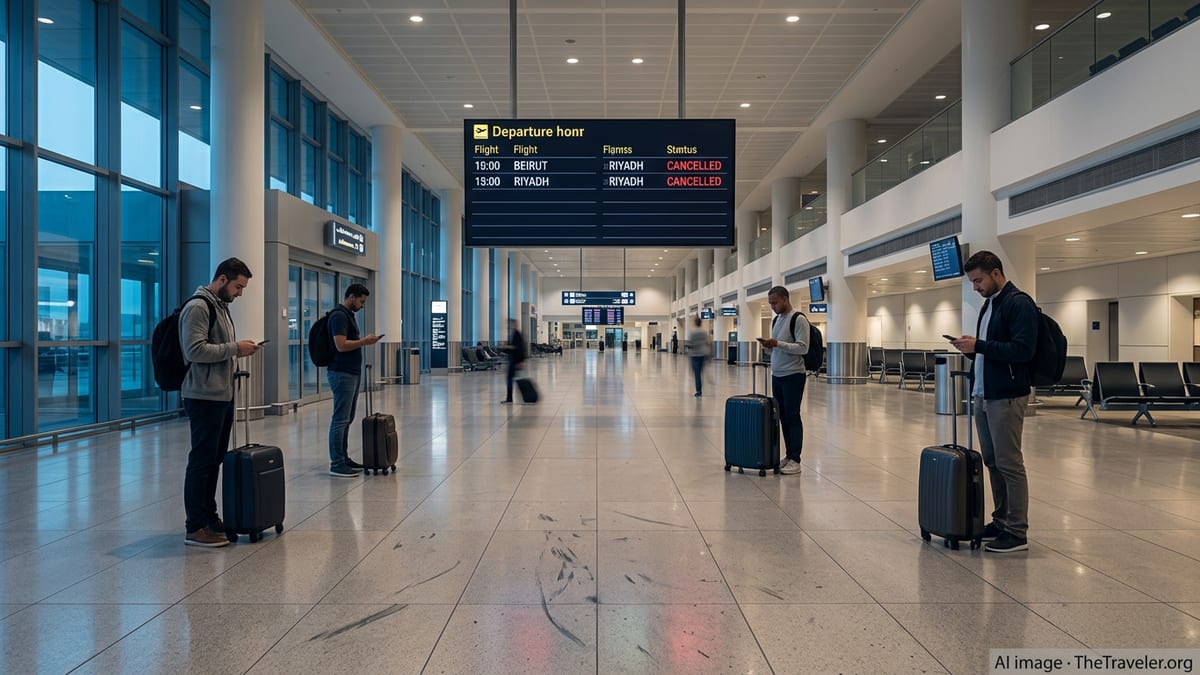
Rising Middle East Tensions Trigger Stricter Warnings
The latest Foreign Office updates come against a backdrop of rapidly escalating violence in the region, including Iranian missile strikes and broader insecurity affecting several Gulf and Levant states. Officials have moved Lebanon and parts of Saudi Arabia into the most restrictive advisory categories used for British travelers, signalling that the government sees a real and immediate risk to personal safety.
Although travel advisories do not constitute a legal ban, “do not travel” guidance is the strongest language used by the Foreign Office. It reflects an assessment that the UK government may be severely limited in its ability to assist nationals if the security situation worsens further or commercial routes out of affected areas are cut.
Airlines and tour operators have begun responding to the heightened risk, with a sharp rise in cancellations and rerouting across the Middle East. Travelers with bookings touching Beirut or vulnerable parts of Saudi Arabia are being urged to check their itineraries daily, as schedules and route permissions are changing at short notice.
Travel insurers are also warning that policies may be void if holidaymakers knowingly enter areas where official advice is against all or all but essential travel. That leaves many would-be visitors facing a difficult decision between postponing trips and taking on substantial personal and financial risk.
Lebanon: Nationwide ‘Do Not Travel’ Amid Missile and Security Threats
Lebanon is now firmly in the highest-risk category for several Western governments, including the United Kingdom. The Foreign Office is advising against all travel to large parts of the country and treating the remainder as unsafe for all but absolutely essential journeys, amid concerns over cross-border fire, internal unrest and the possibility of further escalation.
Security analysts report that areas in the south of Lebanon near the Israeli border, parts of the Bekaa Valley and districts around major urban centres are particularly exposed to potential strikes and armed clashes. Long-standing warnings about bombings, kidnappings and civil unrest have been reinforced by the recent regional conflict, which has seen airspace closures and intermittent disruption at Beirut’s international airport.
While some flights are still operating in and out of the capital, services have been repeatedly suspended or rescheduled at short notice, leaving foreign nationals vulnerable to sudden changes in exit routes. Local security indexes are advising any non-essential visitors to leave while commercial options remain available, and to avoid movement around military or government facilities, ports and border zones.
For Lebanese diaspora travellers and tourists alike, the practical effect of the updated guidance is that standard leisure trips are now strongly discouraged. Those who feel compelled to travel for urgent family or humanitarian reasons are being urged to put contingency plans in place, including alternative routes out of the country and up-to-date contact details with their embassy.
Saudi Arabia: Targeted ‘Do Not Travel’ Zones Near Yemen Border
In Saudi Arabia, the Foreign Office has taken a more regional approach, distinguishing between relatively stable cities and high-risk border provinces. While major hubs such as Riyadh and Jeddah remain open to most travelers, the government is now advising against all travel to areas within a short distance of the frontier with Yemen, where the threat of missile and drone attacks is considered acute.
The advisory highlights territory within a narrow band along the southern border as particularly dangerous, with separate guidance against all but essential travel to a wider strip extending further inland. These regions have long been affected by cross-border fire, but the latest warnings suggest that the frequency and range of attacks may be increasing in the context of the broader regional conflict.
Pilgrims planning to visit the holy cities for Umrah or Hajj, as well as business travelers heading to Saudi industrial centres, are being told to scrutinise their routes carefully. Journeys that involve road travel through or near the restricted southern provinces could fall foul of the “do not travel” guidance even if flights land in areas still judged comparatively secure.
Hotels and operators serving affected regions are bracing for last-minute cancellations, and some international carriers have adjusted schedules to avoid airspace perceived as vulnerable. Travelers are advised to monitor local media, embassy alerts and Foreign Office updates daily, as any further deterioration could see the restricted zone expanded.
Insurance, Refunds and What the Warnings Mean for Travelers
The Foreign Office’s “do not travel” designation carries significant practical consequences for holidaymakers and business travellers, especially when it comes to money and insurance. Many UK travel insurance policies contain clauses stating that cover is invalidated if a traveler enters or remains in a country or region where official advice is against all or all but essential travel.
For those with existing bookings to Lebanon or restricted areas of Saudi Arabia, that can mean losing protection for medical emergencies, evacuations and cancellations if they choose to go ahead despite the warnings. Insurers and consumer advocates are urging affected travellers to contact their providers in writing before departure to clarify their position, and to keep records of all correspondence.
Airlines and package tour operators, meanwhile, are under pressure to offer flexible options when official warnings change. Some carriers are allowing fee-free rebooking or refunds for flights touching Beirut and certain Middle Eastern destinations up to specific dates, but terms vary widely and may change as the situation evolves.
Experts stress that anyone booked to travel in the coming weeks should review terms and conditions carefully, paying close attention to clauses on “force majeure,” government advisories and security-related disruptions. Where tour operators cancel a package outright due to Foreign Office guidance, UK package travel regulations generally require a full refund, although compensation for inconvenience is less clear-cut in fast-moving security crises.
How to Stay Informed if You Are Already in the Region
For British nationals who are already in Lebanon or Saudi Arabia, the key message from officials is to stay informed and be prepared to adjust plans quickly. Travelers are being urged to register their details with consular services where possible, monitor official travel advice pages frequently and sign up for local alert systems offered by embassies and consulates.
Authorities recommend keeping passports and important documents in a secure but easily accessible place, maintaining a supply of essential medications and identifying more than one potential route out of the area should conditions deteriorate. Those staying in hotels or guesthouses are advised to familiarise themselves with emergency exits, safe rooms and shelter areas away from windows.
Local security experts stress the importance of avoiding large gatherings, political demonstrations, military sites and critical infrastructure such as oil facilities and ports. Roadblocks and checkpoints can appear suddenly in periods of tension, and travellers may face delays or questioning even in districts not explicitly covered by “do not travel” warnings.
Above all, officials emphasise that the situation remains fluid. Advisories for Lebanon and Saudi Arabia are under constant review and may be upgraded, downgraded or geographically expanded at short notice. Travellers are urged to treat the warnings as dynamic guidance rather than a one-off notice, and to make conservative decisions where personal safety is concerned.