

More news on this day
Japan’s foreign resident population is projected to surpass 4 million in 2025, a demographic shift that is rapidly turning Tokyo, Osaka and Kyoto into some of Asia’s most compelling multicultural urban destinations for international travelers.
Get the latest news straight to your inbox!
Record Foreign Resident Numbers Mark a Turning Point
Publicly available data from the Immigration Services Agency shows that Japan had around 3.77 million foreign residents at the end of 2024, a record high after a decade of steady increases. Subsequent figures released for mid 2025 indicate that legal foreign residents reached almost 4 million, while projections reported by national media suggest the total could climb to about 4.1 million by the end of the year. That would mean foreign nationals account for more than 3 percent of Japan’s population, still modest by international standards but historically significant for a country long viewed as socially and linguistically homogeneous.
The rapid rise has been driven by a mix of highly skilled professionals, technical trainees, international students and long-term residents from across Asia, Europe and the Americas. Analysts note particularly strong growth among residents from China, Vietnam and other Southeast Asian countries, alongside established communities from Korea and Western countries. These shifts are beginning to reshape not just labor markets and education, but also the everyday street life visitors encounter in Japan’s biggest cities.
For travelers, the demographic trend overlaps with a powerful tourism rebound. Japan set an all-time high for international arrivals in 2024 and early 2025, with much of the activity focused on Tokyo, Osaka and Kyoto. The result is a new urban mix in which residents and visitors from dozens of countries share trains, neighborhoods and nightlife districts, creating a more familiar and accessible experience for overseas tourists while still retaining a distinctly Japanese setting.
Tokyo Emerges as a Multilingual Megacity
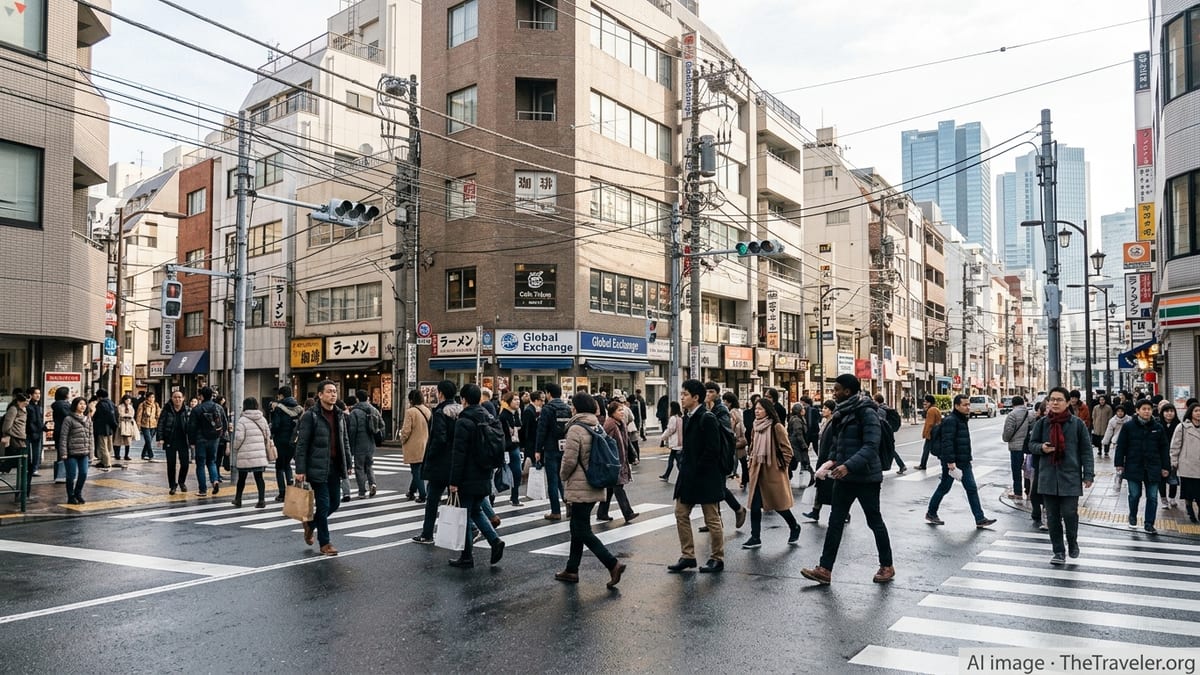
Tokyo has long been the primary gateway for international visitors, but the growing foreign resident population is deepening its role as a genuinely multilingual and multicultural hub. Neighborhoods such as Shinjuku, Shibuya and Minato now host clusters of foreign-owned cafes, halal and vegan restaurants, specialty supermarkets and bilingual co-working spaces, alongside long-established Japanese businesses. Visitors walking major commercial arteries increasingly hear a mix of Japanese, English, Mandarin, Korean and Southeast Asian languages.
Publicly available information indicates that local authorities and transport operators have expanded multilingual signage on trains, buses and in stations, while private businesses have invested in English and Chinese-language menus, mobile ordering systems and cashless payment options favored by foreign residents. This infrastructure, originally designed to meet everyday needs of international communities, also lowers the barrier for short-term visitors who may be navigating Japan for the first time.
Tokyo’s cultural calendar is likewise evolving. International film, food and community festivals organized around Brazilian, Vietnamese, South Asian and European communities are increasingly visible on city event listings. For travelers, this means the chance to combine classic Tokyo experiences, such as visits to Asakusa or Akihabara, with evenings in neighborhoods where global street food, fusion cuisine and live music reflect the city’s new demographic reality.
Osaka’s Global Communities Reinforce Its Reputation as a Welcoming Gateway
Once viewed primarily as a commercial hub and stopover on the route to Kyoto and Nara, Osaka is emerging as a destination in its own right, helped by a vibrant foreign resident scene. Publicly available coverage points to strong growth in international communities in central districts such as Naniwa, Chuo and Kita, where foreign workers and students live alongside long-time Osaka residents. Many new arrivals are drawn by jobs in tourism, hospitality, logistics and manufacturing, as well as by universities and language schools.
The city’s reputation for relaxed, outgoing social norms has made it particularly attractive to international residents, who contribute to a growing number of ethnic restaurants, bars and small independent shops. Streets around major hubs now feature Korean barbecue, Chinese regional cuisines, South and Southeast Asian eateries, Middle Eastern cafes and Western-style bakeries run by foreign or mixed Japanese–foreign teams. For visitors, this multicultural food scene layers onto Osaka’s famous local specialties such as takoyaki and okonomiyaki, turning the city into one of Japan’s most diverse dining destinations.
Osaka is also preparing for future growth in global exposure, including the coming World Expo, which has spurred new investment in transport, waterfront redevelopment and visitor facilities. Planners and tourism stakeholders frequently reference the importance of foreign residents as cultural mediators, employees and entrepreneurs who help bridge linguistic and cultural gaps between Japanese hosts and international guests. This dynamic is visible in multilingual tourism information centers, tour companies run by long-term residents and community-led events that welcome both locals and visitors.
Kyoto Balances Heritage, Overtourism and New Diversity
In Kyoto, the interplay between rising visitor numbers and a growing international resident base is particularly delicate. The city’s historic temples, narrow streets and traditional townhouses have made it a symbol of Japanese culture, and benchmark data indicates that international visitor totals met or exceeded pre-pandemic records in 2024. At the same time, more foreign students, researchers, artists and hospitality workers now call Kyoto home, adding quiet but noticeable diversity to everyday life in university districts and residential neighborhoods beyond the main tourist corridors.
Local debates about overtourism have prompted the development of guidelines and campaigns that encourage more responsible behavior in heritage districts and seek to redirect visitor flows to lesser-known areas. These initiatives often rely on multilingual communication and input from international residents who understand the expectations of overseas travelers. The result is a gradual shift toward tourism models that aim to protect local communities and cultural landscapes while still embracing Kyoto’s role as a global showcase of Japanese history and aesthetics.
For travelers, the presence of foreign residents means that traditional teahouses, ryokan and crafts workshops increasingly operate alongside foreign-run bookstores, bakeries and casual cafes. In some neighborhoods, visitors may chat with baristas or guides from overseas who have settled in Kyoto to study ceramics, religious history or design. This combination of deep-rooted Japanese heritage and everyday multicultural life is turning the city into a more layered destination than its postcard image suggests.
Multiculturalism Rewrites the Visitor Experience Across Japan
The nationwide increase in foreign residents is not limited to Japan’s largest tourism hubs, but its impact is most visible to travelers in Tokyo, Osaka and Kyoto. Demographic analyses show that foreign nationals now account for a meaningful share of the workforce in hotels, restaurants, transportation and retail, sectors that shape the visitor experience. International residents also play a growing role in language education, intercultural exchange programs and digital content that helps travelers navigate Japan’s customs and public spaces.
Government and industry discussions about sustainable tourism, labor shortages and regional revitalization increasingly factor in the presence of foreign communities. Policy roadmaps and industry reports describe foreign residents as essential partners in sustaining services, revitalizing aging shopping streets and supporting local festivals that attract visitors from abroad. In some cases, former short-term visitors have become long-term residents, opening businesses that cater simultaneously to local neighbors and international guests.
Looking ahead, demographic projections point to continued growth in Japan’s foreign resident population through the 2030s, even as the overall population shrinks. For travelers planning trips in 2025 and beyond, that trajectory suggests a Japan that feels more linguistically accessible and internationally connected while still offering the cultural depth and everyday nuances that draw visitors in the first place. Tokyo’s urban sprawl, Osaka’s street-level energy and Kyoto’s temple-lined lanes are likely to remain quintessential stops, but the people visitors meet there will increasingly come from many corners of the world.