

More news on this day
Forest and land fires in and around Batam are fuelling a fast‑intensifying haze crisis across Indonesia’s Riau Islands, raising concerns over power reliability, flight operations and wider travel across the busy Singapore Strait corridor.
Get the latest news straight to your inbox!
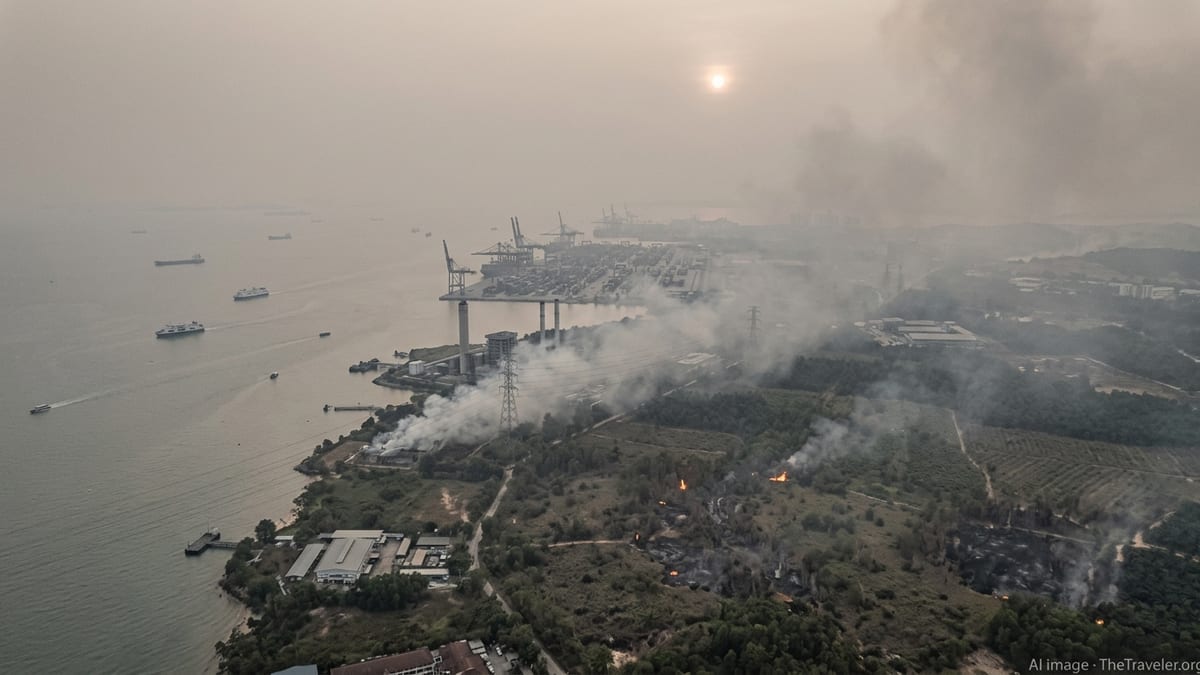
Haze Thickens Over Indonesia’s Key Island Hub
Reports from local monitoring agencies and regional media indicate that hotspots have surged in parts of Sumatra and nearby islands in recent days, with smoke drifting over Batam and neighbouring urban centres. The island, which sits just south of Singapore and forms part of the Riau Islands province, is especially exposed to haze because of its proximity to fire‑prone peatlands and coastal forests used for agriculture and plantation development.
Satellite fire‑detection data and visibility observations suggest that smoke has periodically reduced clarity across key transport and industrial zones on Batam. Publicly available information shows that particulate levels have spiked at times to levels considered unhealthy, mirroring past regional haze episodes that have affected Indonesia, Singapore and Malaysia during the dry season. While conditions can fluctuate quickly with changing winds, the current pattern points to a persistently elevated fire risk.
Analysts who track Southeast Asian haze events note that once fires take hold in drained peat or scrubland, they can smoulder for days, generating dense, lingering smoke. This has been a recurring issue across Sumatra and Kalimantan for decades, and Batam’s position downwind of these fire belts means the island often becomes an early indicator of worsening air quality in the wider region.
Power Supply Faces Strain as Smoke Threatens Grid Stability
As the haze intensifies, attention is turning to the resilience of Batam’s power infrastructure. Publicly available information on past episodes in the Riau region shows that airborne particles and dry conditions can increase the risk of flashovers on high‑voltage transmission lines, particularly when dust and soot accumulate on insulators. In severe cases, such contamination can trigger short outages or cascading trips if multiple lines are affected at once.
The Batam industrial corridor hosts shipyards, electronics manufacturers and petrochemical facilities that rely heavily on stable electricity. Energy observers warn that even brief disruptions can lead to costly shutdowns, delayed exports and added safety checks, especially where automated production lines and sensitive equipment are involved. During earlier haze years elsewhere in Indonesia, similar conditions prompted utilities to step up line washing, vegetation management beneath cables and backup generation planning.
On Batam, preparations appear to be following a comparable pattern. Reports indicate that operators are monitoring load flows and line conditions more closely while advising major customers to review contingency plans. Although the grid is still operating, haze‑related contingencies add pressure to a system that also has to manage rising demand from the island’s growing residential estates and tourism developments.
Flight Operations and Regional Travel Disrupted
Hang Nadim International Airport on Batam is one of western Indonesia’s key secondary air hubs, connecting the Riau Islands with Jakarta, Surabaya and several smaller cities, as well as serving as an alternative gateway for travellers bound for Singapore and Malaysia. As haze from forest and land fires thickens, visibility at the airport becomes a critical operational factor, influencing whether flights can land or take off safely under instrument flight rules.
According to published coverage on recent haze seasons in Indonesia, similar conditions have previously forced flight delays, diversions and occasional cancellations at airports in Sumatra and Kalimantan when runway visual range dropped below safety thresholds. Aviation analysts note that Batam could experience comparable impacts if smoke concentrations increase, particularly during early morning and late evening peaks when visibility can be most compromised.
Any extended disruption at Hang Nadim would ripple across regional travel networks. The airport functions as a low‑cost alternative to Singapore’s Changi Airport, and is an important link for domestic workers, business travellers and tourists moving between Indonesian islands and mainland Southeast Asia. Travel planners are already advising passengers bound for the Riau Islands to build in additional buffer time and to monitor airline advisories closely as the haze situation evolves.
Transboundary Haze Revives Old Concerns for Neighbours
The deteriorating air quality around Batam is also reviving concerns about transboundary haze across the Singapore Strait and into Peninsular Malaysia. Historical records of Southeast Asian haze episodes describe how smoke from Sumatran and Riau fires often drifts north and east, degrading air quality in Singapore and Johor when winds shift. Recent discussions on regional forums suggest that residents in eastern Singapore and coastal Malaysia have already noticed intermittent haze and smoke smells associated with fires to the south and west.
Regional agreements such as the ASEAN Agreement on Transboundary Haze Pollution were designed to encourage cooperation and information‑sharing on such events. Publicly available briefings emphasise the importance of early detection, joint firefighting support and the enforcement of land‑clearing regulations to prevent peat and plantation fires from escalating. The current situation around Batam is likely to intensify scrutiny of how effectively these mechanisms are working on the ground.
From a tourism and travel perspective, worsening haze can dampen demand for short‑haul holidays and weekend trips across the strait. Coastal resorts and ferry operators in the Riau Islands and southern Malaysia have in past years reported softer bookings when skies turn grey and outdoor visibility is limited. Travel observers are watching closely to see whether a similar pattern emerges if the present fire activity persists into the coming weeks.
Local Communities and Travellers Adapt to Prolonged Smoke
As the haze persists, daily life on Batam is adjusting to smoky skies and reduced visibility. Public health advisories commonly issued during such events urge residents to limit strenuous outdoor activity, keep doors and windows closed when possible and use filtration or air conditioning to reduce indoor particle levels. Pharmacies and convenience stores in the region typically see increased demand for masks, eye drops and basic respiratory medications when air quality worsens.
For visitors and business travellers, the haze adds an extra layer of planning to trips through Batam and the broader Riau Islands. Travel guidance increasingly recommends checking real‑time air quality readings, reviewing airline notifications and considering flexible itineraries that allow for delayed ferries or flights. Outdoor attractions such as beaches, snorkelling spots and open‑air food markets may be less appealing on days when smoke is thickest, shifting interest toward indoor malls, spas and cultural venues.
Despite these challenges, Batam remains a pivotal transport and industrial hub whose ports, power lines and runways are structured to cope with recurring seasonal pressures. The scale and duration of the current forest fires will determine how far the disruption spreads, both across Indonesia’s domestic networks and into the wider Southeast Asian travel market. For now, the haze over Batam is a stark reminder that land‑clearing practices and fire management in one part of the archipelago can quickly become a shared concern for travellers and residents across the region.